

Nanotechnology News – Latest Headlines
Arizona State University and Advent Solar to jointly develop next generation solar technology
As part of the initiative, members of Arizona State University's Solar Power Laboratory will work with Advent Solar, a leading innovator of silicon-based solar technology, to develop solutions for improving energy harvesting of solar systems.
April 20, 2009 Read more
Fat droplet nanoparticle delivers tumor suppressor gene to tumor and metastatic cells
Dr. Esther Chang describes the most recent developments in human trials of the first systemic, non-viral, tumor-targeted, nanoparticle method designed to restore normal gene function to tumor cells while completely bypassing normal tissue April 21 at an American Association of Anatomists scientific session at Experimental Biology 2009 in New Orleans.
April 20, 2009 Read more
Specially engineered nanoparticles allow a more direct delivery of cancer drugs to tumors
An interdisciplinary team of researchers at Brigham and Women's Hospital and the Harvard-MIT Division of Health Sciences and Technology has demonstrated a better way to deliver cancer drugs directly to tumors by using specially engineered nanoparticles that can inhibit a signaling pathway and deliver a higher concentration of medication to the specific area.
April 20, 2009 Read more
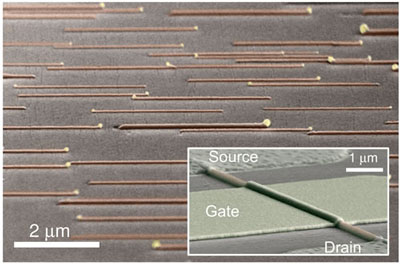
Self-assembled nanowires could make chips smaller and faster
Researchers at the University of Illinois have found a new way to make transistors smaller and faster. The technique uses self-assembled, self-aligned, and defect-free nanowire channels made of gallium arsenide.
April 20, 2009 Read more
$3 million NSF program uses Harry Potter to get nanoscience education into classrooms
Hoping that science will cast a spell on local middle and high school students, a University of Houston team is starting a program that will harness the magical draw of the Harry Potter series to make technical subjects resonate in local classrooms.
April 20, 2009 Read more
Carbon dioxide as a carbon source - a carbene catalyst opens new perspectives
Researchers have developed a novel reaction scheme by which CO2 can be efficiently converted into methanol under very mild conditions.
April 20, 2009 Read more
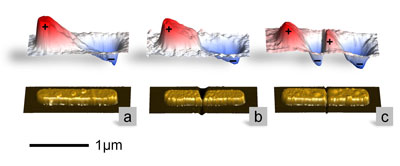
An innovative method for controlling light on the nanoscale
The method opens the door for targeted design of antenna-based applications including highly sensitive biosensors and extremely fast photodetectors, which could play an important role in future biomedical diagnostics and information processing.
April 19, 2009 Read more
New book: Biosensing Using Nanomaterials
This book introduces novel concepts in the area of bioanalysis based on nanomaterials, opening new opportunities for basic research and new tools for real bioanalytical applications.
April 17, 2009 Read more
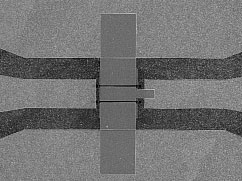
The world's smallest diamond transistor is just 50 nanometers long
Scientists at the University of Glasgow have developed the world's smallest diamond transistor.
April 17, 2009 Read more
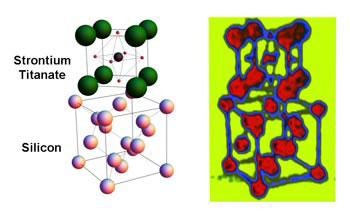
Materials researchers say rebooting your computer soon may be a thing of the past
The ferroelectric materials found in today's 'smart cards' used in subway, ATM and fuel cards soon may eliminate the time-consuming booting and rebooting of computer operating systems by providing an 'instant-on' capability as well as preventing losses from power outages.
April 17, 2009 Read more
New book covers physical and chemical aspects of organic electronics
In this book the principle problems related to using organic materials as semiconductors and to construct functioning devices will be addressed.
April 17, 2009 Read more
Salmonella uses 'nano-syringe' in its stealth attack
A single crafty protein allows the deadly bacterium Salmonella enterica to both invade cells lining the intestine and hijack cellular functions to avoid destruction.
April 17, 2009 Read more
Nanotechnology gets wooden planes airborne again
Wired is carrying a story on how researchers in Canada have unveiled plans for a factory that will use nanotechnology to extract cellulose from wood and use it to form composite materials for airplanes.
April 17, 2009 Read more
DOE makes supercomputer resources available to support high-impact science
The U.S. Department of Energy (DOE) announced today it is accepting proposals for a program to support high-impact scientific advances through the use of some of the world's most powerful supercomputers located at DOE national laboratories.
April 17, 2009 Read more
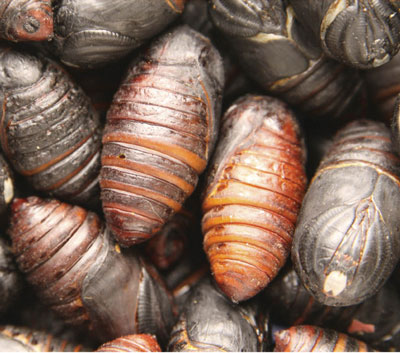
Metabolic fingerprinting
Recent advances in DNA sequencing have made it relatively easy to acquire the full genotype of an individual, but it is equally important to match those genes to their functions. One useful step is to build up a 'metabolic phenotype' outlining all the processes operating to sustain the individual?s life.
April 16, 2009 Read more
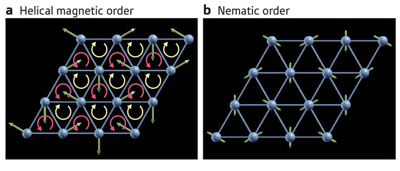
Researchers unveil the possible existence of a new magnetic phase in the spatial arrangements of electron spins
RIKEN scientists, in collaboration with researchers at the University of Tokyo, Japan, and Sungkyunkwan University, Korea, have unveiled the possible existence of a new magnetic phase in the spatial arrangements of electron spins.
April 16, 2009 Read more
 Subscribe to our Nanotechnology News feed