

Nanotechnology News – Latest Headlines
Conference on nanotechnology in health care to be held at Winthrop Rockefeller Institute
Leading researchers from Arkansas and around the nation will convene Jan. 8-10, 2009, for the Statewide Conference on Nanotechnology for Healthcare to be held at the University of Arkansas Winthrop Rockefeller Institute on Petit Jean Mountain.
December 23, 2008 Read more
New nanotechnology approach to help solar cells harvest light more efficiently
A paper in a special energy issue of Optics Express, the Optical Society's (OSA) open-access journal, describes a relatively new approach to solar cells: lacing them with nanoscopic metal particles.
December 23, 2008 Read more
Nanoparticle behavior in the body can be profiled with MRI
Taking advantage of the magnetic properties of one kind of nanoparticle, a team of investigators at Washington University in St. Louis has demonstrated that they can measure ADME quickly using magnetic resonance imaging (MRI).
December 23, 2008 Read more
Sensitive detection of cancer biomarkers with magnetic nanotags
A team led by researchers at Stanford University and the University of California, Santa Cruz, has developed a compact prototype detector that uses magnetic nanotechnology to spot cancer-associated proteins in a human blood serum sample, with much higher sensitivity than current detectors.
December 23, 2008 Read more
Integrated Blood-Barcode Chip enables cheap, fast blood tests
A new barcode chip developed by a multi-institutional team of investigators promises to revolutionize diagnostic medical testing. In less than 10 minutes and using just a pinprick?s worth of blood, the chip can measure the concentrations of dozens of proteins, including those that herald the presence of diseases such as cancer and heart disease.
December 23, 2008 Read more
Targeted nanoparticles deliver therapeutic DNA to cancer cells
Nanoparticles may solve the delivery issues of anticancer genes to tumor cells and two recently published studies, using two different types of nanoparticles, lend credence to that hypothesis.
December 23, 2008 Read more
Computers team up with evolution to design novel enzymes
The dream of designer drugs highly specific in action with zero side effects has come closer by combining atomic level computer prediction with natural selection in the laboratory.
December 23, 2008 Read more
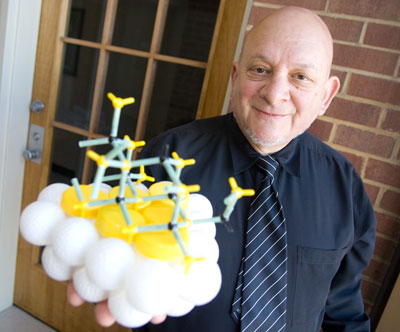
Uzi Landman at Georgia Tech honored with Humboldt Award
Uzi Landman, professor of physics at the Georgia Institute of Technology, is the recipient of a Humboldt Research Award for Senior U.S. Scientists. He will accept the award in June 2009 at the annual meeting of the Alexander von Humboldt Foundation, to be held in Berlin.
December 23, 2008 Read more
Controlling growth and crystal structure of nanowires down to the single atom level
Nanoscience researchers at Lund University in Sweden have shown that they can control the growth and crystal structure of nanowires down to the single atom level.
December 23, 2008 Read more
South Korea announces goal to be among top 3 nanotechnology nations by 2015
The South Korean government announced Tuesday its goal of becoming one of the top three nanotechnology industry leaders by capturing 15 percent of the global market by 2015.
December 22, 2008 Read more
New nanoparticle molecular imaging platform may readily be dapted for clinical use
Researchers have developed a new generation of microscopic particles for molecular imaging, constituting one of the first promising nanoparticle platforms that may be readily adapted for tumor targeting and treatment in the clinic.
December 22, 2008 Read more
US-Ukraine nanotechnology research center to focus on energy efficiency
The new center in Ukraine will focus on fundamental and applied research in nanotechnology for energy efficiency such as cathode, solar-electric and thermoelectric materials.
December 22, 2008 Read more
Space elevator groups form new international consortium
A coalition of leaders in the Space Elevator movement today announced the formation of The International Space Elevator Consortium (ISEC), a new independent group designed to promote standards and foster research relating to the construction of an Elevator to Space at the global level.
December 22, 2008 Read more
Participation in UAlbany nanotechnology outreach programs shows 25 percent increase over 2007
More than 2,500 elementary, middle- and high-school students throughout New York State participated in educational outreach programs and initiatives this year at the College of Nanoscale Science and Engineering of the University at Albany.
December 22, 2008 Read more
New paper systematically reviews carbon nanotube cytotoxicity
A new paper systematically reviews most of the experimental results reported in the literatures. The emphasis was placed on the examination of a variety of factors affecting CNTs cytotoxicity, including species of CNTs, impurities contained, lengths of CNTs, aspect ratios, chemical modification, and assaying methods of cytotoxicity
December 22, 2008 Read more
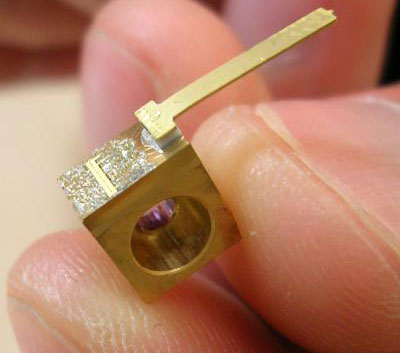
Princeton researchers discover new type of laser
A Princeton-led team of researchers has discovered an entirely new mechanism for making common electronic materials emit laser beams. The finding could lead to lasers that operate more efficiently and at higher temperatures than existing devices, and find applications in environmental monitoring and medical diagnostics.
December 22, 2008 Read more
 Subscribe to our Nanotechnology News feed