

Nanotechnology News – Latest Headlines
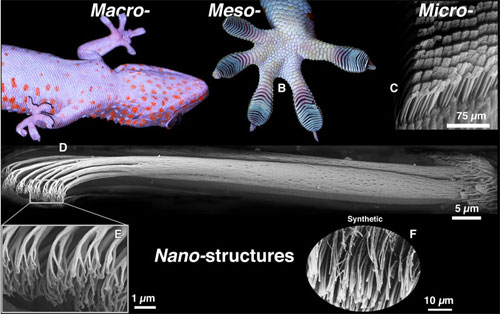
The pitter patter of little feet... climbing straight up a wall
New adhesive is first to mimic quick catch and rapid release traits of a gecko's foot.
January 29, 2008 Read more
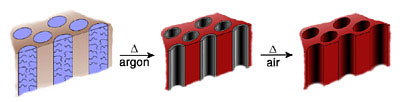
'One-pot' process can make more-efficient materials for fuel cells and solar cells
Cornell researchers have developed a 'one-pot' process to create porous films of crystalline metal oxides that could lead to more-efficient fuel cells and solar cells.
January 29, 2008 Read more
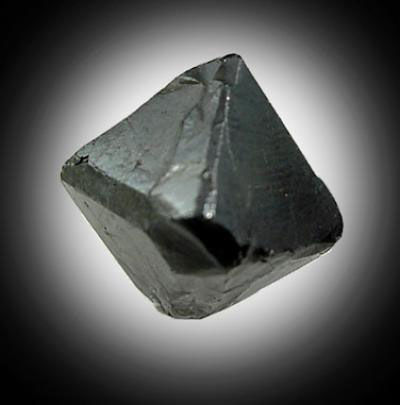
Magnetism loses under pressure
Researchers from the Carnegie Institution's Geophysical Laboratory, together with colleagues at the Advanced Photon Source of Argonne National Laboratory, have found that when magnetite is subjected to pressures between 120,000 and 160,000 times atmospheric pressure its magnetic strength declines by half. They discovered that the change is due to what is called electron spin pairing.
January 29, 2008 Read more
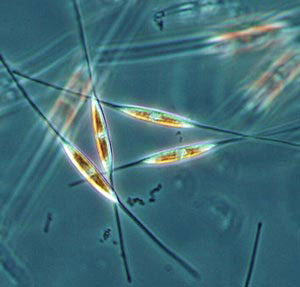
In diatom, scientists find genes that may level engineering hurdle
Denizens of oceans, lakes and even wet soil, diatoms are unicellular algae that encase themselves in intricately patterned, glass-like shells. Curiously, these tiny phytoplankton could be harboring the next big breakthrough in computer chips.
January 29, 2008 Read more
EPA launches nanotechnology monitoring project; Top government officials to speak at FDLI conference
Top officials at the agencies responsible for the regulation of nanotechnology products - including the Food and Drug Administration, Environmental Protection Agency, Occupational Safety and Health Administration and Department of Agriculture - will meet at a Food and Drug Law Institute conference to discuss their plans for managing and monitoring these products.
January 29, 2008 Read more
From here to there: nanotechnology roadmap
Foresight Nanotech Institute and Battelle unveil a Technology Roadmap for Productive Nanosystems.
January 29, 2008 Read more
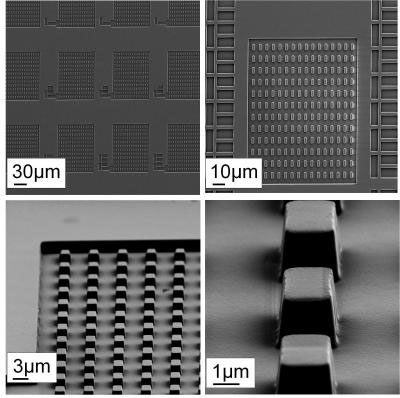
With a jolt, 'nanonails' go from repellant to wettable
Sculpting a surface composed of tightly packed nanostructures that resemble tiny nails, University of Wisconsin-Madison engineers and their colleagues from Bell Laboratories have created a material that can repel almost any liquid.
January 29, 2008 Read more
Nanotechnology: The big news is small
EPA has awarded 21 grants totaling $7.34 million to universities to investigate potential adverse health and environmental effects of manufactured nanomaterials.
January 29, 2008 Read more
FDA advisors declare 'FDA science and mission at risk'
The nation's public health is at risk, as are the regulatory systems that oversee the nation's drug and device supplies, according to an FDA Science Board report being presented at a House Energy and Commerce Committee hearing today. The committee attributed the deficiencies to soaring demands on the FDA; and resources that have not increased in proportion to those demands.
January 29, 2008 Read more
Lab on a chip developed for cheap, portable medical tests
University of Alberta researchers in Edmonton, Canada, have developed a portable unit for genetic testing about the size of a shoebox, which has the same capability as a lab full of expensive equipment.
January 29, 2008 Read more
New nanotube findings give boost to potential biomedical applications
Carbon nanotubes-cylinders are packed with the potential to be highly accurate vehicles for administering medicines and other therapeutic agents to patients. But a dearth of data about what happens to the tubes after they discharge their medical payloads has been a major stumbling block to progress. Now, Stanford researchers, who spent months tracking the tiny tubes inside mice, have found some answers.
January 29, 2008 Read more
What do orthodontics, private jets and car tires have in common?
MEMS (Micro-Electro-Mechanical Systems) are being put to use in some very innovative ways; find out more during the Bourne Report, a new weekly talk radio show that discusses the latest MEMS-based products, news and trends.
January 29, 2008 Read more
Fuel-cell cars race to reality
For those who dream of a cleaner, greener future thanks to nonpolluting technologies, recent auto shows have showcased some ideas. The biggest conglomeration was at the December 2006 Los Angeles Auto Show, where green machines were a dominant theme. The January Detroit auto show was more low-key on the green front, but there were a couple of intriguing, well-developed concepts on display there as well.
January 28, 2008 Read more
New kind of transistor radios shows capability of nanotube technology
Carbon nanotubes have a sound future in the electronics industry, say researchers who built the world's first all-nanotube transistor radios to prove it.
January 28, 2008 Read more
New polymer could improve semiconductor manufacturing, packaging
Researchers at Rensselaer Polytechnic Institute and Polyset Company have developed a new inexpensive, quick-drying polymer that could lead to dramatic cost savings and efficiency gains in semiconductor manufacturing and computer chip packaging.
January 28, 2008 Read more
INBT offers valuable undergraduate nanobiotechnology research opportunity
Undergraduate research experience provides students with lasting benefits. The Johns Hopkins Institute for NanoBioTechnology is pleased to offer a 10-week summer NanoBio research experience for undergraduates funded by a grant from the National Science Foundation.
January 28, 2008 Read more
 Subscribe to our Nanotechnology News feed