

Space Exploration News – Latest Headlines
 Subscribe to our Space Exploration News feed
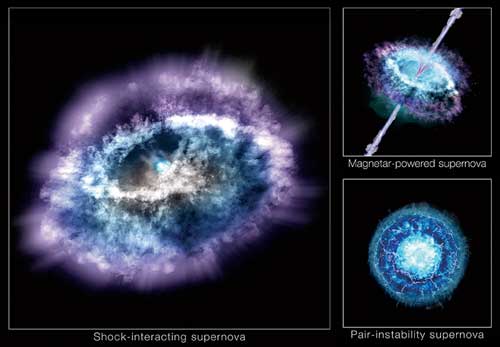
Ultraviolet light from superluminous supernova key to revealing explosion mechanism
An international team of researchers has discovered a way to use observations at ultraviolet (UV) wavelengths to uncover characteristics about superluminous supernovae previously impossible to determine.
September 7, 2017 Read more
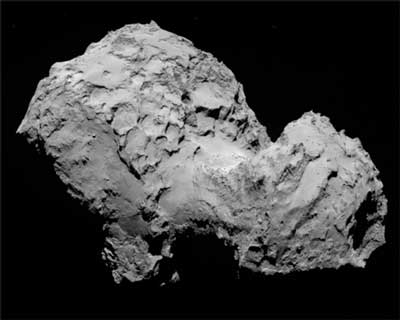
Does the organic material of comets predate our Solar System?
The Rosetta space probe discovered a large amount of organic material in the nucleus of comet 'Chury'. Two researchers advance the theory that this matter has its origin in interstellar space and predates the birth of the Solar System.
September 6, 2017 Read more
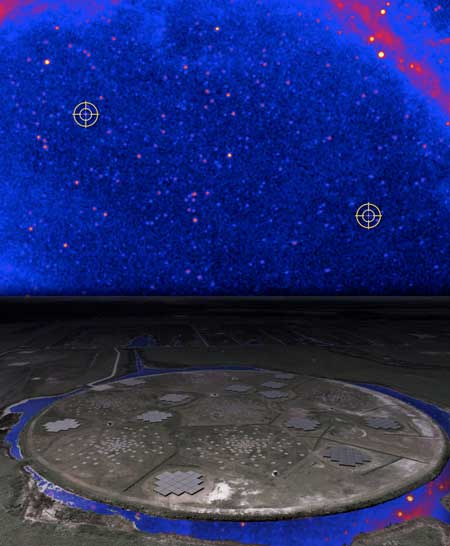
LOFAR radio telescope discovers record-breaking pulsar
Astronomers have discovered two rapidly rotating radio pulsars with the Low-Frequency Array (LOFAR) radio telescope by investigating unknown gamma-ray sources uncovered by NASA's Fermi Gamma-ray Space Telescope.
September 5, 2017 Read more
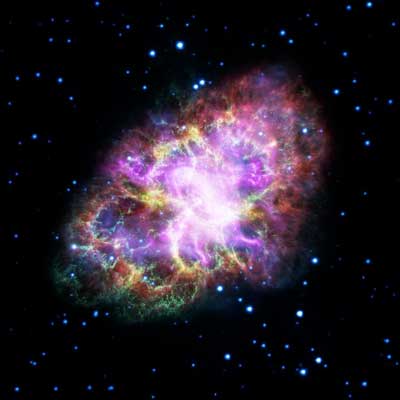
Stellar corpse sheds light on origin of cosmic rays
New research revealed that the entire zoo of electromagnetic radiation streaming from the Crab Nebula has its origin in one population of electrons and must be produced in a different way than scientists have.
September 4, 2017 Read more
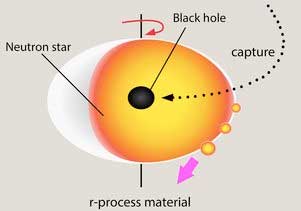
Physicists propose new theories of black holes from the very early universe
'Primordial black holes', believed to have formed shortly after the Big Bang, might explain how gold, platinum and uranium are created.
September 1, 2017 Read more
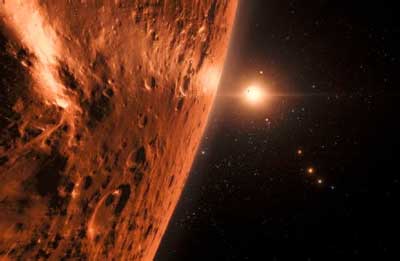
Hubble delivers first hints of possible water content of TRAPPIST-1 planets
There could be water on multiple Earth-sized planets orbiting the recently discovered TRAPPIST-1 dwarf star - making them potentially habitable - according to an international collaboration of researchers.
September 1, 2017 Read more
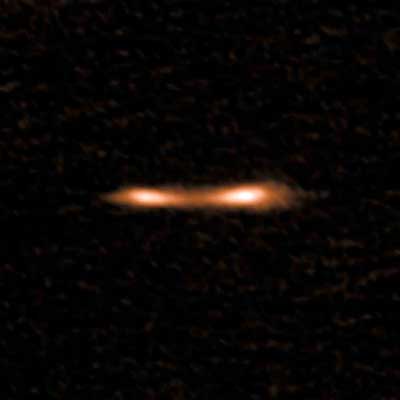
Star-formation 'fuel tanks' found around distant galaxies offer insights into history of universe
Astronomers uncovered star-forming 'fuel tanks' by the discovery of extensive regions of carbon hydride molecules in and around the galaxies.
September 1, 2017 Read more
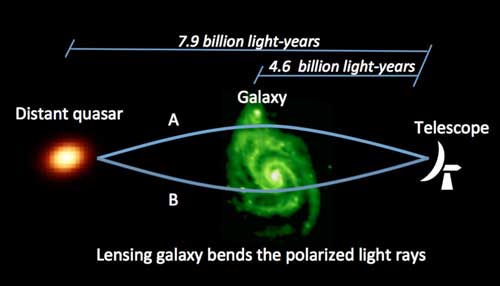
Magnetic fields in distant galaxy are new piece of cosmic puzzle
Astronomers have measured magnetic fields in a galaxy 4.6 billion light-years away - a big clue to understanding how magnetic fields formed and evolved over cosmic time.
August 30, 2017 Read more
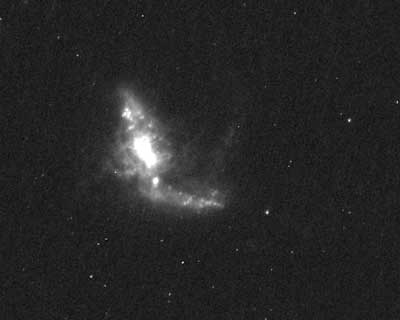
Researchers propose how the universe became filled with light
Black holes may have punctured darkened galaxies, allowing light to escape.
August 30, 2017 Read more
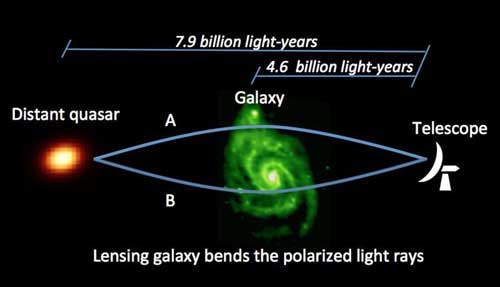
The detection of magnetic fields in a galaxy 5 billion light years away
Magnetic fields play an important role in the physics of the interstellar medium, but they are very difficult to observe at vast distances corresponding to large look-back times in the cosmic history. An international team of astronomers was able to measure the magnetic field in a galaxy beyond the local volume, as seen 4.6 billion light years away at a redshift of 0.439.
August 28, 2017 Read more
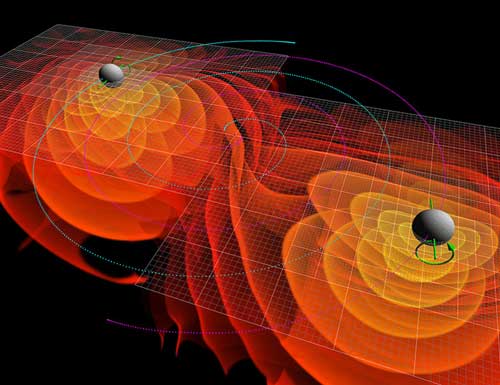
Gravitational waves are helping us crack the mystery of how pairs of black holes form
One of the key questions puzzling astrophysicists since the first gravitational wave detection is: how did these heavy black hole pairs get close enough to merge?
August 23, 2017 Read more
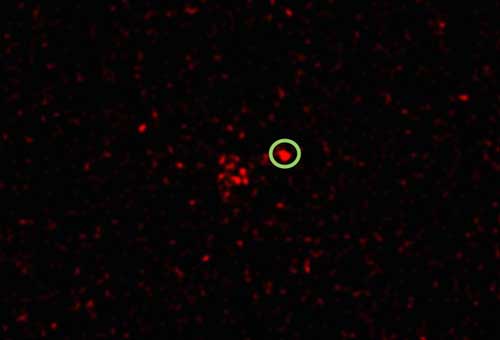
Scientists detect first X-rays from mystery supernovas
Exploding stars carry a cloak of dense material that puzzles astronomers.
August 23, 2017 Read more
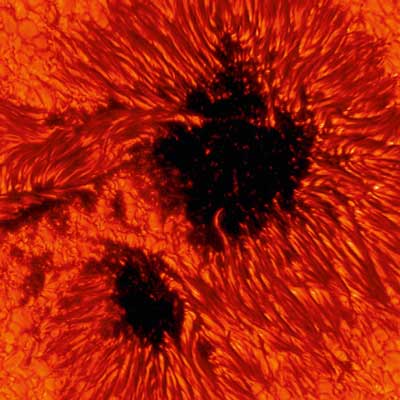
Unleashed magnetic power
The spots on the surface of our Sun bear witness to the activity in its interior.
August 23, 2017 Read more
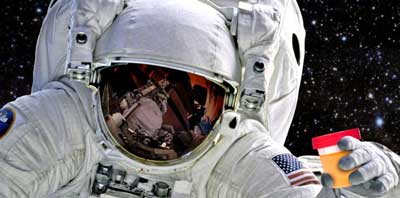
Turning human waste into plastic, nutrients could aid long-distance space travel
Imagine you're on your way to Mars, and you lose a crucial tool during a spacewalk. Not to worry, you'll simply re-enter your spacecraft and use some microorganisms to convert your urine and exhaled carbon dioxide into chemicals to make a new one.
August 22, 2017 Read more
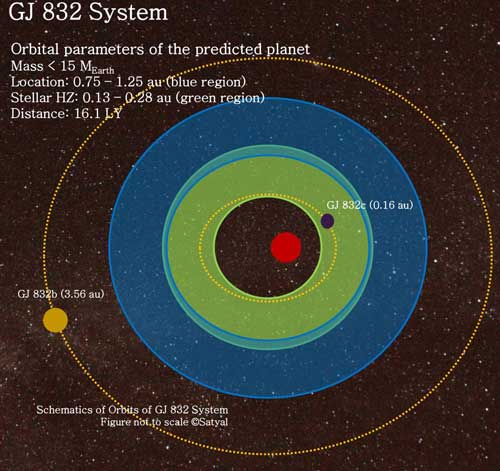
Astrophysicists predict Earth-like planet in star system only 16 light years away
Their computations revealed that an additional Earth-like planet with a dynamically stable configuration may be residing at a distance ranging from 0.25 to 2.0 astronomical unit (AU) from Gliese 832.
August 17, 2017 Read more
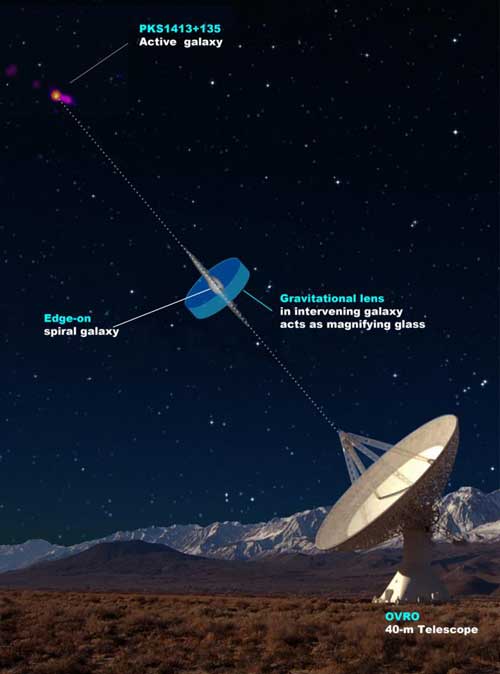
Cosmic magnifying lens reveals inner jets of black holes
New radio observations show clumps of gas streaming from supermassive black hole.
August 15, 2017 Read more
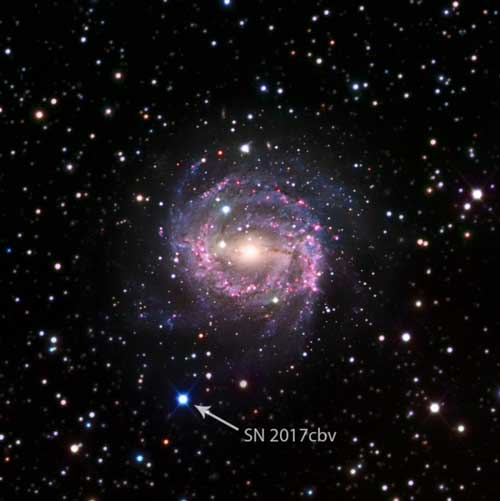
A fleeting blue glow
Observations of a supernova colliding with a nearby companion star take astrophysicists by surprise.
August 14, 2017 Read more
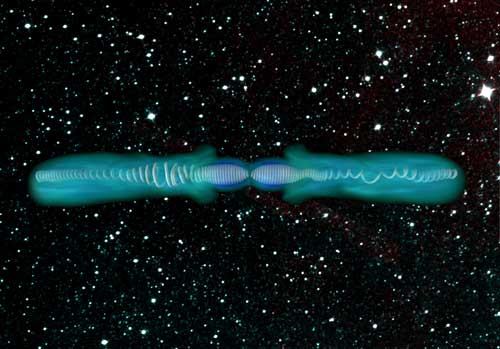
New 3-D simulations show how galactic centers cool their jets
Theories and models show how instabilities develop in extreme energy releases from black holes.
August 14, 2017 Read more