

Space Exploration News – Latest Headlines
 Subscribe to our Space Exploration News feed
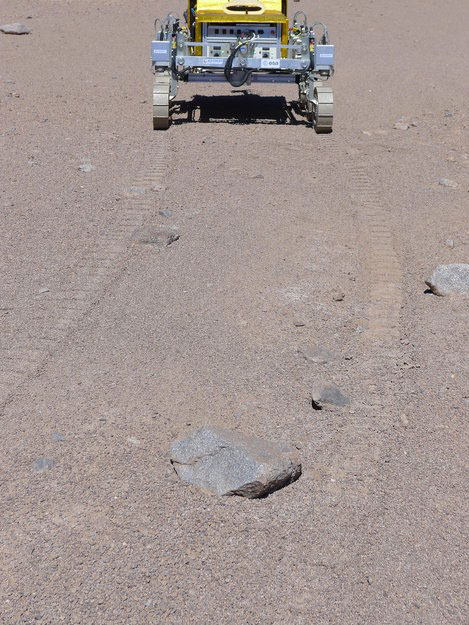
ESA's test rover begins exploring Atacama Desert
ESA's test rover has been fitted with scientific instruments and made its first tracks in the sands of Chile's Atacama Desert. Meanwhile, team members have explored the area to select a suitable site for testing, flying a drone to produce an aerial map.
October 9, 2013 Read more
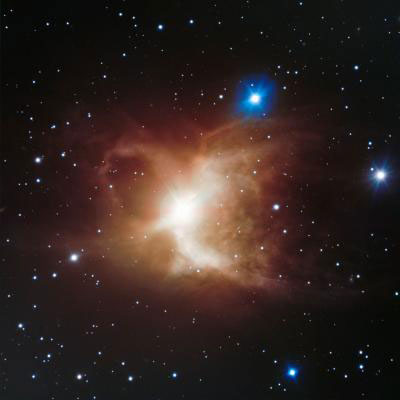
A close look at the Toby Jug Nebula
ESO's Very Large Telescope has captured a remarkably detailed image of the Toby Jug Nebula, a cloud of gas and dust surrounding a red giant star. This view shows the characteristic arcing structure of the nebula, which, true to its name, does indeed look a little like a jug with a handle.
October 9, 2013 Read more
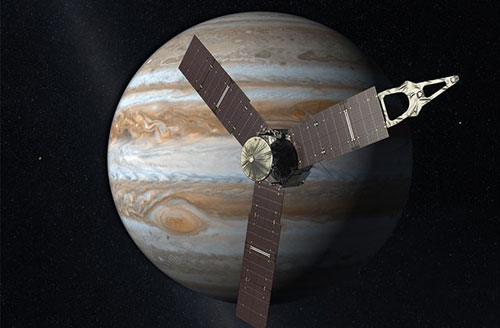
Juno spacecraft slingshots past Earth on its way to Jupiter
NASA's Juno spacecraft will be passing within some 350 miles of Earth's surface Oct. 9 before it slingshots off into space on an historic exploration of Jupiter.
October 8, 2013 Read more

First ever evidence of a comet striking Earth
The first ever evidence of a comet entering Earth's atmosphere and exploding, raining down a shock wave of fire which obliterated every life form in its path, has been discovered by a team of South African scientists and international collaborators.
October 8, 2013 Read more
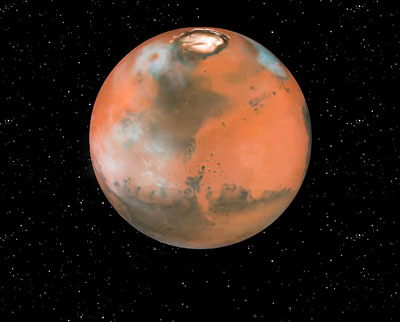
Making Martian clouds on Earth
Cloud-chamber experiments show that clouds on Mars form in much more humid conditions than clouds on Earth.
October 8, 2013 Read more
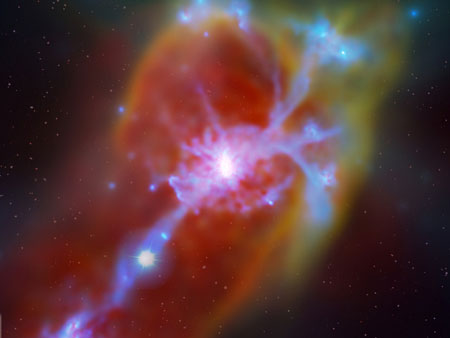
A galaxy refuels
Astronomers observe distant galaxy powered by primordial cosmic fuel.
October 7, 2013 Read more
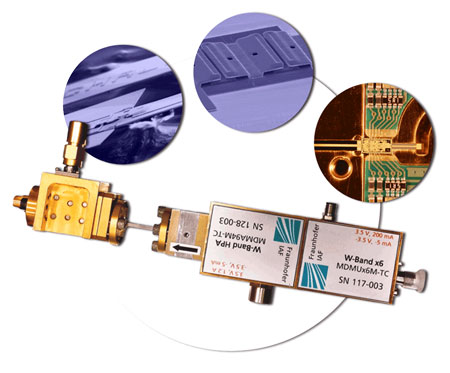
Terahertz sensor aiming for Jupiter's moons
A high performance terahertz receiver aiming for space missions such as ESA's 'Jupiter icy moons explorer' has been developed in a joint European effort, led by Chalmers University of Technology.
October 7, 2013 Read more
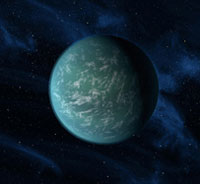
Looking at planets in other solar systems
An EU-funded project is developing direct methods for actually acquiring an image of planets. We could soon be one step closer to answering the age-old question of whether life exists on any other planet beyond Earth.
October 4, 2013 Read more
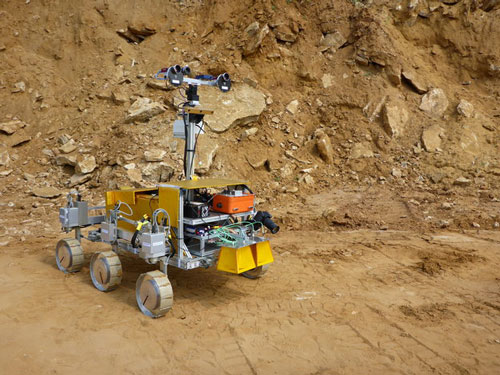
Desert trial for ESA Mars rover
Next week will see ESA's most ambitious planetary rover test yet. Robotic exploration of a Mars-like desert in South America will be overseen from the UK, providing experience for future missions to the Red Planet.
October 4, 2013 Read more
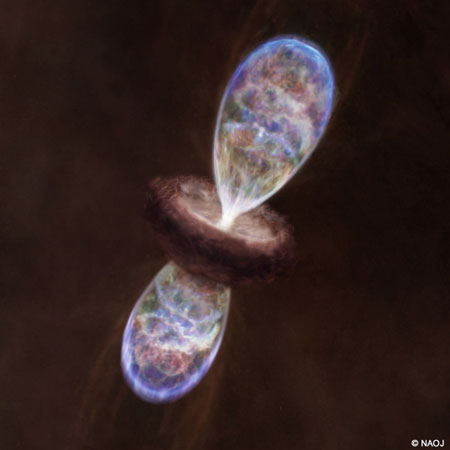
ALMA discovers large 'hot' cocoon around a small baby star
An international research team, led by researcher at the University of Electro-Communication observed an infrared dark cloud G34.43+00.24 MM3 with ALMA and discovered a baby star surrounded by a large hot cloud. This hot cloud is about ten times larger than those found around typical solar-mass baby stars.
October 4, 2013 Read more
Researchers find that bright nearby double star Fomalhaut is actually a triple
The nearby star system Fomalhaut - of special interest for its unusual exoplanet and dusty debris disk - has been discovered to be not just a double star, as astronomers had thought, but one of the widest triple stars known.
October 4, 2013 Read more
Researchers propose new theory to explain seeds of life in asteroids
A new look at the early solar system introduces an alternative to a long-taught, but largely discredited, theory that seeks to explain how biomolecules were once able to form inside of asteroids.
October 1, 2013 Read more
Student-built satellite launched into Earth orbit
A small satellite designed and built by a team of University of Colorado Boulder students to better understand how atmospheric drag can affect satellite orbits was successfully launched from Vandenberg Air Force Base in California Sunday morning.
October 1, 2013 Read more
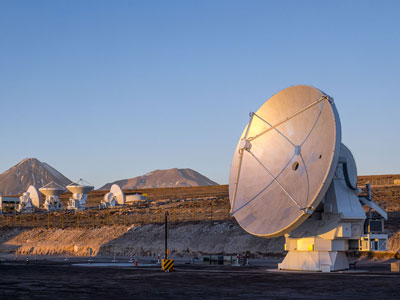
Final antenna delivered to ALMA
The final antenna for the Atacama Large Millimeter/submillimeter Array (ALMA) project has just been handed over to the ALMA Observatory. The 12-metre-diameter dish was manufactured by the European AEM Consortium and also marks the successful delivery of a total of 25 European antennas.
October 1, 2013 Read more
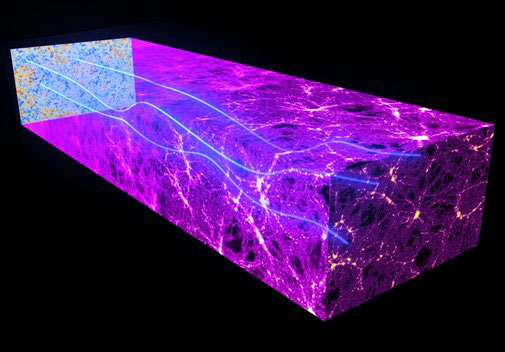
Herschel helps find elusive signals from the early universe
Using a telescope in Antarctica and ESA's Herschel space observatory, astronomers have made the first detection of a subtle twist in the relic radiation from the Big Bang, paving the way towards revealing the first moments of the Universe's existence.
October 1, 2013 Read more
More accurate estimate of amount of water on surface layer of Mars
A new study reveals that according to observations made by the NASA rover Curiosity, the surface layer of the Gale crater near the Martian equator has a water content of about two percent, which is at the lower end of previous estimates.
October 1, 2013 Read more
Researchers create first cloud map of an exoplanet outside our solar system
Astronomers using data from NASA's Kepler and Spitzer space telescopes have created the first cloud map of a planet beyond our solar system, a sizzling, Jupiter-like world known as Kepler-7b.
September 30, 2013 Read more
Cassini spacecraft finds ingredient of household plastic on Titan (w/video)
NASA's Cassini spacecraft has detected propylene, a chemical used to make food-storage containers, car bumpers and other consumer products, on Saturn's moon Titan.
September 30, 2013 Read more