

Space Exploration News – Latest Headlines
 Subscribe to our Space Exploration News feed
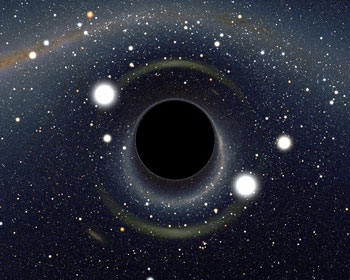
Do black holes have hair?
A black hole. A simple and clear concept, at least according to the hypothesis by Roy Kerr, who in 1963 proposed a 'clean' black hole model, which is the current theoretical paradigm. From theory to reality things may be quite different. According to a new research, black holes may be much 'dirtier' than what Kerr believed.
September 30, 2013 Read more
Google Lunar XPRIZE appoints international space experts to Judging Panel
Google Lunar XPRIZE has announced the line-up for its Judging Panel: eight international experts with experience from iconic space missions including Apollo, the Hubble Space Telescope, the Huygens probe to Titan, the Swift gamma-ray burst mission and the Curiosity Mars rover.
September 30, 2013 Read more
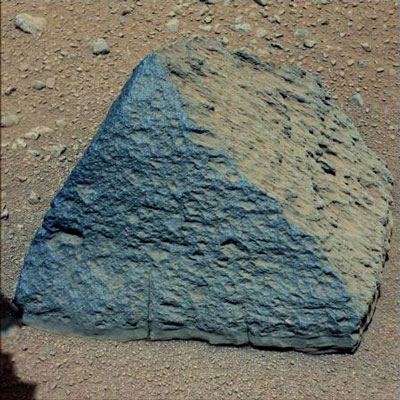
Scientists find a martian igneous rock that is surprisingly Earth-like
A team of Caltech-led scientists reports its analysis of a surprisingly Earth-like martian rock, discovered by the Mars Science Laboratory rover Curiosity, that offers new insight into the history of Mars's interior and suggests parts of the Red Planet may be more like our own than we ever knew.
September 27, 2013 Read more
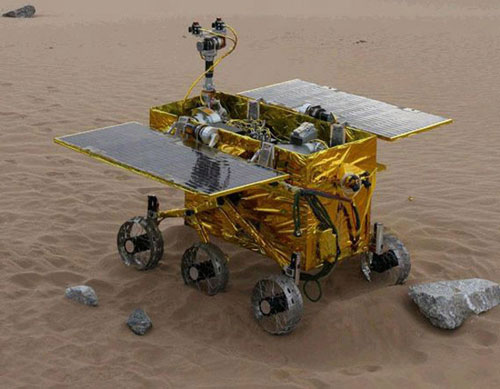
China unveils its first and unnamed moon rover
Chinese scientists described the country's first moon rover on Wednesday and invited the global public to come up with a name for it.
September 27, 2013 Read more
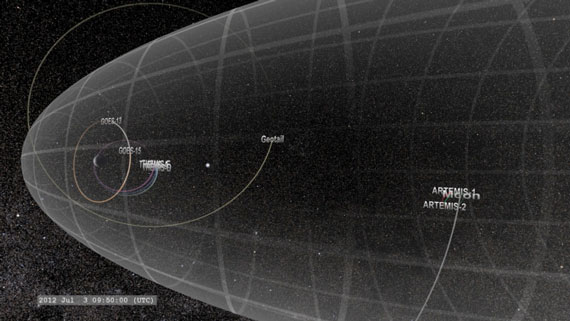
Several NASA spacecraft track energy through space
Scientists have provided the most comprehensive details yet of the journey energy from the sun takes as it hurtles around Earth's magnetosphere. Understanding the changes energy from the sun undergoes as it travels away and out into space is crucial for scientists to achieve their goal of some day predicting the onset of space weather that creates effects such as the shimmering lights of the aurora or interruptions in radio communications at Earth.
September 26, 2013 Read more
Martian chemical complicates hunt for life's clues
The quest for evidence of life on Mars could be more difficult than scientists previously thought. Researchers detail the investigation of a chemical in the Martian soil that interferes with the techniques used by the Curiosity rover to test for traces of life. The chemical causes the evidence to burn away during the tests.
September 26, 2013 Read more
Observations reveal critical interplay of interstellar dust, hydrogen
For astrophysicists, the interplay of hydrogen - the most common molecule in the universe - and the vast clouds of dust that fill the voids of interstellar space has been an intractable puzzle of stellar evolution.
September 26, 2013 Read more
Mars rover Curiosity finds water in first sample of planet surface
The first scoop of soil analyzed by the analytical suite in the belly of NASA's Curiosity rover reveals that fine materials on the surface of the planet contain several percent water by weight.
September 26, 2013 Read more
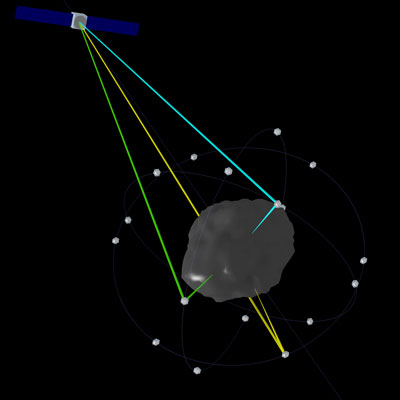
Space-based lasers key to proposed asteroid defense system
A space-based laser system proposed to NASA by University of Alabama in Huntsville researchers could be a cost-effective way to nudge small asteroids away from a collision course with Earth.
September 26, 2013 Read more
Understanding clouds as a necessary ingredient in the search for life: Case study of the exoplanet Kepler-7b
An international team, with participation from the University of Bern, has produced the first map of clouds on an exoplanet using the Kepler Space Telescope. Studying the atmospheres of exoplanets is the path towards ultimately identifying life elsewhere in the Universe. Understanding the role of clouds in exoplanet atmospheres is a necessary ingredient in the cosmic hunt for life.
September 26, 2013 Read more
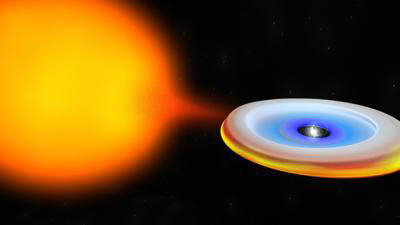
'Jekyll and Hyde' star morphs from radio to X-ray pulsar and back again
Astronomers have uncovered the strange case of a neutron star with the peculiar ability to transform from a radio pulsar into an X-ray pulsar and back again. This star's capricious behavior appears to be fueled by a nearby companion star and may give new insights into the birth of millisecond pulsars.
September 25, 2013 Read more
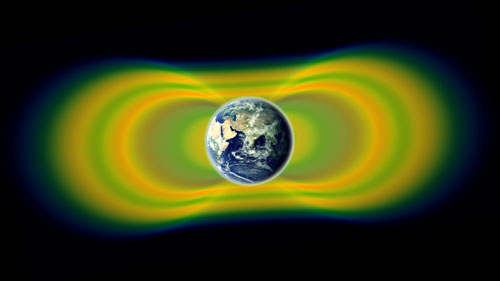
Ultra-fast electrons explain third radiation ring around Earth (w/video)
In the already complicated science of what creates -- and causes constant change in -- two giant doughnuts of radiation surrounding Earth, researchers have added a new piece of information: Some of the electrons reach such enormous energies that they are driven by an entirely different set of physical processes.
September 24, 2013 Read more
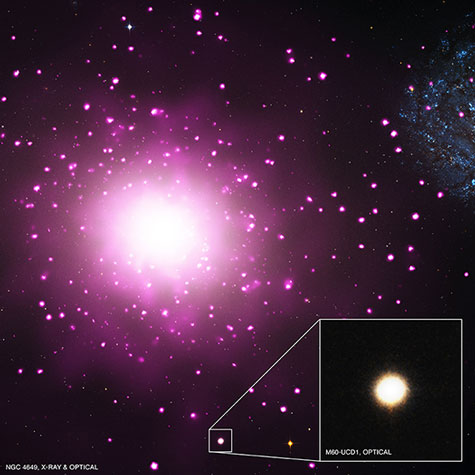
Evidence for densest galaxy In the nearby universe
The densest galaxy in the nearby Universe may have been found. Packed with an extraordinary number of stars, this unusual galaxy is providing astronomers with clues to its intriguing past and how it fits into the galactic evolutionary chain.
September 24, 2013 Read more
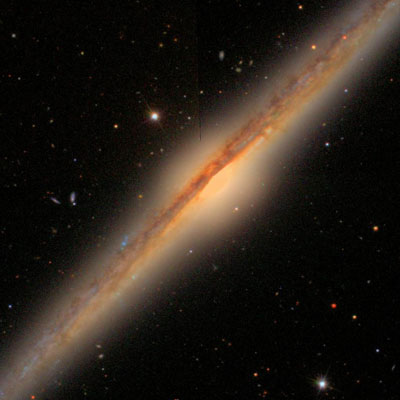
Researchers publish enormous catalog of more than 300,000 nearby galaxies
More than 83,000 volunteer citizen scientists. Over 16 million galaxy classifications. Information on more than 300,000 galaxies. This is what you get when you ask the public for help in learning more about our universe.
September 24, 2013 Read more
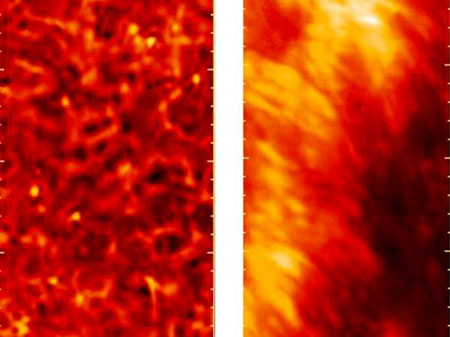
A unique glance into the Sun's atmosphere
Data of the Sunrise observatory provide first detailed images of the chromosphere in ultraviolet light.
September 24, 2013 Read more
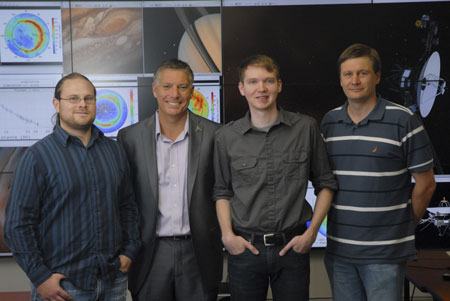
Voyager 1 magnetic data surprise intrigues researchers
A University of Alabama graduate student and a recent UAH doctoral graduate are exploring surprising data from Voyager 1's crossing of the heliopause into the interstellar medium of our galaxy.
September 24, 2013 Read more
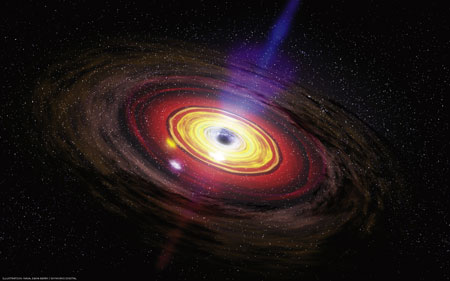
Colossal explosion from supermassive black hole at centre of galaxy revealed (w/video)
Two million years ago a supermassive black hole at the heart of our galaxy erupted in an explosion so immensely powerful that it lit up a cloud 200,000 light years away, a team of researchers led by the University of Sydney has revealed.
September 24, 2013 Read more
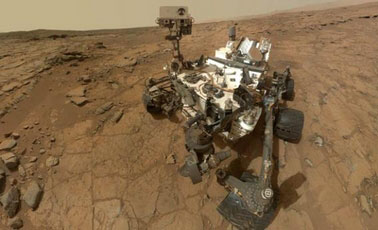
The future of space exploration is robotic
Responding to a space exploration roadmap recently released by NASA and the International Space Exploration Coordination Group that calls for robotic and human missions to near-Earth asteroids, the Moon and Mars, Srilanth Saripalli argues that most of the arguments in favor of manned space exploration are based on near-sighted assumptions about emerging developments in robotics.
September 23, 2013 Read more