

Space Exploration News – Latest Headlines
 Subscribe to our Space Exploration News feed
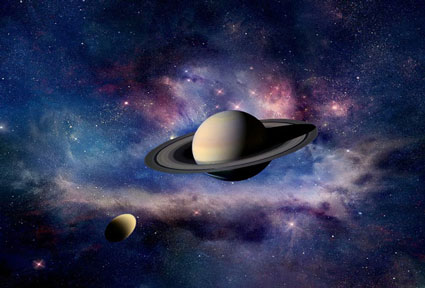
Titan, Saturn's largest moon, icier than thought
Scientists have long suspected that a vast ocean of liquid water lies under the crusty exterior of Titan, Saturn's largest moon. New analysis suggests that the internally generated heat that keeps that ocean from freezing relies on the moon's interactions with Saturn and its other moons.
December 4, 2012 Read more
Planet rings could be behind the formation of solar system satellites
Two French researchers have recently proposed the first ever model explaining how the great majority of regular satellites in our solar system were formed out of planet rings. The model, the only one of its kind, was first tested in 2010 on Saturn's moons.
December 4, 2012 Read more
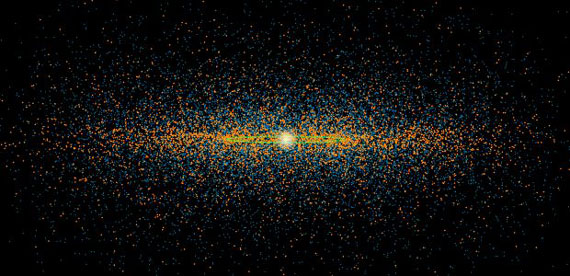
Improving software for asteroid detection
Alon Efrat and Jonathan Myers of the University of Arizona computer science department are working under a new grant to help improve methods for discovering asteroids on paths toward Earth.
December 4, 2012 Read more
Chinese astronauts may grow vegetables on Moon
Chinese astronauts may get fresh vegetables and oxygen supplies by gardening in extraterrestrial bases in the future, an official said after a just-concluded lab experiment in Beijing.
December 4, 2012 Read more
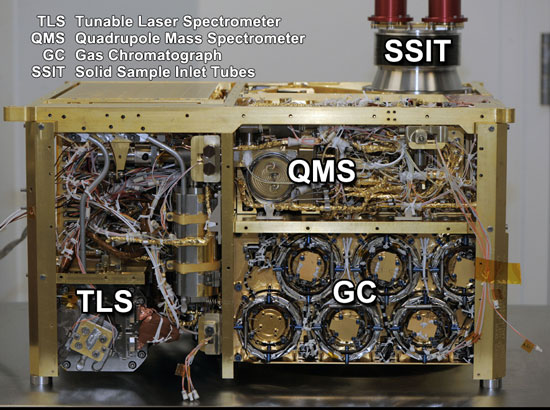
Curiosity shakes, bakes, and tastes Mars with SAM
NASA's Curiosity rover analyzed its first solid sample of Mars in Nov. with a variety of instruments, including the Sample Analysis at Mars (SAM) instrument suite.
December 3, 2012 Read more
Search for life suggests solar systems more habitable than ours
Scattered around the Milky Way are stars that resemble our own sun - but a new study is finding that any planets orbiting those stars may very well be hotter and more dynamic than Earth.
December 3, 2012 Read more
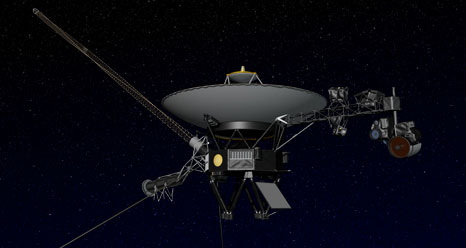
NASA Voyager 1 probe encounters new region in deep space
NASA's Voyager 1 spacecraft has entered a new region at the far reaches of our solar system that scientists feel is the final area the spacecraft has to cross before reaching interstellar space.
December 3, 2012 Read more
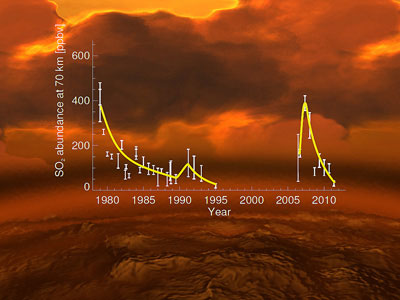
Have Venusian volcanoes been caught in the act?
Six years of observations by ESA's Venus Express have shown large changes in the sulphur dioxide content of the planet's atmosphere, and one intriguing possible explanation is volcanic eruptions.
December 3, 2012 Read more
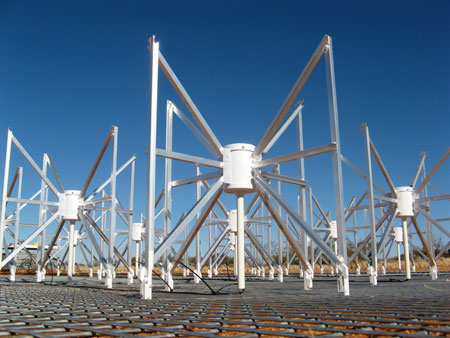
New radio telescope could save world billions
A small pocket of Western Australia's remote outback is set to become the eye on the sky and could potentially save the world billions of dollars. The Murchison Widefield Array (MWA) radio telescope, unveiled today, Friday 30 November, will give the world a dramatically improved view of the Sun and provide early warning to prevent damage to communication satellites, electric power grids and GPS navigation systems.
November 30, 2012 Read more
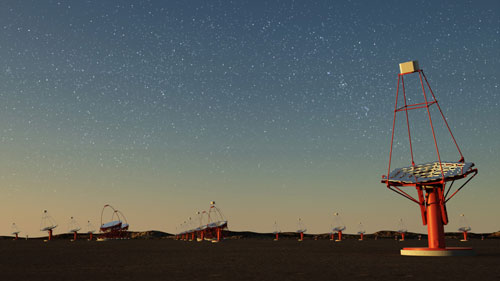
European research agencies create sustainable entity for astroparticle physics
European funding agencies for astroparticle physics celebrate today the successful work of the ASPERA European funded network and the launch of the newly founded APPEC, the Astroparticle Physics European Consortium.
November 30, 2012 Read more
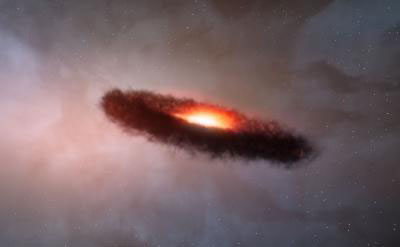
Even brown dwarfs may grow rocky planets
ALMA sizes up grains of cosmic dust around failed star.
November 30, 2012 Read more
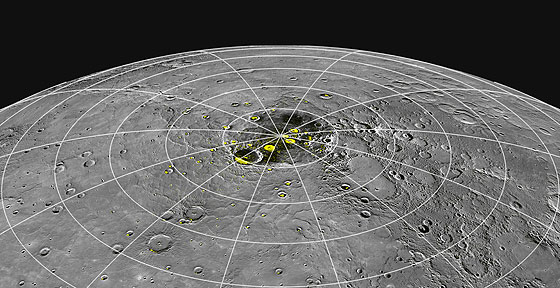
Scientists discover water ice on Mercury
Ice and organic material may have been carried to the planet by passing comets.
November 30, 2012 Read more
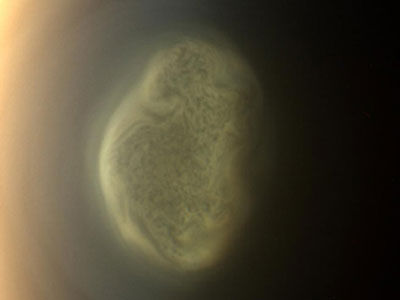
NASA's Cassini sees abrupt turn in Titan's atmosphere
Data from NASA's Cassini spacecraft tie a shift in seasonal sunlight to a wholesale reversal, at unexpected altitudes, in the circulation of the atmosphere of Saturn's moon Titan.
November 29, 2012 Read more
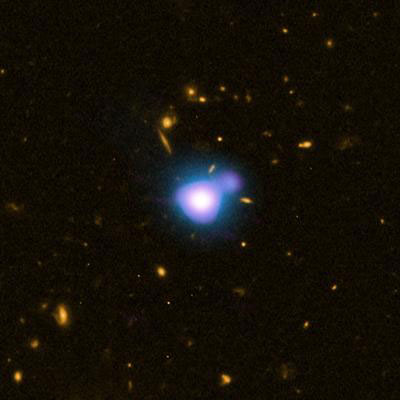
Record-setting X-ray jet discovered
A jet of X-rays from a supermassive black hole 12.4 billion light years from Earth has been detected by NASA's Chandra X-ray Observatory. This is the most distant X-ray jet ever observed and gives astronomers a glimpse into the explosive activity associated with the growth of supermassive black holes in the early universe.
November 28, 2012 Read more
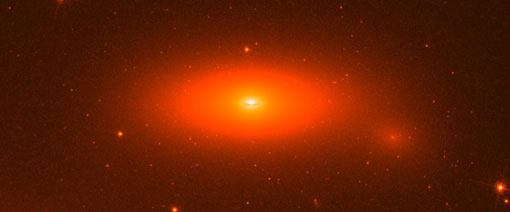
Giant black hole could upset galaxy evolution models
A group of astronomers have discovered a black hole that could shake the foundations of current models of galaxy evolution. At 17 billion times the mass of the Sun, its mass is much greater than current models predict - in particular in relation to the mass of its host galaxy.
November 28, 2012 Read more
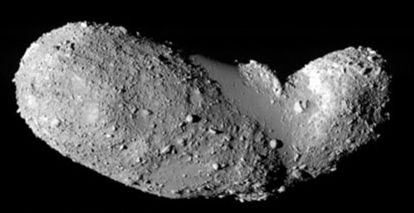
Asteroid dust from space
To the naked eye there is nothing to see, and yet the small transparent container holds something never observed before. For the first time, scientists are studying asteroid dust collected by a spacecraft and returned to Earth.
November 28, 2012 Read more
Researchers use 3-D printer to make parts from moon rock
Imagine landing on the moon or Mars, putting rocks through a 3-D printer and making something useful - like a needed wrench or replacement part.
November 28, 2012 Read more
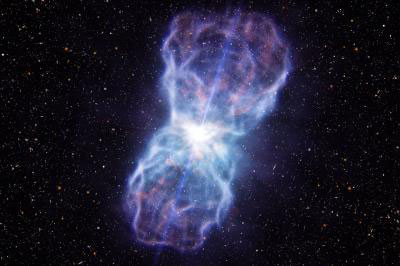
Biggest black hole blast discovered
New European Southern Observatory observations reveal most powerful quasar outflow ever found.
November 28, 2012 Read more