

Space Exploration News – Latest Headlines
 Subscribe to our Space Exploration News feed
NREL updates solar radiation database
The National Renewable Energy Laboratory (NREL) and collaborators released a 20-year updated version of the U.S. National Solar Radiation Database, a web-based technical report that provides critical information about solar and meteorological data for 1,454 locations in the U.S. and its territories.
November 28, 2012 Read more
NASA seeks concepts for innovative uses of large space telescopes
NASA is exploring options for innovative and imaginative uses of two large space telescopes recently transferred to the agency. In a request for information (RFI) published Monday, NASA seeks information about system concepts and architectures that would take advantage of these assets to address NASA's goals in astrophysics, heliophysics, planetary sciences, and human spaceflight.
November 28, 2012 Read more
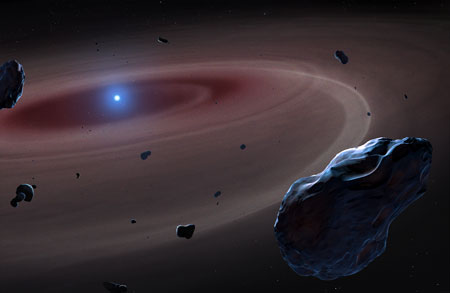
Graphite experiment shines new light on giant planets, white dwarfs, and laser-driven fusion
An international team led by researchers from the University of Warwick and Oxford University is now dealing with unexpected results of an experiment with strongly heated graphite (up to 17,000 degrees Kelvin). The findings may pose a new problem for physicists working in laser-driven nuclear fusion and may also lead astrophysicists to revise our understanding of the life cycle of giant planets and stars.
November 28, 2012 Read more
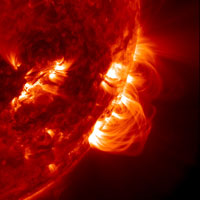
One step closer to "space climate" forecasting
Scientists have compared cycles of solar magnetic activity over the past 10,000 years - as reconstructed from ice cores - with the action of the planets. The agreement observed is very striking, raising hopes that our ability to forecast periods of intense solar activity may ultimately be improved.
November 28, 2012 Read more
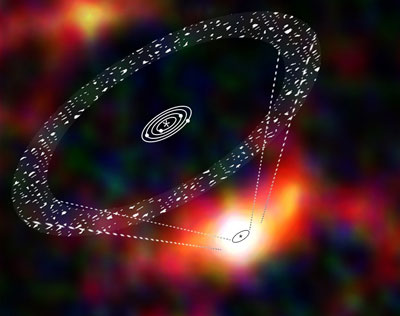
Do missing Jupiters mean massive comet belts?
Using ESA's Herschel space observatory, astronomers have discovered vast comet belts surrounding two nearby planetary systems known to host only Earth-to-Neptune-mass worlds. The comet reservoirs could have delivered life-giving oceans to the innermost planets.
November 27, 2012 Read more
Tracking pollution from outer space
Researchers use NASA satellites to measure pollution hovering over world's megacities.
November 27, 2012 Read more
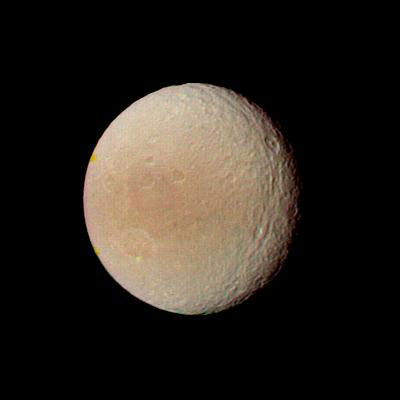
Cassini finds a video gamer's paradise at Saturn
Call it "PAC-MAN, the Sequel." Scientists with NASA's Cassini mission have spotted a second feature shaped like the 1980s video game icon in the Saturn system, this time on the moon Tethys.
November 26, 2012 Read more
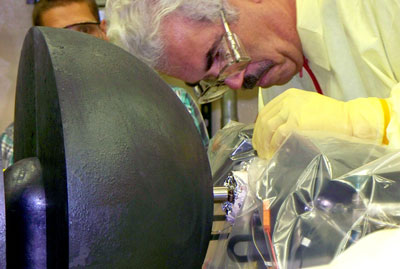
Researchers test novel power system for space travel (w/video)
The research team recently demonstrated the first use of a heat pipe to cool a small nuclear reactor and power a Stirling engine.
November 26, 2012 Read more
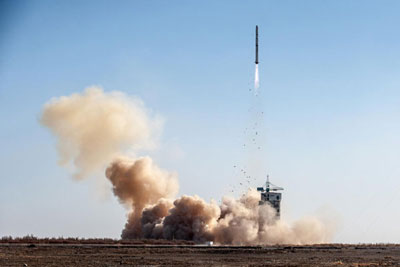
China successfully launches remote sensing satellite
The Jiuquan Satellite Launch Center confirmed that China successfully launched the Yaogan XVI remote-sensing satellite into space at 12:06 am Sunday.
November 26, 2012 Read more
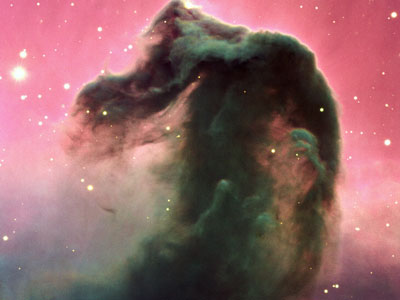
Cosmic refinery
Using IRAM's 30m-telescope, astronomers find indications for vast petroleum reservoirs in the Horsehead Nebula.
November 23, 2012 Read more
Martian history: Finding a common denominator with Earth's
A team of scientists studied the hydrogen in water from the Martian interior and found that Mars formed from similar building blocks to that of Earth, but that there were differences in the later evolution of the two planets. This implies that terrestrial planets, including Earth, have similar water sources - chondritic meteorites.
November 22, 2012 Read more
Magnesium oxide: From Earth to super-Earth
The mantles of Earth and other rocky planets are rich in magnesium and oxygen. Due to its simplicity, the mineral magnesium oxide is a good model for studying the nature of planetary interiors. New work from a team led by Carnegie's Stewart McWilliams studied how magnesium oxide behaves under the extreme conditions deep within planets and found evidence that alters our understanding of planetary evolution.
November 22, 2012 Read more
Meteosat Third Generation agreement signed at Ministerial meeting
The European Space Agency and EUMETSAT today signed the agreement on the Meteosat Third Generation weather satellite system at the ESA Ministerial Council in Naples, Italy.
November 22, 2012 Read more
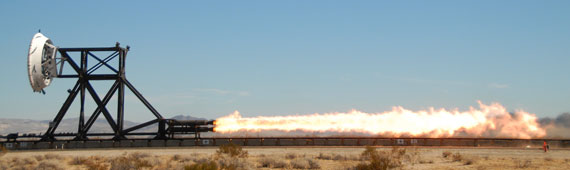
Supersonic decelerator project 'on track' for success
NASA has completed three key milestones in its development of new atmospheric deceleration technologies to support exploration missions across the solar system.
November 21, 2012 Read more
Europe Space Agency sets 10-billion-euro space budget
Members of European Space Agency (ESA) on Wednesday approved a multi-year budget of 10 billion euros ($12.3 billion), ESA director general Jean-Jacques Dordain said, hailing this as a 'big success'.
November 21, 2012 Read more
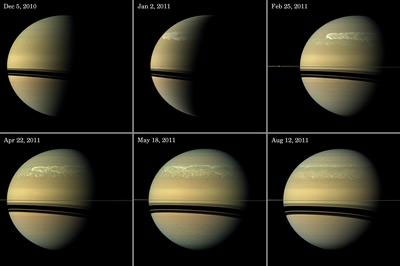
Peeking into Saturn's super storm
Astronomers have gotten a first look at the aftermath of Saturn's 'Great Springtime Storm' thanks to the heat-seeking capabilities of the international Cassini spacecraft and two ground-based telescopes. Even though the cosmic event is hidden to the naked eye, a giant oval vortex continues to exist long after the visible effects of the storm have subsided.
November 20, 2012 Read more
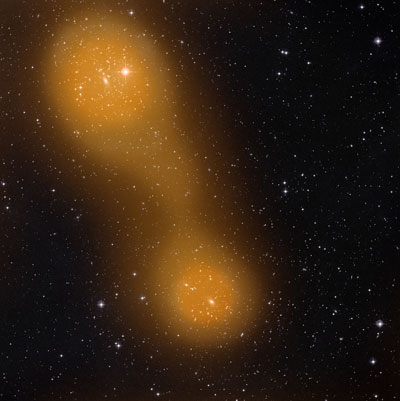
Planck spots hot gas bridging galaxy cluster pair
ESA's Planck space telescope has made the first conclusive detection of a bridge of hot gas connecting a pair of galaxy clusters across 10 million light-years of intergalactic space.
November 20, 2012 Read more
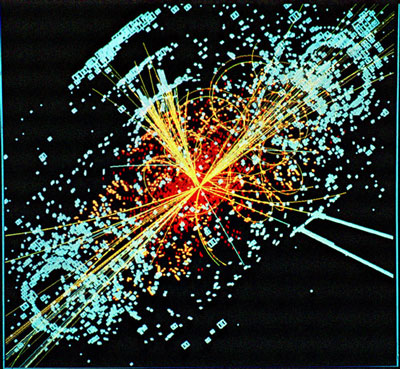
Higgs Boson: Mysterious particle could help unlock secrets of the universe
The search for a mysterious subatomic particle can certainly involve some enormous tools, not to mention a multitude of scientists. The effort to find the elusive "Higgs boson" includes over 5,800 scientists from 56 countries. It's a subatomic particle that gives other particles, such as quarks and electrons, their mass.
November 20, 2012 Read more