High-quality microwave signals generated from tiny photonic chip
 Researchers create a compact, all-optical device with the lowest microwave noise ever achieved for an integrated chip.
Mar 19th, 2024
Read more
Researchers create a compact, all-optical device with the lowest microwave noise ever achieved for an integrated chip.
Mar 19th, 2024
Read more Understanding electron behavior and surface structure of triphenylene thin film molecules deposited on graphite substrates under light irradiation.
Mar 19th, 2024
Read more The novel approach helps advance wireless sensor technology and paves the way for one day using large populations of inconspicuous sensors in implantable and wearable biomedical microdevices.
Mar 19th, 2024
Read more Using ultrahigh-intensity x-ray beams can cause the intensity of diffraction patterns from samples to drop.
Mar 19th, 2024
Read more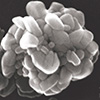 New process can accelerate the production of complex materials needed to advance photonics technologies.
Mar 19th, 2024
Read more Experiment shows heat and magnetic fields transform spin textures in devices, achieving low-energy skyrmion shifts at room temperature.
Mar 19th, 2024
Read more Breakthrough in photoluminescence: Achieving >99% PLQY in gold-copper nanoclusters at room temperature, enabling advances in biomedical imaging.
Mar 18th, 2024
Read more Leafhoppers| buckyball-shaped brochosomes with through-holes reduce light reflection, showcasing unique antireflection properties in nature.
Mar 18th, 2024
Read more This finding is expected to increase capacity of rechargeable batteries for electric vehicles and telecommunications equipment with two to few-layer graphene electrodes.
Mar 18th, 2024
Read more Researchers have published groundbreaking work demonstrating, for the first time, the ability to recycle high-performance carbon nanotube sheets while preserving their shape, structural alignment, mechanical and electrical properties, and intrinsic flexibility.
Mar 18th, 2024
Read more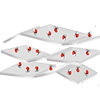 Scientists have synthesized bulk van der Waals materials at near-room temperature (ranging from room temperature to 60 C), significantly reducing the energy consumption required for their fabrication by at least one order of magnitude.
Mar 18th, 2024
Read more The flexible perovskite panels have electrodes made of tiny carbon nanotubes. These can generate more power with greater efficiency and at a cost 70% lower than existing solar panels.
Mar 18th, 2024
Read more Materials scientists are shedding light on the intricate growth processes of 2D crystals, paving the way for controlled synthesis of these materials with unprecedented precision.
Mar 15th, 2024
Read more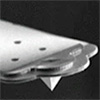 A study introduces a novel method for calibrating the spring constant of FluidFM micropipette cantilevers, crucial for the accurate measurement of forces in microfluidic environments. This method addresses the limitations of current calibration techniques, offering a significant advancement in the field of force microscopy.
Mar 15th, 2024
Read more A printable organic polymer that assembles into chiral structures when printed has enabled researchers to reliably measure the amount of charge produced in spin-to-charge conversion within a spintronic material at room temperature.
Mar 15th, 2024
Read more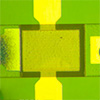 New etching process could enable the integration of electronics and photonics on a single chip, combining light sources and optical fibers.
Mar 15th, 2024
Read more Subscribe to our Nanotechnology News feed