

Nanotechnology News – Latest Headlines
The emergence of North Carolina as a nanobiotechnology hub
The tools of nanobiotechnology have wide-ranging commercial impact on fields that include pharma, medtech, textiles, agriculture, consumer products and many more. There are many hotbeds of nanobiotech innovation, and North Carolina has emerged as a leader in nanobiotech research, development and commercialization.
April 21, 2011 Read more
Physicist seeks nanomaterials with rationally designed properties
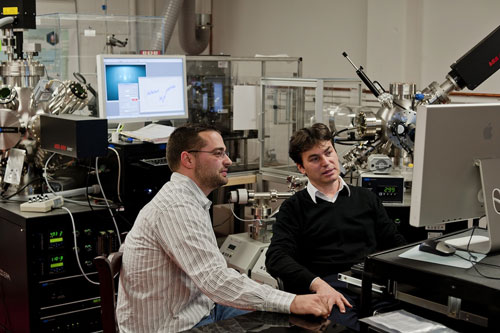
A University of Arkansas physicist has received the largest award granted to an individual researcher from the Army Research Laboratory to search for a novel class of nanomaterials with rationally designed properties.
April 21, 2011 Read more
UC Berkeley launches Synthetic Biology Institute to advance research in biological engineering
An alliance of top researchers at the University of California, Berkeley, has formed the UC Berkeley Synthetic Biology Institute (SBI), advancing efforts to engineer cells and biological systems in ways that promise to transform technology in health and medicine, energy, the environment, new materials, and a host of other critical arenas.
April 21, 2011 Read more
Researchers construct RNA nanoparticles to safely deliver long-lasting therapy to cells
Nanotechnology researchers have known for years that RNA, the cousin of DNA, is a promising tool for nanotherapy, in which therapeutic agents can be delivered inside the body via nanoparticles. But the difficulties of producing long-lasting, therapeutic RNA that remains stable and non-toxic while entering targeted cells have posed challenges for their progress. Now, researchers detail successful methods of producing large RNA nanoparticles and testing their safety in the delivery of therapeutics to targeted cells.
April 21, 2011 Read more
Food Standards Agency publishes a report of consumers' views on the use of nanotechnology
The Food Standards Agency (FSA) in the UK has published a report of consumers' views on the use of nanotechnology in food and food packaging. The focus group research, which asked participants about their views on nanotechnology in late 2010 and early 2011, was carried out as part of the FSA's programme of work on nanotechnology.
April 21, 2011 Read more
Using niosomes for encapsulation of nisin and EDTA
Researchers at National Nanotechnology Center (NANOTEC) in Bangkok have studied the application of niosomes for encapsulation of nisin and EDTA. Nisin (Food Additive, E234) are used as antimicrobial substance in food and pharmaceutical applications.
April 21, 2011 Read more
Nanoscale vaults encapsulate nanodisks for drug delivery
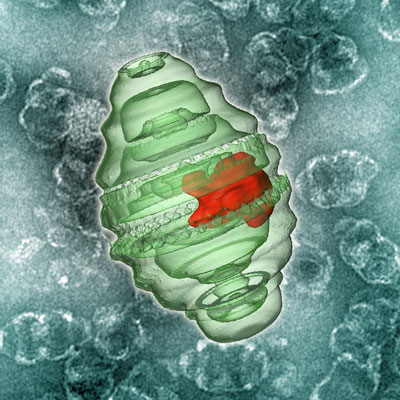
The development of new methods that use engineered nanomaterials to transport drugs and release them directly into cells holds great potential in this area. And while several such drug-delivery systems have won approval for clinical use, they have been hampered by size limitations and ineffectiveness in accurately targeting tissues. Now, researchers at UCLA have developed a new and potentially far more effective means of targeted drug delivery using nanotechnology.
April 21, 2011 Read more
Chemists advance understanding of wetting of nanostructured surfaces
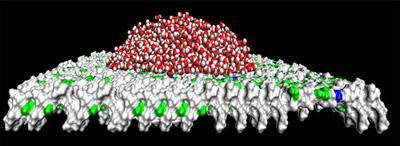
Virginia Commonwealth University researchers have identified the molecular mechanisms at play for the non-additive wetting free energies at chemically heterogeneous surfaces.
April 21, 2011 Read more
German Research Foundation establishes new research units on nanocomposites and nanodiamonds
One of the approved Research Units deals with novel synthesis methods in chemistry, another works on "quantum diamonds".
April 21, 2011 Read more
Successful workshop "Energy and Innovation"
The enormous changes with respect to how we handle and consume energy and the impact on the environment are of great concern not only to us as scientists, but also to all of us as responsible citizen. Therefore, the PhD students of the International Doctorate Program NanoBioTechnology had the wish to establish a discussion with experts from relevant fields to get a deep insight into the technical, economic and social preconditions necessary for the creation of a truly sustainable energy supply system.
April 21, 2011 Read more
New DNA nanoforms take shape (w/video)
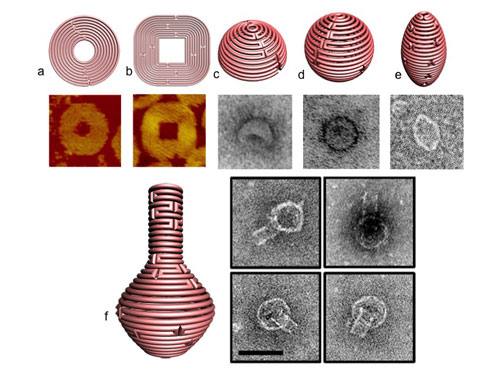
Miniature architectural forms - some no larger than viruses - have been constructed through a revolutionary technique known as DNA origami. Now, Hao Yan, Yan Liu and their colleagues at ASU's Biodesign Institute have expanded the capability of this method to construct arbitrary, two- and three-dimensional shapes, mimicking those commonly found in nature.
April 21, 2011 Read more
Limit to top-down nanotechnology mass-production?
A leading nanotechnology scientist has raised questions over a billion dollar industry by boldly claiming that there is a limit to how small nanotechnology materials can be mass produced. He says that you cannot mass produce structures with a diameter of three nanometres or less using a top-down approach.
April 21, 2011 Read more
New research moves nanomedicine one step closer to reality
A class of engineered nanoparticles - gold-centered spheres smaller than viruses - has been shown safe when administered by two alternative routes in a mouse study led by investigators at the Stanford University School of Medicine. This marks the first step up the ladder of toxicology studies that, within a year and a half, could yield to human trials of the tiny agents for detection of colorectal and possibly other cancers.
April 20, 2011 Read more
A scratched coating heals itself
Your 6-year-old found a nail in the garage and drew pictures across the side of your new car. Gnash your teeth now, but researchers at Case Western Reserve University, U.S., say the fix-up may be cheap and easy to do yourself in the not-too-distant future. Together with partners in the USA and Switzerland, they have developed a polymer-based material that can heal itself when placed under ultraviolet light for less than a minute.
April 20, 2011 Read more
The Nanodermatology Society releases position statement on the safety of nanotechnology in sunscreens
The Nanodermatology Society (NDS), a physician-led organization dedicated to the scientific and medical aspects of nanotechnology and dermatology, released its first position statement on the safety of nanotechnology in sunscreens.
April 20, 2011 Read more
Nature's elegant solution to repairing DNA in cancer, other conditions
A major discovery about an enzyme's structure has opened a window on understanding DNA repair. Scientists at Duke University Medical Center have determined the structure of a nuclease that will help scientists to understand several DNA repair pathways, a welcome development for cancer research.
April 20, 2011 Read more
 Subscribe to our Nanotechnology News feed