

Nanotechnology News – Latest Headlines
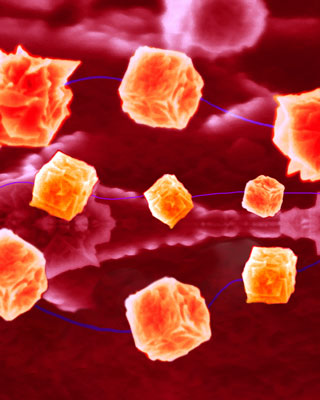
Nanotechnology tetherball biosensor precisely detects glucose
Researchers have created a precise biosensor for detecting blood glucose and potentially many other biological molecules by using single-wall carbon nanotubes anchored to gold-coated nanocubes.
January 22, 2009 Read more
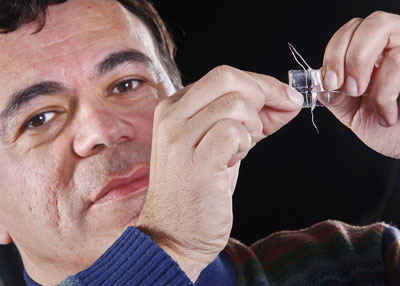
New stretchable electrodes created to study stresses on cardiac cells
Engineers at Purdue and Stanford universities have created stretchable electrodes to study how cardiac muscle cells, neurons and other cells react to mechanical stresses from heart attacks, traumatic brain injuries and other diseases.
January 22, 2009 Read more
CELL PEN report considers health risks of nanomaterials in relation to cellular translocation
In a report published by DEFRA this week, the Institute of Occupational Medicine, Edinburgh, together with a team of multi-disciplinary experts presents an informed commentary and research agenda toward elucidating the importance of translocation in nanoparticle toxicology.
January 22, 2009 Read more
Nanotechnology: Solutions for the future of healthcare
On March 4 - 6, 2009, international experts will gather in Berlin for the NanoMed 2009 conference to discuss the state of the art in medical applications of nanotechnology.
January 22, 2009 Read more
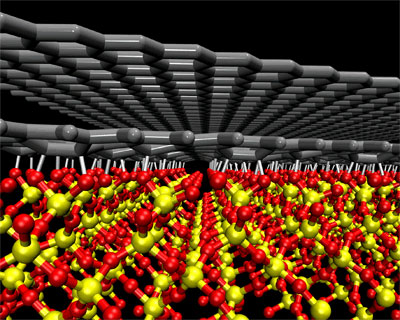
Researchers tune graphene's properties by growing it on different surfaces
Researchers at Rensselaer Polytechnic Institute have discovered a new method for controlling the nature of graphene, bringing academia and industry potentially one step closer to realizing the mass production of graphene-based nanoelectronics.
January 21, 2009 Read more
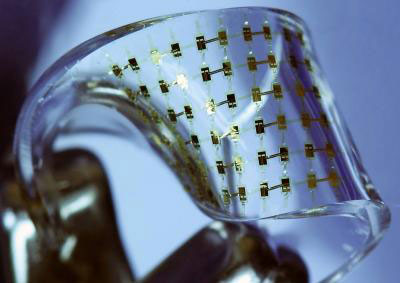
New stretchable electronics design accomodates extreme bending and straining
Researchers have developed a new design for stretchable electronics that can be wrapped around complex shapes, without a reduction in electronic function.
January 21, 2009 Read more
Semi-conducting nanotubes produced in quantity
After announcing last April a method for growing exceptionally long, straight, numerous and well-aligned carbon cylinders only a few atoms thick, a Duke University-led team of chemists has now modified that process to create exclusively semiconducting versions of these single-walled carbon nanotubes.
January 21, 2009 Read more
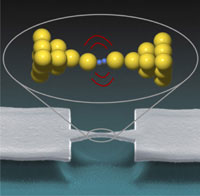
Nanotechnology allows building the smallest possible switches
The smallest mechanical switch plus an electronic switch of a type never seen before. That's how physicist Marius Trouwborst sums up the results of his PhD research on electric current through atoms and molecules.
January 21, 2009 Read more
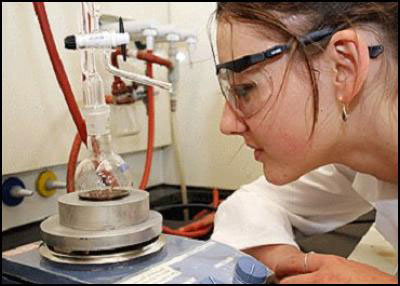
High school students go to NanoCamp
While most teenagers are at the beach this summer, 12 high school pupils from across the country are busy in the laboratory at the inaugural NanoCamp at Massey University's Manawatu campus.
January 20, 2009 Read more
Elsevier launches expert-generated information and collaboration web resource
Elsevier today announced the launch of SciTopics, a free online expert-generated knowledge sharing service for the research community to quickly offer scientific, technical and medical knowledge on a variety of subjects.
January 20, 2009 Read more
Editors wanted for nanotechnology encyclopedia
Sage Publications are inviting academic editorial contributors to the Encyclopedia of Nanoscience and Society, a new reference for undergraduate students and the general public.
January 20, 2009 Read more
University of Helsinki and ASM International renew 5-year research agreement on Atomic Layer Deposition
The collaboration is about Atomic Layer Deposition (ALD) which is an advanced technology for depositing thin film materials in highly controlled manner for integrated circuits and other applications.
January 20, 2009 Read more
Josephson effect for photons observed in new optical system
The Josephson effect is the phenomenon of current flow across two weakly coupled superconductors, separated by a very thin insulating barrier. It has important applications in quantum-mechanical circuits, such as superconducting quantum interference devices.
January 20, 2009 Read more
Researchers develop microbot motors to swim through the bloodstream
A range of complex surgical operations necessary to treat stroke victims, confront hardened arteries or address blockages in the bloodstream are about to be made safer as researchers from the Micro/Nanophysics Research Laboratory at Australia?s Monash University put the final touches to the design of micro-motors small enough to be injected into the human bloodstream.
January 19, 2009 Read more
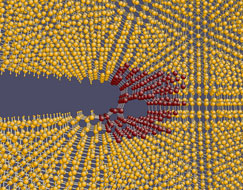
How and why materials crack
How and why materials crack is the subject of a research paper just published in the journal Nature by a team in Cambridge University's Department of Engineering.
January 19, 2009 Read more
Infra red spotlights crystal growth
The creation of a reproducible crystallisation process is a fundamental challenge to drug manufacturers, but a technique which provides real time detailed analyses of chemical processes could provide an answer.
January 19, 2009 Read more
 Subscribe to our Nanotechnology News feed