

Nanotechnology News – Latest Headlines
Editors wanted for nanotechnology encyclopedia
Sage Publications are inviting academic editorial contributors to the Encyclopedia of Nanoscience and Society, a new reference for undergraduate students and the general public.
January 20, 2009 Read more
University of Helsinki and ASM International renew 5-year research agreement on Atomic Layer Deposition
The collaboration is about Atomic Layer Deposition (ALD) which is an advanced technology for depositing thin film materials in highly controlled manner for integrated circuits and other applications.
January 20, 2009 Read more
Josephson effect for photons observed in new optical system
The Josephson effect is the phenomenon of current flow across two weakly coupled superconductors, separated by a very thin insulating barrier. It has important applications in quantum-mechanical circuits, such as superconducting quantum interference devices.
January 20, 2009 Read more
Researchers develop microbot motors to swim through the bloodstream
A range of complex surgical operations necessary to treat stroke victims, confront hardened arteries or address blockages in the bloodstream are about to be made safer as researchers from the Micro/Nanophysics Research Laboratory at Australia?s Monash University put the final touches to the design of micro-motors small enough to be injected into the human bloodstream.
January 19, 2009 Read more
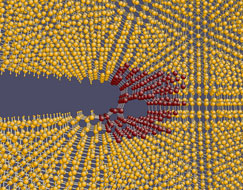
How and why materials crack
How and why materials crack is the subject of a research paper just published in the journal Nature by a team in Cambridge University's Department of Engineering.
January 19, 2009 Read more
Infra red spotlights crystal growth
The creation of a reproducible crystallisation process is a fundamental challenge to drug manufacturers, but a technique which provides real time detailed analyses of chemical processes could provide an answer.
January 19, 2009 Read more
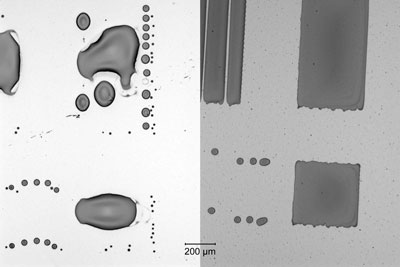
Nanoink electronics from the printer
Electronic systems designed to perform simple functions, such as monitor the temperature on a yogurt pot, mustn't cost much: This is where printed electronics are at an advantage. Researchers are now significantly improving the properties of printed circuits.
January 19, 2009 Read more
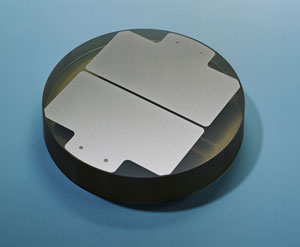
Extremely flat fixtures for EUV exposure
Exposing silicon wafers to light during chip manufacture requires special fixtures called chucks. Novel electrostatic chucks made of glass ceramics are incredibly flat. This prevents structural distortions on the exposure mask and the silicon chip.
January 19, 2009 Read more
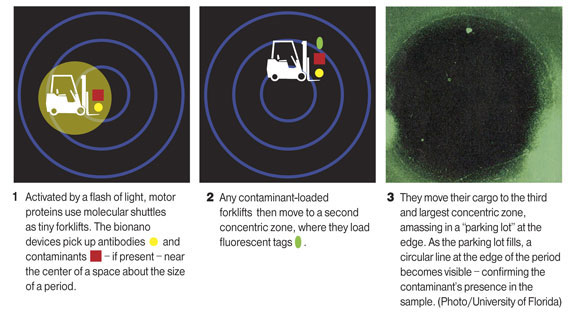
One step closer to 'smart dust' with biologically powered molecular forklifts
Algae is a livid green giveaway of nutrient pollution in a lake. Scientists would love to reproduce that action in tiny particles that would turn different colors if exposed to biological weapons, food spoilage or signs of poor health in the blood. Now, University of Florida engineering researchers have tapped the working parts of cells to clear a major hurdle to creating such 'smart dust'.
January 18, 2009 Read more
Polymer nanoparticle for oral anticancer drug delivery
Thanks to a new type of nanoparticle developed by researchers at the Johns Hopkins University School of Medicine, future cancer patients may be able to receive their medication in pill form.
January 16, 2009 Read more
Biodegradable nanoprobe images new blood vessel growth
Researchers at the University of California, Berkeley, have developed a type of nanoparticle that can image angiogenesis using positron emission tomography.
January 16, 2009 Read more
Toxin-nanoparticle combo inhibits brain cancer invasion while imaging tumors
Working with a nanoparticle designed to target and image glioblastoma, a form of brain cancer, investigators at the University of Washington in Seattle have found that these same nanoparticles inhibit tumor cell invasion, one of the key events that leads to the metastatic spread of cancer.
January 16, 2009 Read more
Artificial single-chain antibody delivers nanoparticles to tumors
Antibodies that target epidermal growth factor receptor (EGFR) have proven themselves as potent anticancer drugs.
January 16, 2009 Read more
Nanotubes as cancer sensors in living cells
A multidisciplinary team at the Massachusetts Institute of Technology (MIT) has developed carbon nanotubes that can be used as sensors for cancer drugs and other DNA-damaging agents inside living cells.
January 16, 2009 Read more
Michael Pepper has been appointed to the Pender Chair of Nanoelectronics at the London Centre for Nanotechnology
Professor Sir Michael Pepper has been appointed to the Pender Chair of Nanoelectronics at UCL (University College of London) where he will work on joint projects between the Department of Electronic and Electrical Engineering and the London Centre for Nanotechnology.
January 16, 2009 Read more
French nanotechnology laboratory equipped with one of the best-performing microscopes in Europe
The Institut de physique et de chimie des materiaux de Strasbourg inaugurated its new transmission electron microscope on January 9, 2009. This instrument, which will be devoted to studying matter at the atomic scale, is one of the best-performing in Europe.
January 16, 2009 Read more
 Subscribe to our Nanotechnology News feed