

Nanotechnology News – Latest Headlines
Boston College chemist Torsten Fiebig honored by Sloan Foundation
Boston College Chemist Torsten Fiebig has been awarded the prestigious Alfred P. Sloan Foundation Research Fellowship, intended to enhance the careers of the very best young faculty members in specified fields of science, the foundation recently announced.
February 20, 2008 Read more
Options for states to reform chemicals policies: A resource guide
The Lowell Center for Sustainable Production at UMass Lowell released 'Options for States to Reform Chemicals Policies: A Resource Guide,' which illustrates a range of options for states to revamp chemicals management policies in the absence of federal reform.
February 20, 2008 Read more
Launch of AMAR Antiaging Society in India
From the AMAR press release: 'This is the right time to bring the ancient art of medicine together with nanotechnology to defy the process of degeneration and disease."
February 20, 2008 Read more
Costs of solar photovoltaic panels substantially eclipse benefits, says study
Despite increasing popular support for solar photovoltaic panels in the United States, their costs far outweigh the benefits, according to a new analysis by Severin Borenstein, a professor at the University of California, Berkeley's Haas School of Business and director of the UC Energy Institute.
February 20, 2008 Read more
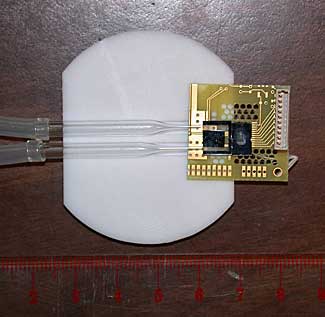
Nuclear magnetic resonance (NMR) on a chip
A super-sensitive mini-sensor developed at the National Institute of Standards and Technology (NIST) can detect nuclear magnetic resonance in tiny samples of fluids flowing through a novel microchip. The prototype chip device, developed in a collaboration between NIST and the University of California, may have wide application as a sensitive chemical analyzer, for example in rapid screening to find new drugs.
February 20, 2008 Read more
Cleaner water through nanotechnology
Coated silica particles filter out toxins, pathogens.
February 20, 2008 Read more
Taiwan to allot NT$23 billion for nanoscience, nanotechnology R&D
The government is planning to appropriate NT$23 billion (US$726 million) to fund the second stage of the 'Taiwan National Science and Technology Program for Nanoscience and Nanotechnology' slated for 2009-2014, officials at the cabinet-level National Science Council said Tuesday.
February 20, 2008 Read more
Researchers discover new way to store information via DNA
Technique may make it less expensive for industry to identify counterfeit merchandise.
February 20, 2008 Read more
Crackpot technologies that could shake up IT
Computerworld has an article that looks at eight technologies that 'straddle the divide between harebrained and brilliant - each with a promise to transform the future of the enterprise.' One of them being nanotechnology.
February 19, 2008 Read more
Birck Nanotechnology Center's Weaver to receive 2008 IEST Fellow Award
The 2008 Institute of Environmental Sciences and Technology (IEST) Fellow Award will be presented to John Weaver for his 'numerous publications and significant technical contributions to the advancement of cleanroom design and construction, particularly in the emerging field of nanotechnology.'
February 19, 2008 Read more
Chemists measure copper levels in zinc oxide nanowires
Chemists at the National Institute of Standards and Technology have been the first to measure significant amounts of copper incorporated into zinc oxide nanowires during fabrication. The issue is important because copper plays a significantâ??but not well-understoodâ??role in important optical and electrical properties of the nanowires. Previous experiments found only trace amounts of copper.
February 19, 2008 Read more
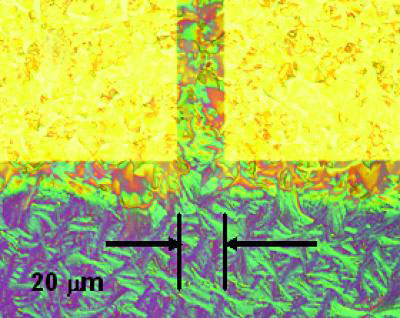
Directed self-ordering of organic molecules for electronic devices
A simple surface treatment technique demonstrated by a collaboration between researchers at the National Institute of Standards and Technology, Penn State and the University of Kentucky potentially offers a low-cost way to mass produce large arrays of organic electronic transistors on polymer sheets for a wide range of applications including flexible displays, 'intelligent paper' and flexible sheets of biosensor arrays for field diagnostics.
February 19, 2008 Read more

Strengthening fluids with nanoparticles
New study paves way for using nanofluids in cameras, microdevices and displays.
February 19, 2008 Read more
Partnership increases pot for Rice competition
The Greater Houston Partnership has pumped $200,000 into the prize pot for Rice University's annual Business Plan Competition.
February 19, 2008 Read more
The Bourne Report radio show kicks off its listener's challenge
he Bourne Report, a weekly talk radio show that focuses on nanotechnology and MEMS (micro-electro-mechanical systems), officially kicked off its Listener's Challenge this week. Listeners are being asked to pick a random item from everyday life and challenge host Marlene Bourne to find the MEMS or nanotech connection.
February 19, 2008 Read more
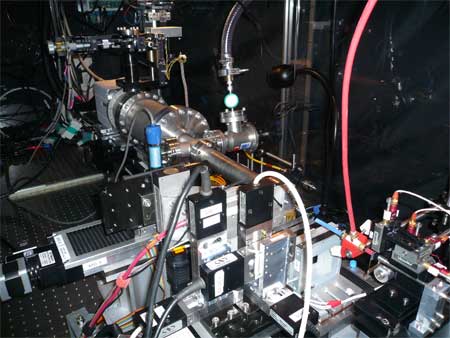
Lensless camera uses X-rays to view nanoscale materials and biological specimens
X-rays have been used for decades to take pictures of broken bones, but scientists at the U.S. Department of Energy's Argonne National Laboratory and their collaborators have developed a lensless X-ray technique that can take images of ultra-small structures buried in nanoparticles and nanomaterials, and features within whole biological cells such as cellular nuclei.
February 19, 2008 Read more
 Subscribe to our Nanotechnology News feed