

Nanotechnology News – Latest Headlines
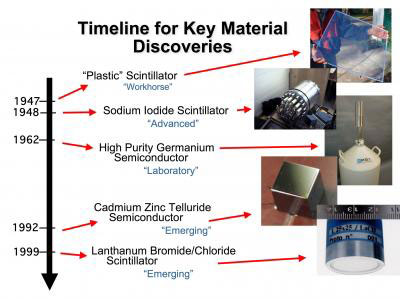
You can't teach old materials new tricks
Decades-old challenge has researchers seeking new materials for radiation detection.
February 16, 2008 Read more
Discussion on medical and energy research and transferring technology to the marketplace
On Feb. 15 Reporters met with four of America's foremost nanotechnology experts in Boston, Mass.for a wide-ranging discussion about using the technology to more effectively treat patients and to better produce and secure energy.
February 16, 2008 Read more
Turning 'funky' quantum mysteries into computing reality
The strange world of quantum mechanics can provide a way to surpass limits in speed, efficiency and accuracy of computing, communications and measurement, according to research by MIT scientist Seth Lloyd.
February 16, 2008 Read more
India-Japan trade to treble in three years
India-Japan trade is set to treble in three years, according to Indian Ambassador to US Ronen Sen. India and Japan have set a trade turnover target of $20 billion by 2010, up from last year's figure of about $7.5 billion, in which Japan enjoyed a trade surplus of $1.7 billion, Sen said in his address to the Japan Society here Friday.
February 16, 2008 Read more
Leading engineers and scientists identify advances that could improve quality of life around the world
The U.S. National Academy of Engineering today announced the grand challenges for engineering in the 21st century. A diverse committee of experts from around the world, convened at the request of the U.S. National Science Foundation, revealed 14 challenges that, if met, would improve how we live.
February 15, 2008 Read more
Microfluidics, nanoparticles drive novel cancer detection schemes
Early detection of tumors is one of the Holy Grails of cancer research, an achievement that would greatly improve cancer therapy and prognosis. Two new reports describe different but promising approaches to solving this problem.
February 15, 2008 Read more
Fluorescent nanoparticles image tumor marker in animals
Since 2004 the U.S. Food and Drug Administration has approved three new-generation anticancer therapies that target epidermal growth factor receptor (EGFR), a protein that is greatly overexpressed on certain types of tumors, including some forms of colorectal and lung cancer. For patients with EGFR-positive tumors, these drugs can be lifesavers, but at present, there is no good way to predict who will respond to anti-EGFR therapy. That may change, though, thanks to the development of two quantum dot-based systems that can image EGFR expression in living animals.
February 15, 2008 Read more
Targeted dendrimer advances in preclinical studies
Although a variety of nanoparticles continue to show promise for improving cancer imaging and therapy, regulators and drug developers are concerned that these delivery systems may prove difficult to manufacture on a consistent basis, which is key for any agent designed for use in humans. A new study provides data showing that such concerns can be overcome.
February 15, 2008 Read more
Nanotechnology advances brain cancer detection and therapy
Brain cancer is one of the most aggressive and lethal of malignancies, made even more difficult to treat by the fact that most anticancer drugs have a hard time even getting to the tumors. Now, studies by three different groups of researchers show that targeted nanoparticles hold promise for solving this delivery problem.
February 15, 2008 Read more
Researchers probe biological fate of carbon nanotubes with Raman spectroscopy
Carbon nanotubes have shown real promise as highly accurate vehicles for delivering antitumor agents into malignant cells, but a dearth of data about what happens to the tubes after they discharge their medical payloads has been a major stumbling block to progress. Now, two studies at the Center for Cancer Nanotechnology Excellence Focused on Therapy Response have revealed some reassuring answers after months of tracking the tiny tubes inside mice.
February 15, 2008 Read more
Religion colors Americans' views of nanotechnology
Is nanotechnology morally acceptable? For a significant percentage of Americans, the answer is no, according to a recent survey of Americans' attitudes about the science of the very small.
February 15, 2008 Read more
Nanotechnology's health, environmental impacts worry scientists and the public
Scientists and the public agree that the promise of nanotechnology is great, but there are risks to it and they should be governed accordingly.
February 15, 2008 Read more
Second announcement and call for papers: Managing the uncertainty of nanotechnologies
Second announcement and call for papers for the conference 'Managing the uncertainty of nanotechnologies. Challenges to law, ethics and policy making' in Rovigo, Italy, on May 22-23, 2008.
February 15, 2008 Read more
EUR 61 million competition for innovative nanotechnology project starts in Germany
Next Monday, February 18, 2008, the Innovation Ministry of the German federal state North Rhine-Westphalia (NRW) will kick off the 1st NRW-Nanokonferenz (in German) in Dortmund with a EUR61 million (approx. $85 million) endowed competition for scientists and entrepreneurs.
February 15, 2008 Read more
Is hybridoma production about to take a quantum leap forward?
Recently published research has established the ability of Neowater to enhance the various processes involved in the production of pure human monoclonal antibodies by refining the standard hybridoma production process.
February 15, 2008 Read more
U.S. leads world in PHEV battery R&D, lags in capabilities to make them
During opening testimony before the House Appropriations Subcommittee on Energy and Water Development, Argonne's Don Hillebrand noted that while the United States is the dominant player in the development of battery materials and chemistries for hybrid vehicles and Plug-in Hybrid Electric Vehicles (PHEV) with the help of progressive research conducted at U.S. Department of Energy national laboratories, including Argonne, the nation lags behind the world in adopting capabilities to make such batteries.
February 15, 2008 Read more
 Subscribe to our Nanotechnology News feed