

Nanotechnology News – Latest Headlines

Exploring the frontiers of neuromorphic engineering: A journey into brain-inspired computing
Neuromorphic engineering is focused on developing computer hardware and software systems that mimic the structure, function, and behavior of the human brain. The goal of neuromorphic engineering is to create computing systems that are much more energy-efficient, scalable, and adaptive than conventional computer systems, and that can solve complex problems in a manner that is similar to how the brain solves problems. Neuromorphic computing is a specific application of neuromorphic engineering. It involves the use of hardware and software systems that are designed to process information in a manner that is similar to how the human brain processes information.
February 13, 2023 Read more

The first model to describe the ways variously sized particles can jam together
Scientists have developed a model that describes bodies of particles with highly diverse sizes, and in different jamming scenarios.
February 13, 2023 Read more

Silicon nanoelectronic device hosts 'flip-flop' qubit
Researchers demonstrate a new type of quantum bit in silicon, called 'flip-flop' qubit, which can facilitate the construction of a large-scale quantum computer.
February 13, 2023 Read more

Elusive transition shows universal quantum signatures
Understanding the physics behind a mysterious phase transition could lead to new complex microscopic circuits, superconductors and exotic insulators that could find use in quantum computing.
February 11, 2023 Read more

Fighting brain cancer with bioadhesive nanoparticles
A new nanoparticle-based treatment is aimed at fighting glioblastoma.
February 11, 2023 Read more
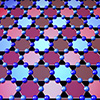
Researchers detail never-before-seen properties in a family of superconducting Kagome metals
Scientists describe the microscopic structure of a recently discovered group of superconductors for the first time, a small step toward paving the way for future advances in superconducting technology.
February 11, 2023 Read more

Researchers pioneer process to stack micro-LEDs
Researchers have developed a new process based on 2D materials to create LED displays with smaller and thinner pixels. Enabled by two-dimensional, materials-based layer transfer technology, the innovation promises a future of clearer and more realistic LED displays.
February 10, 2023 Read more
Graphene aerogel particles for efficient water purification
Researchers have produced 3-dimensional particles made of graphene, of many interesting shapes, using a variation of the vortex ring effect. These particles have also been shown to be exceptionally efficient in adsorbing contaminants from water, thereby purifying it.
February 10, 2023 Read more

High-efficiency water splitting process revealed
Experiments have revealed the complex mode of action behind the artificial splitting of water at its most efficient level.
February 10, 2023 Read more

Finely-tuned quantum dots enhance nonlinear optics
Quantum dots with finely-tuned spherical defects could display advanced nonlinear optical properties, new calculations have suggested. Adjusting the sizes of these defects could enable researchers to tightly control the brightness and frequency of the light they produce when illuminated.
February 10, 2023 Read more
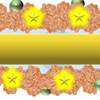
New diagnostic test is 1,000 times more sensitive than conventional tests
Rersearchers developed an ultrasensitive lateral-flow assays via plasmonically active antibody-conjugated fluorescent nanoparticles.
February 10, 2023 Read more

Novel microscope developed to design better high-performance batteries
Researchers developed an operando reflection interference microscope (RIM) that provides a better understanding of how batteries work, which has significant implications for the next generation of batteries.
February 9, 2023 Read more

Chemists create nanomachines by breaking them apart
Scientists discovered that 'breaking' molecular nanomachines basic to life can create new ones that work even better.
February 9, 2023 Read more

Make them thin enough, and antiferroelectric materials become ferroelectric
Antiferroelectric materials have electrical properties that make them advantageous for use in high-density energy storage applications. Researchers have now discovered a size threshold beyond which antiferroelectrics lose those properties, becoming ferroelectric.
February 9, 2023 Read more
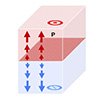
Atom-thin walls could smash size, memory barriers in next-gen devices
Nanomaterial feature could help electronic circuits adopt benefits of human memory.
February 9, 2023 Read more

Nickel nanowires enhance microwave absorption
Researchers report the synthesis of polyvinylpyrrolidone coated nickel nanowires by solvothermal method assisted by high magnetic field, and applied to enhance microwave absorption.
February 9, 2023 Read more
 Subscribe to our Nanotechnology News feed