

Robotics, AI and SmartTech News – Latest Headlines
 Subscribe to our Robotics, AI & SmartTech News feed
Artificial intelligence that imitates children's learning
The computer programmes used in the field of artificial intelligence (AI) are highly specialised. They can for example fly airplanes, play chess or assemble cars in controlled industrial environments. However, a research team from Gothenburg, Sweden, has now been able to create an AI programme that can learn how to solve problems in many different areas. The programme is designed to imitate certain aspects of children's cognitive development.
September 22, 2014 Read more
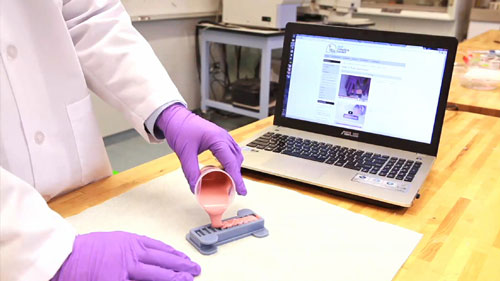
Soft robotics 'toolkit' features everything a robot-maker needs
Online resource is designed to foster innovation and learning.
September 19, 2014 Read more
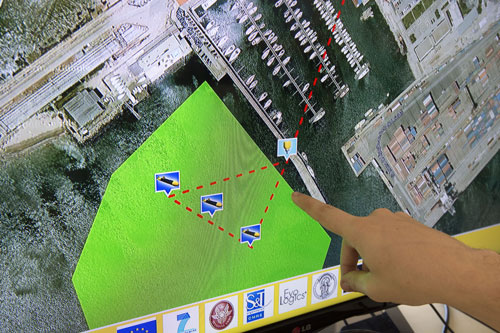
Using underwater robots for a better understanding of the underwater world (w/video)
The Sunrise project is at the forefront of a revolution in communications, creating an underwater 'internet of things', that will mobilise robots to work in groups, interacting together and passing back information to us on life underwater.
September 19, 2014 Read more
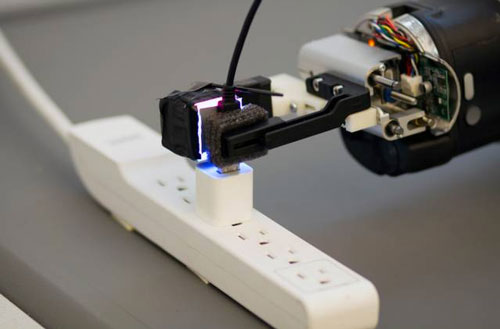
Fingertip sensor gives robot unprecedented dexterity
Researchers have equipped a robot with a novel tactile sensor that lets it grasp a USB cable draped freely over a hook and insert it into a USB port.
September 19, 2014 Read more
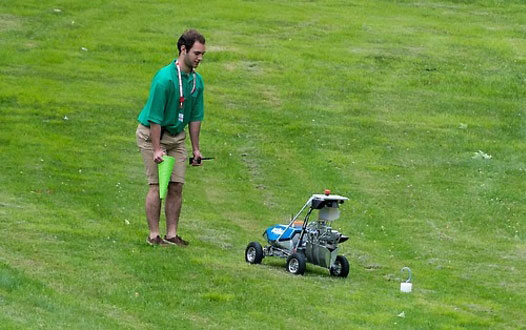
NASA's 2015 Sample Return Robot Challenge open for registration
Registration is open for the fourth running of the NASA Centennial Challenge program's Sample Return Robot Challenge, which will take place June 8-13, 2015. The autonomous robot competition, which carries a prize purse of $1.5 million, will be held at Worcester Polytechnic Institute in Worcester, Massachusetts, which has hosted the event since 2012.
September 18, 2014 Read more
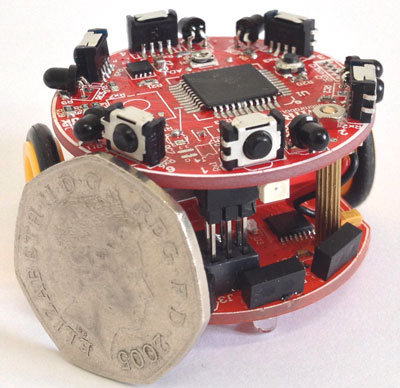
'Honeybee' robots replicate swarm behavior
Computer scientists have created a low-cost, autonomous micro-robot which in large numbers can replicate the behavior of swarming honeybees.
September 18, 2014 Read more
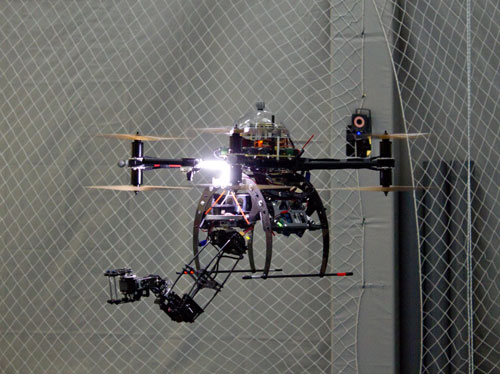
ARCAS: Flying robots will go where humans can't
There are many situations where it's impossible, complicated or too time-consuming for humans to enter and carry out operations. Think of contaminated areas following a nuclear accident, or the need to erect structures such as antennae on mountain tops. These are examples of where flying robots could be used.
September 17, 2014 Read more
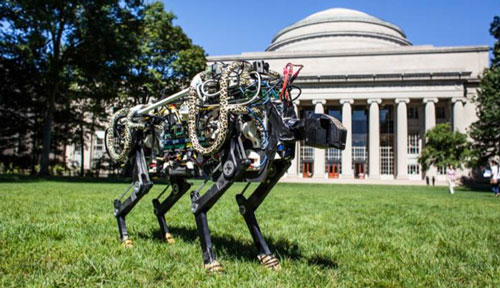
Cheetah-bot - bound for robotic glory (w/video)
New algorithm enables MIT cheetah robot to run and jump, untethered, across grass.
September 15, 2014 Read more
Cutting the cord on soft robots
Developers from Harvard's School for Engineering and Applied Sciences and the Wyss Institute for Biologically Inspired Engineering have produced the first untethered soft robot - a quadruped that can stand up and walk away from its designers.
September 12, 2014 Read more
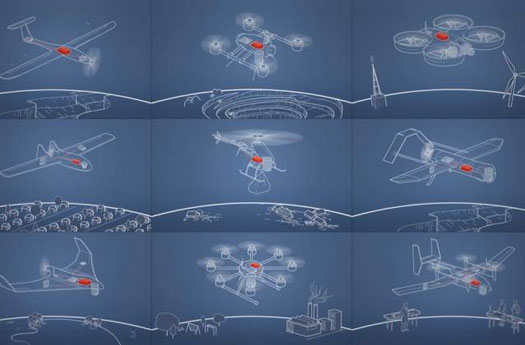
Making drones more customizable
A first-ever standard 'operating system' for drones could soon help manufacturers easily design and customize unmanned aerial vehicles (UAVs) for multiple applications.
September 12, 2014 Read more
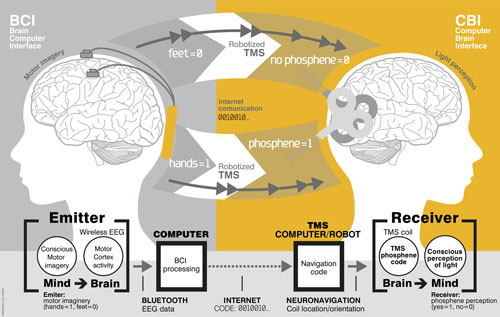
Researchers demonstrate direct human brain-to-brain communication via the internet
In a first-of-its-kind study, an international team of neuroscientists and robotics engineers have demonstrated the viability of direct brain-to-brain communication in humans.
September 3, 2014 Read more
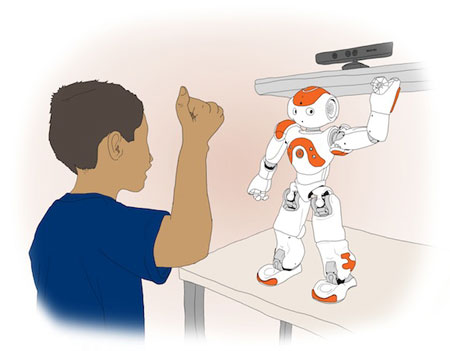
Socially-assistive robots help kids with autism learn by providing personalized prompts
In a pilot study, researchers found that children with autism spectrum disorders showed improved or maintained performance in learning imitative behavior by interacting with humanoid robots that provided graded cueing, an occupational therapy technique that shapes behavior by providing increasingly specific cues to help a person learn new skills.
August 28, 2014 Read more
'Robo Brain' will teach robots everything from the Internet
Robo Brain - a large-scale computational system that learns from publicly available Internet resources - is currently downloading and processing about 1 billion images, 120,000 YouTube videos, and 100 million how-to documents and appliance manuals. The information is being translated and stored in a robot-friendly format that robots will be able to draw on when they need it.
August 25, 2014 Read more
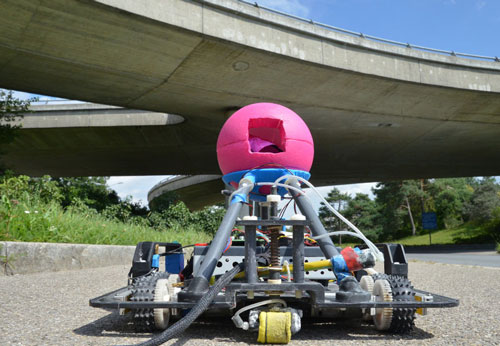
C2D2 fighting corrosion
Bridges become an infrastructure problem as they get older, as de-icing salt and carbon dioxide gradually destroy the reinforced concrete. A new robot can now check the condition of these structures, even in places that people cannot reach.
August 22, 2014 Read more
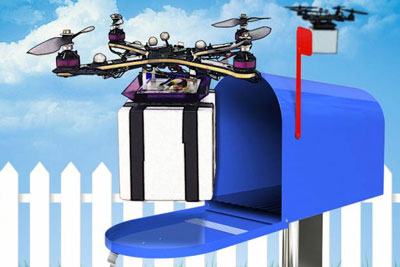
Delivery by drone
New algorithm lets drones monitor their own health during long package-delivery missions.
August 21, 2014 Read more
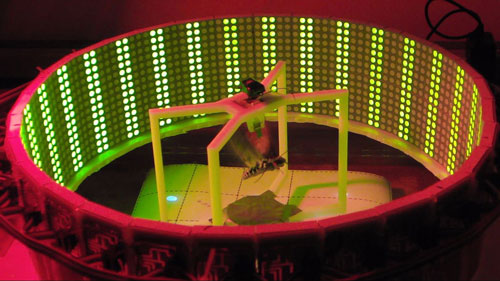
Research paves way for development of cyborg moth 'biobots' (w/video)
Researchers have developed methods for electronically manipulating the flight muscles of moths and for monitoring the electrical signals moths use to control those muscles. The work opens the door to the development of remotely-controlled moths, or 'biobots', for use in emergency response.
August 20, 2014 Read more
Secrets of how worms wriggle uncovered could be of use in robotics
An engineer has found how worms move around, despite not having a brain to communicate with the body.
August 19, 2014 Read more
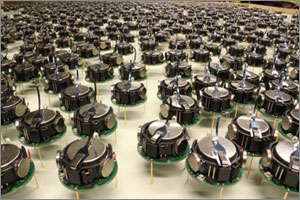
A self-organizing thousand-robot swarm (w/video)
Following simple programmed rules, autonomous robots arrange themselves into vast, complex shapes.
August 14, 2014 Read more