

Biotechnology News – Latest Headlines
 Subscribe to our Biotechnology News feed
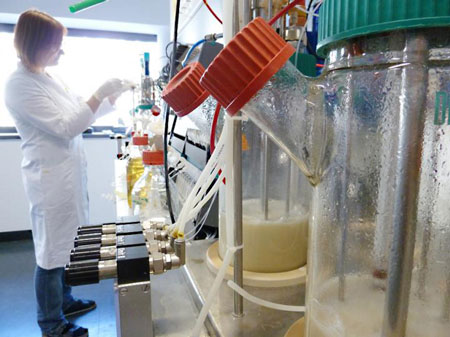
Millions of liters of juice from 1 grapefruit
New method allows production of expensive grapefruit aroma Nootkatone biotechnologically from cheap sugar using a 'turbo-yeast'. The versatile, healthy and tasty substance is used in soft drinks, pharmaceutical products or even as an insect repellent.
April 15, 2015 Read more
Genetically engineered Salmonella promising as anti-cancer therapy
A new study has demonstrated that genetically modified Salmonella can be used to kill cancer cells.
April 14, 2015 Read more
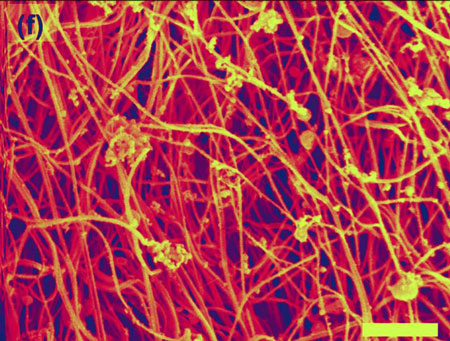
Engineers elucidate why skin is resistant to tearing
Skin is remarkably resistant to tearing and a team of researchers now have shown why.
April 14, 2015 Read more
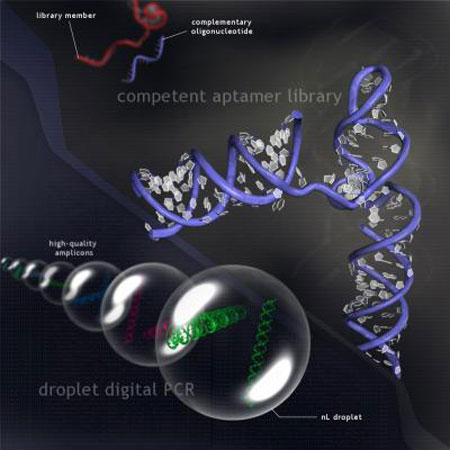
New clinical platform may accelerate discovery of diagnostic and therapeutic agents
Scientists have developed a new technology that enables rapid discovery of aptamers, one of the fastest growing classes of diagnostic and therapeutic agents.
April 10, 2015 Read more
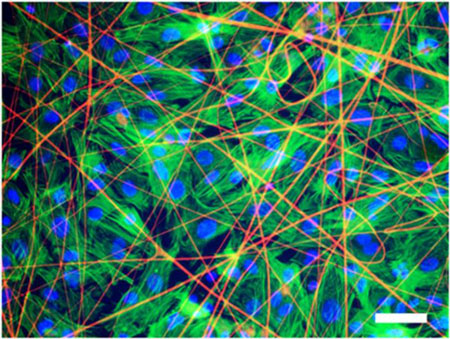
Researchers grow cardiac tissue on 'spider silk' substrate
Genetically engineered fibers of the protein spidroin, which is the construction material for spider webs, has proven to be a perfect substrate for cultivating heart tissue cells.
April 10, 2015 Read more
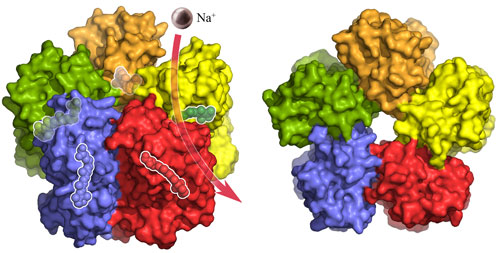
Versatile switch for light-controlled cells
Scientists uncovered the atomic structure of KR2, a light-driven transporter for sodium ions which had only recently been discovered. Based on the structural information the team then identified a simple way to turn KR2 from a sodium into a potassium pump using simple means. Integrated into neurons, this could make KR2 a valuable tool for optogenetics, a new field of research that uses light-sensitive proteins as molecular switches to precisely control the activity of neurons and other electrically excitable cells using light impulses.
April 9, 2015 Read more
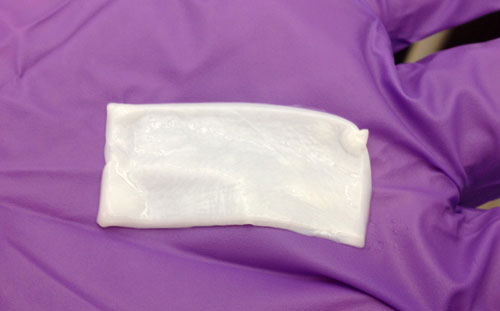
Startup is developing self-assembling, bioinstructive collagen materials for research, medical applications
A researcher is commercializing her laboratory's innovative collagen formulations that self-assemble or polymerize to form fibrils that resemble those found in the body's tissues.
April 7, 2015 Read more
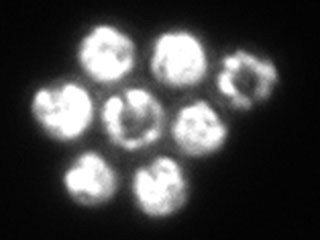
Under the microscope, strong-swimming swamp bacteria spontaneously organize into crystals
Biophysicists have revealed that fast-swimming, sulfur-eating microbes known as Thiovulum majus can organize themselves into a two-dimensional lattice composed of rotating cells, the first known example of bacteria spontaneously forming such a pattern.
April 7, 2015 Read more
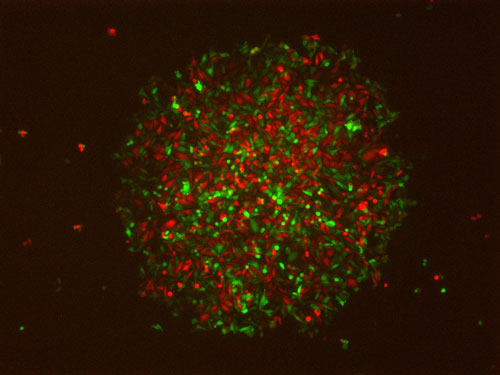
Engineering cell circuits
By mutually inhibiting signaling through a crucial developmental pathway, cells connected by an intercellular signaling circuit can be induced to change their fate.
April 3, 2015 Read more

Pick a color, any color
A small team of scientists can synthesize molecules that will absorb any color of sunlight from the oranges through the near-infrared, greatly expanding the palette of light-harvesting molecules.
April 2, 2015 Read more
Future antibiotic-making kits for amateurs?
Researchers have developed a rapid, simple and safe method for generating large libraries of novel organic molecules in a fraction of the time required for traditional organic synthesis.
April 2, 2015 Read more
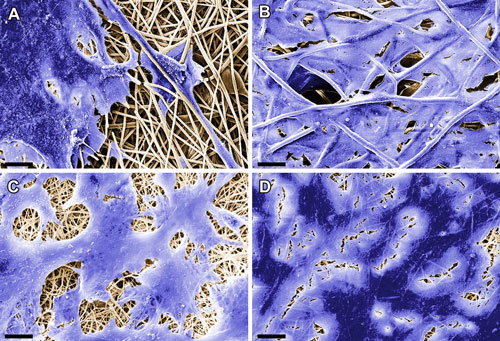
Novel tissue substitute made of high-tech fibers
Regenerative medicine uses cells harvested from the patient's own body to heal damaged tissue. Fraunhofer researchers have developed a cell-free substrate containing proteins to which autologous cells bind and grow only after implantation.
April 1, 2015 Read more
Scientists get 1 step closer to finding how to repair damaged nerve cells
Researchers uncovered a new kind of synergy in the development of the nervous system, which explains an important mechanism required for neural circuits to form properly. Their breakthrough could eventually help develop tools to repair nerve cells following injuries to the nervous system (such as the brain and spinal cord).
April 1, 2015 Read more
Researchers create 'Wikipedia' for neurons (w/video)
The decades worth of data that has been collected about the billions of neurons in the brain is astounding. To help scientists make sense of this 'brain big data', researchers have used data mining to create http://www.neuroelectro.org, a publicly available website that acts like Wikipedia, indexing physiological information about neurons.
March 30, 2015 Read more
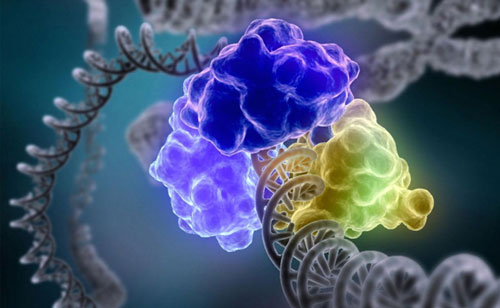
How DNA alarm-system works
Researcher managed to clarify how DNA damage signaling works. The DNA molecule is chemically unstable giving rise to DNA lesions. That is why DNA damage detection, signaling and repair, collectively known as the DNA damage response, are needed. DNA repair consists of enzymes which find the damaged DNA and repair it. Some of them recognize the damaged bases and give signals to the other enzymes, which repair the DNA.
March 30, 2015 Read more
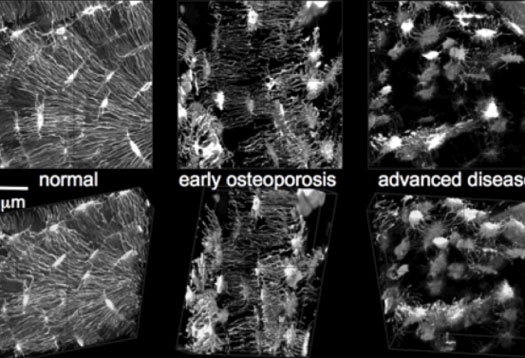
'Google Maps' for the body: a biomedical revolution (w/video)
Researchers are using previously top-secret semiconductor technology to zoom through organs of the human body, down to the level of a single cell.
March 30, 2015 Read more
Recipe for antibacterial plastic: Plastic plus egg whites
Bioplastics show promise in search for antibacterial packaging.
March 27, 2015 Read more
Report identifies opportunities for scaling up industrial biotechnology and bioenergy
The study documents major investment opportunities to build UK excellence and leadership in translating industrial biotechnology and bioenergy research into industrial products and processes.
March 27, 2015 Read more