

Biotechnology News – Latest Headlines
 Subscribe to our Biotechnology News feed
A step closer to bio-printing transplantable tissues and organs
Researchers have made a giant leap towards the goal of 'bio-printing' transplantable tissues and organs for people affected by major diseases and trauma injuries, a new study reports.
June 30, 2014 Read more
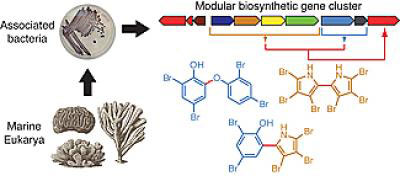
Marine bacteria are natural source of chemical fire retardants
Scientists have discovered a widely distributed group of marine bacteria that produce compounds nearly identical to toxic man-made fire retardants.
June 29, 2014 Read more
Reconstructing the life history of a single cell
Researchers have developed new methods to trace the life history of individual cells back to their origins in the fertilised egg. By looking at the copy of the human genome present in healthy cells, they were able to build a picture of each cell's development from the early embryo on its journey to become part of an adult organ.
June 29, 2014 Read more
Noninvasive brain control
New light-sensitive protein enables simpler, more powerful optogenetics.
June 29, 2014 Read more
Deeper insights into protein folding
Study presents a new theoretical foundation explaining the mechanism of protein folding and unfolding in water.
June 26, 2014 Read more
Researchers discover 'Trojan Horse' method of penetrating cellular walls without harm
Scientists have found a 'Trojan horse' way to deliver proteins into live human cells without damaging them. The finding is expected to be easily adopted for use in medical research to find cures and treatments for a wide range of diseases.
June 26, 2014 Read more
New material improves wound healing, keeps bacteria from sticking
Scientists are reporting the next step in the evolution of wound treatment with a material that leads to faster healing than existing commercial dressings and prevents potentially harmful bacteria from sticking.
June 25, 2014 Read more
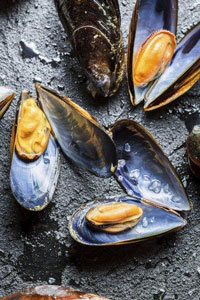
Understanding mussels' stickiness could lead to better surgical and underwater glues
Scientists report a clearer understanding of how mussels stick to surfaces, which could lead to new classes of adhesives that will work underwater and even inside the body.
June 25, 2014 Read more
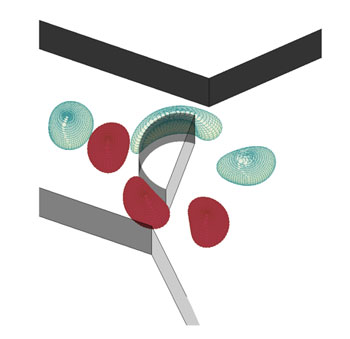
New device could improve biomarker analyses
A device proposed by researchers at Sweden's KTH Royal Institute of Technology could offer a more reliable alternative for detecting biomarkers in patients facing such illnesses as cancer or malaria.
June 25, 2014 Read more
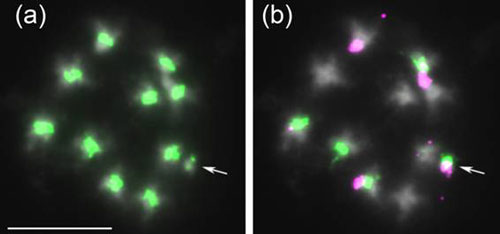
Plant models for crop breeding of the future
This review article summarizes the structure and stability of all the minichromosomes that Minoru Murata and colleagues at Okayama University have isolated since 2006, and describes their interesting features.
June 25, 2014 Read more
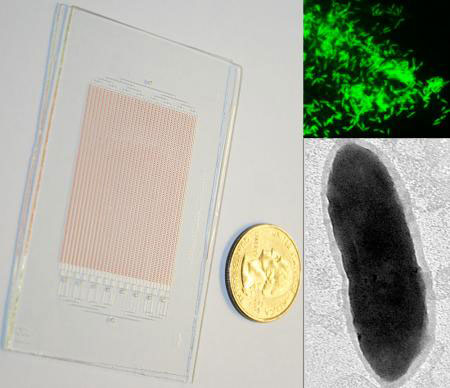
Growing unknown microbes 1 by 1
Trillions of bacteria live in the human body, and although there's plenty of evidence that these microbes play a collective role in human health, we know very little about the individual bacterial species. Employing the use of a specially designed glass chip with tiny compartments, researchers provide a way to target and grow specific microbes from the gut - a key step in understanding which bacteria are helpful to human health and which are harmful.
June 24, 2014 Read more
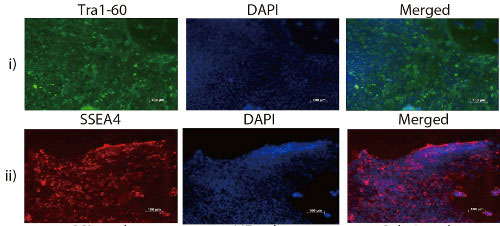
Pushing cells towards a higher pluripotency state
Researchers gained new insight into the role of CCL2, a chemokine known to be involved in the immune response, in the enhancement of stem cell pluripotency. In the study, the researchers replaced basic fibroblast growth factor (bFGF), a critical component of human stem cell culture, with CCL2 and studied its effect.
June 24, 2014 Read more
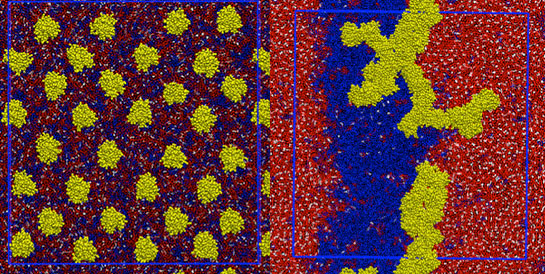
Cancer chain in the membrane (w/video)
Supercomputer simulations reveal clusters of a protein linked to cancer warp cell membranes - findings could help design new anticancer drugs.
June 23, 2014 Read more
Various genes could be used as early biomarkers of stress due to heavy metals
Various genes of the plant Arabidopsis thaliana and of the bacteria Escherichia coli and Pseudomonas fluorescens could be used as early biomarkers of stress due to heavy metals.
June 23, 2014 Read more
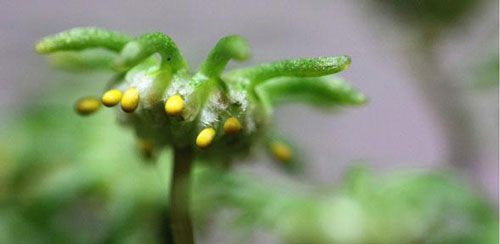
From foundry to factory: building synthetic plants
A movement is under way that will fast-forward the design of new plant traits. It takes inspiration from engineering and the software industry, and is being underpinned in Cambridge and Norwich by an initiative called OpenPlant.
June 20, 2014 Read more
Researchers develop genetic control mechanism for major livestock pest
Researchers have developed a technique to control populations of the Australian sheep blowfly - a major livestock pest in Australia and New Zealand - by making female flies dependent upon a common antibiotic to survive.
June 19, 2014 Read more
NIH and NSF collaborate to accelerate biomedical research innovations into the marketplace
A collaboration between the National Science Foundation (NSF) and the National Institutes of Health will give NIH-funded researchers training to help them evaluate their scientific discoveries for commercial potential, with the aim of accelerating biomedical innovations into applied health technologies.
June 18, 2014 Read more
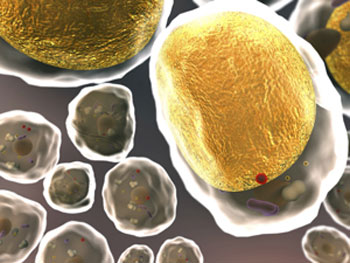
Stem cells: The fat source makes the difference
Stem cells derived from different types of fat express different cell-surface markers.
June 18, 2014 Read more