

Biotechnology News – Latest Headlines
 Subscribe to our Biotechnology News feed
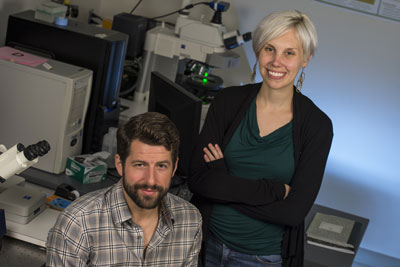
Researchers are developing mobile DNA test for HIV
Diagnostic test aimed at detecting virus in infants, viral loads in older patients in low-resource settings.
June 5, 2014 Read more
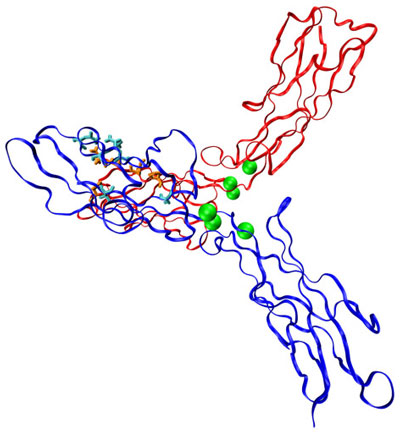
Researchers find the mechanism that forms cell-to-cell catch bonds
Strong cell-to-cell bonds are important to heart health and fighting cancer. The bonds connecting heart cells have to withstand constant forces caused by continuous pumping. And, in some cancers, bonds no longer resist forces, allowing cancer cells to detach and spread.
June 5, 2014 Read more
Scientists shed light on braking mechanisms in cellular signaling
A team of researchers studying a flowering plant has zeroed in on the way cells manage external signals about prevailing conditions, a capability that is essential for cells to survive in a fluctuating environment.
June 5, 2014 Read more
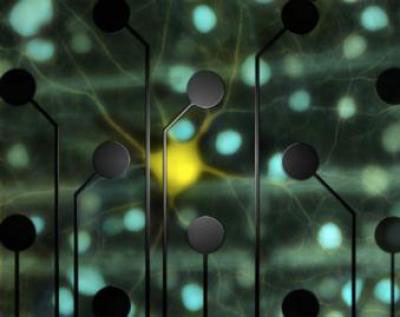
Retina prosthesis - Making artificial vision look more natural
In laboratory tests, researchers have used electrical stimulation of retinal cells to produce the same patterns of activity that occur when the retina sees a moving object. Although more work remains, this is a step toward restoring natural, high-fidelity vision to blind people.
June 5, 2014 Read more

Cellular traffic control system mapped for the first time
The transport routes of nutrients and messenger cargos can be compared to the traffic system of a city: A worldwide unique quantitative study of cell biologists shows that cells regulate the main routes, side routes and intersections by an intricate traffic control system, which guides the spatial and temporal distribution of substances within the cell.
June 5, 2014 Read more
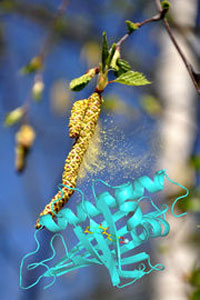
Environmental factors could explain when pollen proteins become allergens
The reason why many people are allergic to birch pollen has not been fully clarified yet. It is known that a specific birch pollen protein causes the immune system to overreact. What makes it an allergen has now been discovered by scientists at the Vetmeduni Vienna. The pollen protein can bind iron. Without iron load the protein becomes an allergen. Environmental factors are possibly the reason for low iron loads in plants.
June 5, 2014 Read more
Smart application of surfactants gives sustainable agriculture
Researchers have investigated the interaction between the plant's barrier, plant protection products and adjuvants that are added to increase the effect of the plant protection product. The results of this research can be applied to minimise the use of plant protection products in agriculture.
June 5, 2014 Read more
Powerful new protein engineering tool for fighting toxins and pathogens
A new protein engineering technique developed at Rensselaer Polytechnic Institute gives researchers a powerful new tool for fighting potentially harmful toxins and pathogens.
June 4, 2014 Read more
Scientists successfully transplant, grow stem cells in pigs
Researchers have shown that a new line of genetically modified pigs will host transplanted cells without the risk of rejection, opening the door for future stem cell therapy research.
June 4, 2014 Read more
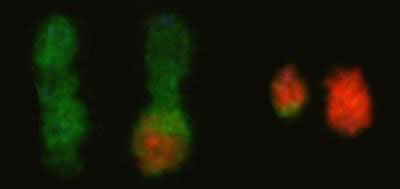
Tumor chromosomal translocations reproduced for the first time in human cells
Scientists have been able to reproduce, for the first time in human cells, chromosomal translocations associated with two types of cancer: acute myeloid leukemia and Ewing's sarcoma. The discovery opens the door to the development of new therapeutic targets to fight these types of cancer.
June 3, 2014 Read more
Molecular 'scaffold' could hold key to new dementia treatments
Scientists have discovered how a molecular 'scaffold' which allows key parts of cells to interact, comes apart in dementia and motor neuron disease, revealing a potential new target for drug discovery.
June 3, 2014 Read more
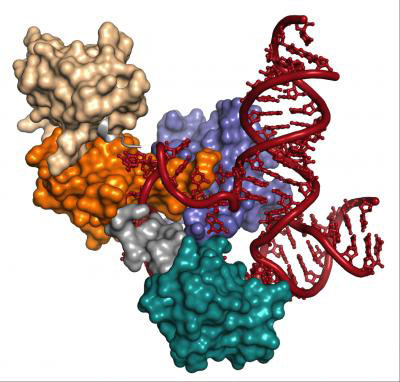
Scientists capture most detailed images yet of humans' tiny cellular machines
Like exploring the inner workings of a clock, a team of researchers is digging into the inner workings of the tiny cellular machines called spliceosomes, which help make all of the proteins our bodies need to function. In a recent study, they have captured images of this machine, revealing details never seen before.
June 2, 2014 Read more

How the environment and genetics impact our DNA
The impact of the environment on our genetic makeup has long been a topic of discussion among researchers. Now a European consortium (EURATRANS) has taken the opposite approach. The scientists have investigated for the first time to what extent specific genetic predispositions influence the processes of gene regulation.
June 2, 2014 Read more
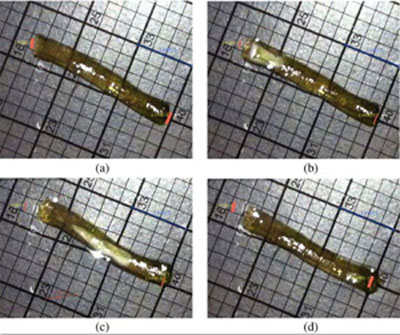
New method of wormlike motion lets gels wiggle through water
Next time you spot an earthworm sliding through fresh dirt, take a closer look. What you're seeing is an organic movement called peristaltic locomotion that has been meticulously refined by nature.
May 30, 2014 Read more
For the first time in the lab, researchers see stem cells take key step toward development
The gap between stem cell research and regenerative medicine just became a lot narrower, thanks to a new technique that coaxes stem cells to take the first step to specialization for the first time in a laboratory. Researchers demonstrated that not only is it possible for mouse embryonic stem cells to form three distinct germ layers in the lab, but also that it requires correct timing, chemical factors and mechanical environment.
May 30, 2014 Read more
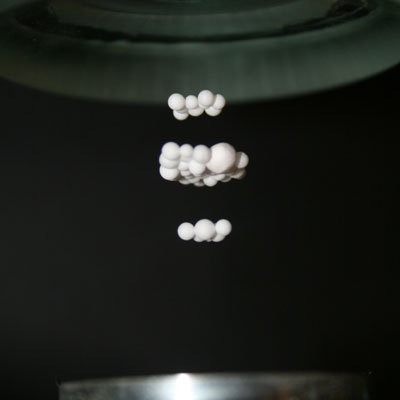
Gravity-beating ultrasonic tweezers provide a sound route to bio-engineering
Pioneering 'tweezers' that use ultrasound beams to grip and manipulate tiny clusters of cells under electronic, push-button control could lead to life-changing medical advances, such as better cartilage implants that reduce the need for knee replacement operations.
May 30, 2014 Read more
An ecological risk research agenda for synthetic biology
Environmental scientists and synthetic biologists have for the first time developed a set of key research areas to study the potential ecological impacts of synthetic biology.
May 29, 2014 Read more
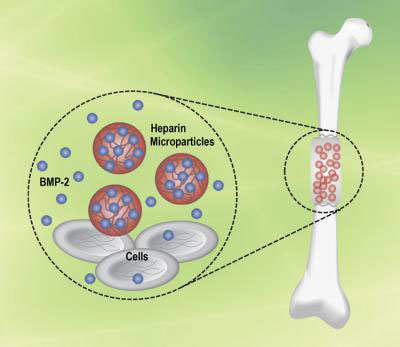
Engineering a better way to rebuild bone inside the body
A new technology under development at the Georgia Institute of Technology could one day provide more efficient delivery of the bone regenerating growth factors with greater accuracy and at a lower cost.
May 29, 2014 Read more