

Biotechnology News – Latest Headlines
 Subscribe to our Biotechnology News feed
Synthetic biology still in uncharted waters of public opinion (w/video)
A new set of focus groups convened by the Synthetic Biology Project at the Wilson Center found continued low awareness of synthetic biology, as well as concerns about specific applications.
May 15, 2014 Read more
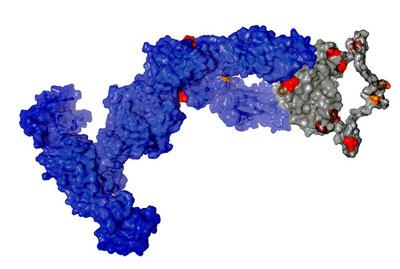
Learning from sharks how to stabilize genetically engineered antibodies
Comparing the antibodies of sharks, which are very old from an evolutionary perspective, with those of humans, a team of researchers discovered stabilizing mechanisms that can also be applied to optimize custom-tailored antibodies in humans.
May 15, 2014 Read more
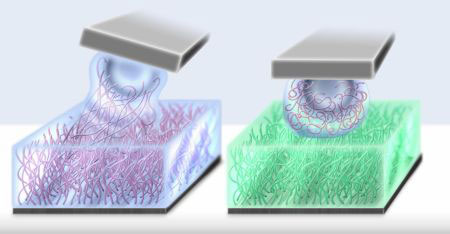
Using nature as a model for low-friction bearings
The mechanical properties of natural joints are considered unrivalled. Cartilage is coated with a special polymer layer allowing joints to move virtually friction-free, even under high pressure. Scientists have developed a new process that technologically imitates biological lubrication and even improves it using two different types of polymers.
May 14, 2014 Read more
New technology simplifies production of biotech medicines
The final step in the production of a biotech medicine is finishing with the correct sugar structure. This step is essential for the efficacy of the medicine, but it also makes the production process very complex and expensive. Now, researchers have developed a technology that shortens the sugar structures whilst retaining the therapeutic efficiency. This technology has the potential to make the production of biotech medicines significantly simpler and cheaper.
May 14, 2014 Read more
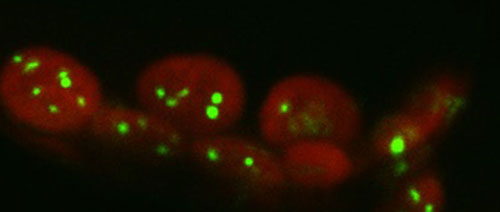
A synthetic biology approach to improve photosynthesis
Assembling a compartment inside chloroplasts of flowering plants has the potential to improve the efficiency of photosynthesis.
May 14, 2014 Read more
Enzyme 3D map could lead to more effective drugs (w/video)
Researchers have completed a 3-D map of an enzyme called Proline utilization A (PutA). PutA facilitates metabolism by adding oxygen to molecules. Mapping this enzyme will give researchers a better understanding of its function, which could help drug manufacturers create more effective drugs.
May 13, 2014 Read more

Chemists design molecules for controlling bacterial behavior
Chemists have figured out how to control multiple bacterial behaviors - potentially good news for the treatment of infectious diseases and other bacteria-associated issues, without causing drug resistance.
May 13, 2014 Read more
Researchers design a molecule that blocks cancer growth in mice
New drug candidate disrupts key interaction of two proteins by mimicking one to trick the other.
May 13, 2014 Read more
'Shocking' video reveals the surprising truth about cell wall growth
Researchers use new techniques to document how cells can conceal growth, then suddenly swell like raisins into grapes; study is a 'paradigm shift' in understanding osmotic shock that may lead to new strategies for fighting bacterial disease
May 13, 2014 Read more
Patient stem cells used to make 'heart disease-on-a-chip'
Scientists have merged stem cell and 'organ-on-a-chip' technologies to grow, for the first time, functioning human heart tissue carrying an inherited cardiovascular disease. The research appears to be a big step forward for personalized medicine, as it is working proof that a chunk of tissue containing a patient's specific genetic disorder can be replicated in the laboratory.
May 11, 2014 Read more
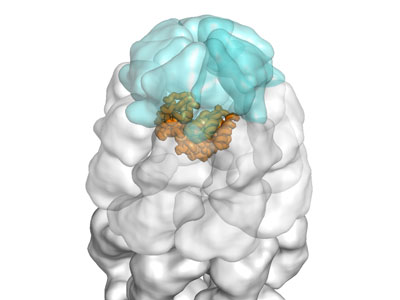
Molecular high-speed origami
Researchers elucidate important mechanism of protein folding.
May 9, 2014 Read more
DNA takes a chemical bath
A chemical-based DNA cleavage technique could lead to more versatile genetic engineering.
May 9, 2014 Read more
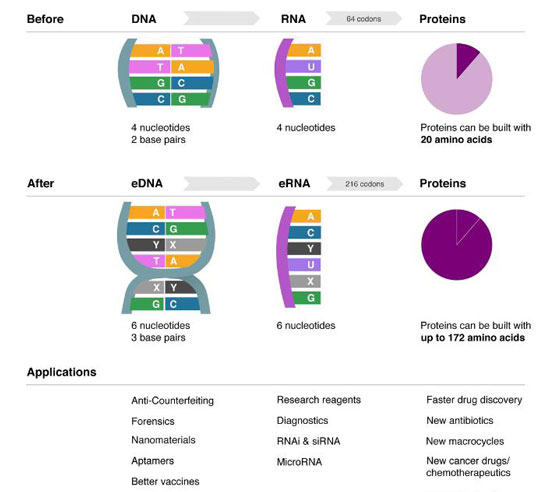
First example of in vivo replication of a synthetic DNA base pair published
Synthorx Inc. announced the official launch of the company, which will be focused on using synthetic biology to improve the discovery and development of new medicines, diagnostics and vaccines.
May 8, 2014 Read more
Scientists create first living organism that transmits added letters in DNA 'alphabet'
Scientists have engineered a bacterium whose genetic material includes an added pair of DNA 'letters', or bases, not found in nature. The cells of this unique bacterium can replicate the unnatural DNA bases more or less normally, for as long as the molecular building blocks are supplied.
May 7, 2014 Read more
A hydrogel that knows when to go (w/video)
Bioscaffold material degrades as bone grows to replace it .
May 7, 2014 Read more
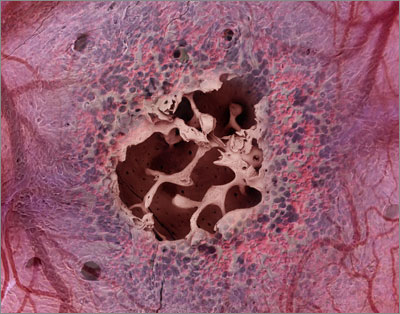
Bone marrow-on-a-chip unveiled (w/video)
The latest organ-on-a-chip from Harvard's Wyss Institute for Biologically Inspired Engineering reproduces the structure, functions and cellular make-up of bone marrow, a complex tissue that until now could only be studied intact in living animals.
May 5, 2014 Read more
Functioning of aged brains and muscles in mice made younger
Harvard Stem Cell Institute researchers have shown that a protein they previously demonstrated can make the failing hearts in aging mice appear more like those of young health mice, similarly improves brain and skeletal muscle function in aging mice.
May 5, 2014 Read more
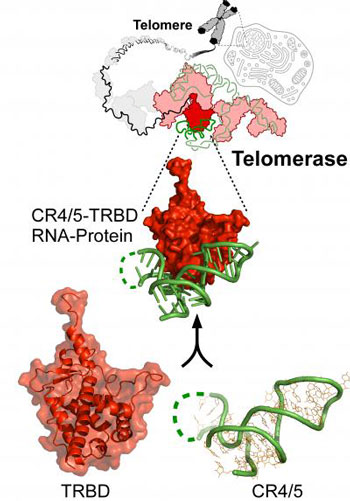
Atomic level look at telomerase may unlock the secrets to the fountain of youth
Despite the strong medical applications, the mechanism for telomerase holoenzyme (the most important unit of the telomerase complex) assembly remains poorly understood. New research provides, for the first time, an atomic level description of the protein-RNA interaction in the vertebrate telomerase complex.
May 5, 2014 Read more