

Biotechnology News – Latest Headlines
 Subscribe to our Biotechnology News feed
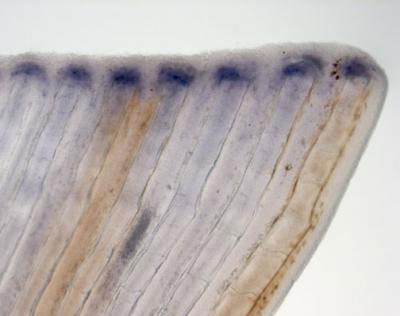
To grow or not to grow: a step forward in adult vertebrate tissue regeneration
The reason why some animals can regenerate tissues after severe organ loss or amputation while others, such as humans, cannot renew some structures has always intrigued scientists. In a new study, researchers show, for the first time, that zebrafish regenerates its caudal fin by a process that involves a specific channel in the cell membrane, called V-ATPase, that pumps hydrogen ions, generating an electrical current.
March 27, 2014 Read more
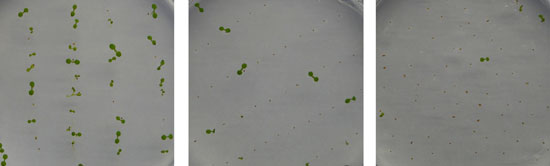
Scientists discover how to increase the longevity of seeds with genetic engineering
The key is the overexpression of the ATHB25 gene. This gene encodes a protein that regulates gene expression, producing a new mutant that gives the seed new properties. Researchers have proven that this mutant has more gibberellin - the hormone that promotes plant growth - which means the seed coat is reinforced as well.
March 27, 2014 Read more
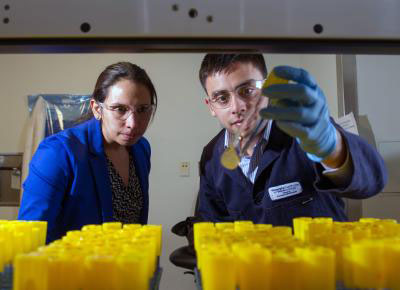
Engineered bacteria produce biofuel alternative for high-energy rocket fuel
Researchers have engineered a bacterium to synthesize pinene, a hydrocarbon produced by trees that could potentially replace high-energy fuels, such as JP-10, in missiles and other aerospace applications.
March 26, 2014 Read more
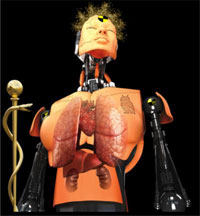
Significant progress toward creating 'benchtop human' reported
So-called organ-on-a-chip technology is being developed to provide a better and less expensive method of drug and toxicity testing.
March 26, 2014 Read more
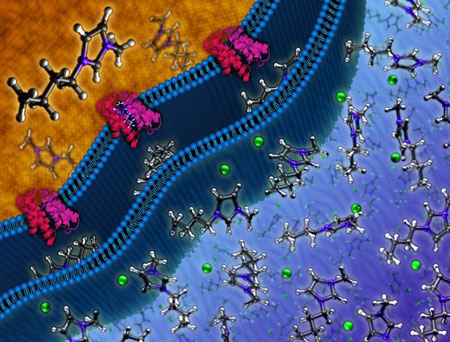
Researchers engineer resistance to ionic liquids in biofuel microbes
Researchers have identified the genetic origins of a microbial resistance to ionic liquids and successfully introduced this resistance into a strain of E. coli bacteria for the production of advanced biofuels.
March 26, 2014 Read more
Latest Genome Analysis Toolkit dramatically improves speed of genome analysis
By optimizing the latest version of the Broad?s Genome Analysis Toolkit (GATK) 3.1, scientists were able to achieve three to five times overall improvement in variant discovery to meet the challenges of research and accelerate discovery.
March 26, 2014 Read more
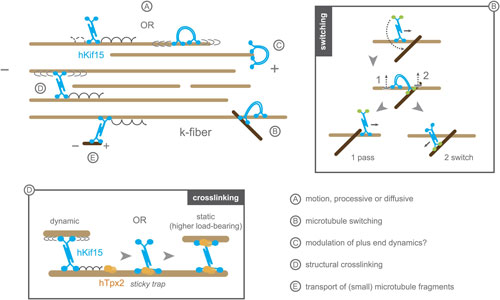
Kif15: The acrobatic motor protein that could pave the way for new cancer therapies
Researchers at Warwick Medical School have shown for the first time how a protein motor, Kif15, uses acrobatic flexibility to navigate within the mitotic spindle. Understanding how it works could prove vital for the development of targeted cancer therapies.
March 26, 2014 Read more
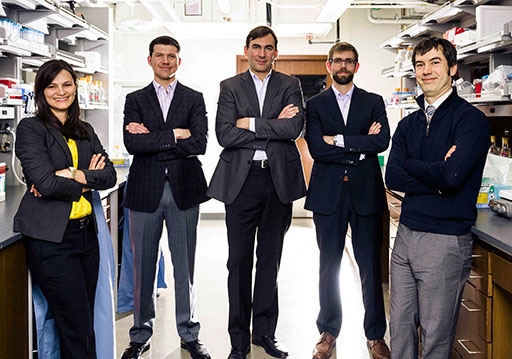
Synthetic biologists break new ground in medicine, energy
With such ambitious goals as helping cure cancer and eradicating pervasive disease, some of the most talented scientists in the country from the emerging field of synthetic biology are breaking new ground at Northwestern University.
March 25, 2014 Read more
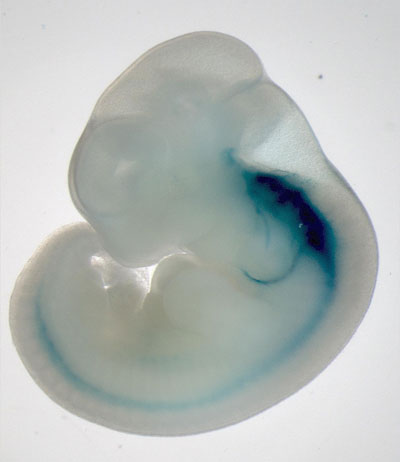
New technique for identifying gene-enhancers
Berkeley Lab researchers led the development of a new technique for identifying gene enhancers - sequences of DNA that act to amplify the expression of a specific gene - in the genomes of humans and other mammals. Called SIF-seq, this new technique complements existing genomic tools, such as ChIP-seq, and offers additional benefits.
March 24, 2014 Read more
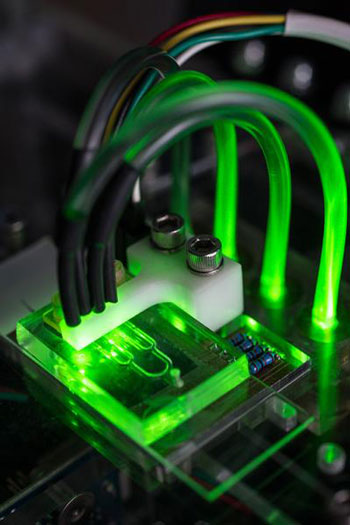
Microfluidic device with artificial arteries measures drugs' influence on blood clotting
A new microfluidic method for evaluating drugs commonly used for preventing heart attacks has found that while aspirin can prevent dangerous blood clots in some at-risk patients, it may not be effective in all patients with narrowed arteries. The study, which involved 14 human subjects, used a device that simulated blood flowing through narrowed coronary arteries to assess effects of anti-clotting drugs.
March 24, 2014 Read more
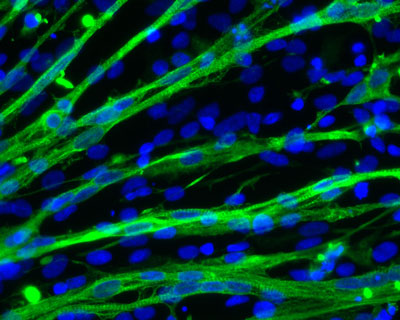
A new way to make muscle cells from human stem cells
As stem cells continue their gradual transition from the lab to the clinic, a research group at the University of Wisconsin-Madison has discovered a new way to make large concentrations of skeletal muscle cells and muscle progenitors from human stem cells.
March 21, 2014 Read more
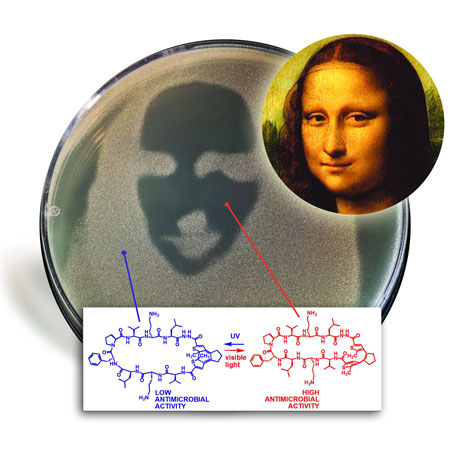
Switching an antibiotic on and off with light
Scientists have produced an antibiotic, whose biological activity can be controlled with light. Thanks to the robust diarylethene photoswitch, the antimicrobial effect of the peptide mimetic can be applied in a spatially and temporally specific manner.
March 21, 2014 Read more
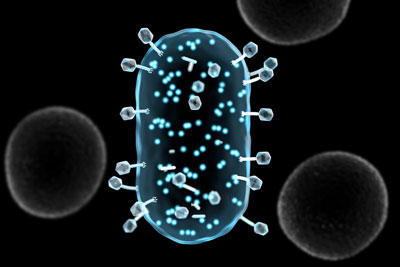
Brighter future for bacteria detection
An advanced assay quickly illuminates bacteria for more rapid, accurate detection.
March 20, 2014 Read more
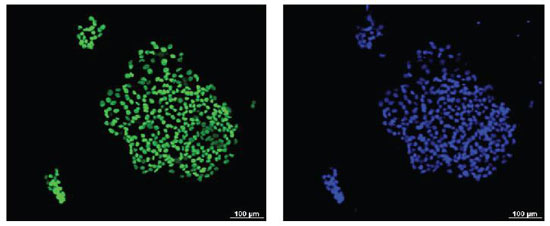
Scientists create stem cells from a drop of blood from a finger prick
The DIY finger-prick technique opens door for extensive stem cell banking.
March 20, 2014 Read more
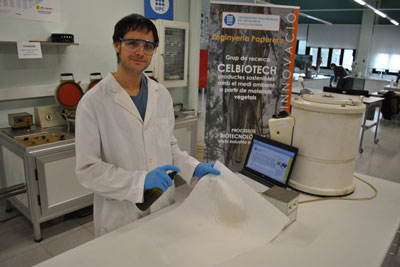
Patent application for a new biotechnology product to make waterproof paper using natural enzymes
The compound uses natural enzymes instead of the traditional chemical reagents, is biodegradable, and involves no environmental impact. Most important, it is easily applicable in the production process and requires no additional investment.
March 19, 2014 Read more
Small step towards growing tissue in the lab
University of Adelaide mathematicians have devised a method for identifying how cell clusters have formed by analysing an image of the cluster.
March 19, 2014 Read more
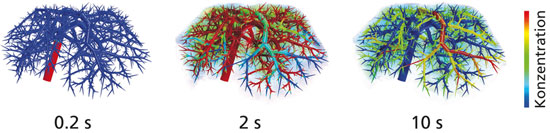
Virtual blood flow
A new computer technique can realistically simulate how medicine affects the liver.
March 19, 2014 Read more
Building heart tissue that beat
When a heart gets damaged, such as during a major heart attack, there's no easy fix. But scientists working on a way to repair the vital organ have now engineered tissue that closely mimics natural heart muscle that beats, not only in a lab dish but also when implanted into animals.
March 18, 2014 Read more