

Biotechnology News – Latest Headlines
 Subscribe to our Biotechnology News feed
Chemosynthetic liver technology - an end to animal testing for drug discovery?
As some countries and companies roll out new rules to limit animal testing in pharmaceutical products designed for people, scientists are stepping in with a new way to test therapeutic drug candidates and determine drug safety and drug interactions - without using animals.
March 18, 2014 Read more
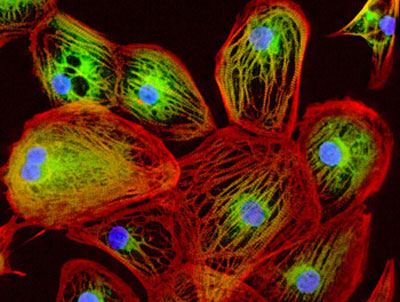
New DNA-editing technology spawns bold university initiative
The University of California, Berkeley, and UC San Francisco are launching the Innovative Genomics Initiative (to lead a revolution in genetic engineering based on a new technology already generating novel strategies for gene therapy and the genetic study of disease.
March 18, 2014 Read more
Fighting antibiotic resistance with 'molecular drill bits'
In response to drug-resistant superbugs that send millions of people to hospitals around the world, scientists are building tiny, 'molecular drill bits' that kill bacteria by bursting through their protective cell walls.
March 17, 2014 Read more
In the lab, scientists coax E. coli to resist radiation damage
Capitalizing on the ability of an organism to evolve in response to punishment from a hostile environment, scientists have coaxed the model bacterium Escherichia coli to dramatically resist ionizing radiation and, in the process, reveal the genetic mechanisms that make the feat possible.
March 14, 2014 Read more
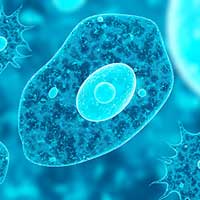
Bioscientists develop 'grammar' to design useful synthetic living systems
Researchers have used a computer-aided design tool to create genetic languages to guide the design of biological systems.
March 13, 2014 Read more
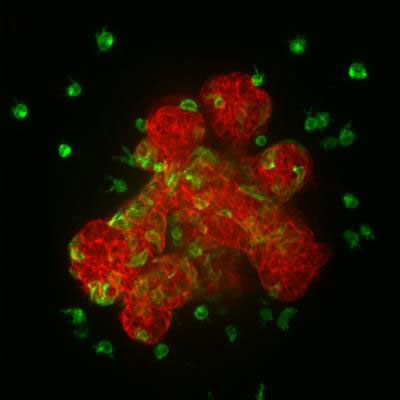
'Velcro protein' found to play surprising role in cell migration
Studying epithelial cells, the cell type that most commonly turns cancerous, Johns Hopkins researchers have identified a protein that causes cells to release from their neighbors and migrate away from healthy mammary, or breast, tissue in mice. They also found that deletion of a cellular 'Velcro protein' does not cause the single-celled migration expected. Their results, they say, help clarify the molecular changes required for cancer cells to metastasize.
March 13, 2014 Read more
Stirring the simmering 'designer baby' pot
From genetic and genomic testing to new techniques in human assisted reproduction, various technologies are providing parents with more of a say about the children they have and 'stirring the pot of designer baby concerns', writes Thomas H. Murray, President Emeritus of The Hastings Center, in a commentary in Science.
March 13, 2014 Read more
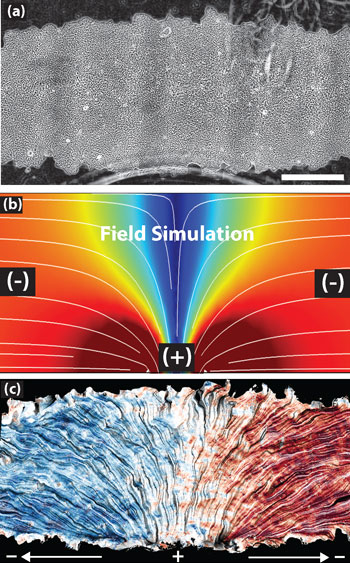
Scientists 'herd' cells in new approach to tissue engineering (w/video)
Engineers have found that an electrical current can be used to orchestrate the flow of a group of cells. This achievement sets the stage for more controlled forms of tissue engineering and for potential applications such as 'smart bandages' that use electrical stimulation to help heal wounds.
March 11, 2014 Read more
When urban waste become bioplastics (w/video)
Bacteria may be the key to produce useful bioplastics from the gasification of urban waste.
March 11, 2014 Read more
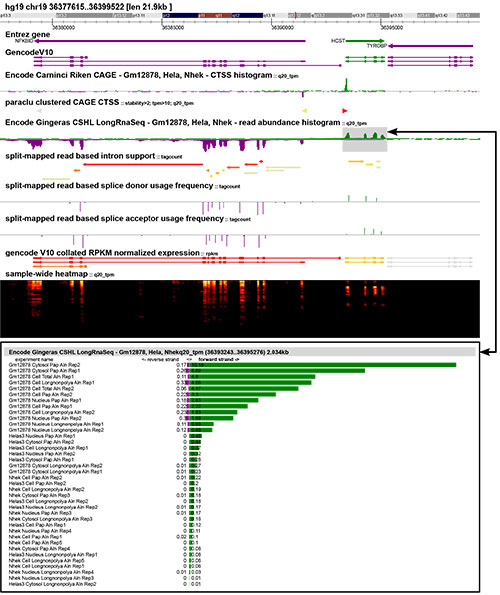
A new bioinformatics tool to visualize transcriptomes
ZENBU, a new, freely available bioinformatics tool developed at the RIKEN Center for Life Science Technology in Japan, enables researchers to quickly and easily integrate, visualize and compare large amounts of genomic information resulting from large-scale, next-generation sequencing experiments.
March 11, 2014 Read more
Synthetic biologists shine light on genetic circuit analysis (w/video)
In a significant advance for the growing field of synthetic biology, bioengineers have created a toolkit of genes and hardware that uses colored lights and engineered bacteria to bring both mathematical predictability and cut-and-paste simplicity to the world of genetic circuit design.
March 10, 2014 Read more
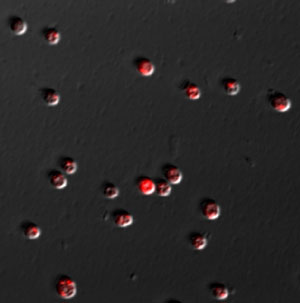
A boost for photosynthetically derived bioplastics
Enhanced photosynthesis is crucial for improving bioplastic yields from cyanobacteria.
March 7, 2014 Read more
Team models photosynthesis and finds room for improvement
Teaching crop plants to concentrate carbon dioxide in their leaves could increase photosynthetic efficiency by 60 percent and yields by as much as 40 percent, researchers report in a new study.
March 6, 2014 Read more
Computational tool offers new insight into key biological processes
Researchers have developed a computational tool designed to guide future research on biochemical pathways by identifying which components in a biological system are related to specific biochemical processes, including those processes responsible for gene expression, cell signaling, stress response, and metabolism.
March 6, 2014 Read more
Enzyme controls transport of genomic building blocks
Our DNA and its architecture are duplicated every time our cells divide. Histone proteins are key building blocks of this architecture and contain gene regulatory information. Danish researchers show how an enzyme controls reliable and high-speed delivery of histones to DNA copying hubs in our cells. This shuttling mechanism is crucial to maintain normal function of our genes and prevent diseases as cancer.
March 6, 2014 Read more
New molecules doom proteins with kiss of death
Like mobsters following strict orders, newly engineered molecules called 'ubiquibodies' can mark specific proteins inside a cell for destruction. It's a molecular kiss of death developed at Cornell University that is paving the way for new drug therapies and powerful research tools.
March 5, 2014 Read more
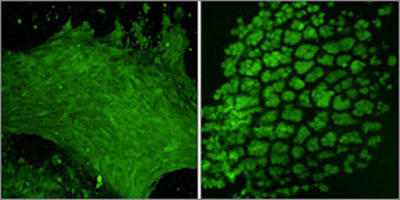
New shrinking gel steers tooth tissue formation (w/video)
A bit of pressure from a new shrinking, sponge-like gel is all it takes to turn transplanted unspecialized cells into cells that lay down minerals and begin to form teeth.
March 5, 2014 Read more
Silk-based surgical implants could offer a better way to repair broken bones
Study shows that devices from silkworm silk are potentially attractive alternatives to metal and synthetic-based systems.
March 4, 2014 Read more