

Biotechnology News – Latest Headlines
 Subscribe to our Biotechnology News feed

New biomaterials to address injuries to the peripheral nervous system
The European NEURIMP project sets out to select new biomaterials with optimum properties of biocompatibility, biodegradability and biotoxicity in addition to mechanical properties similar to those of the severed nerve.
February 12, 2014 Read more
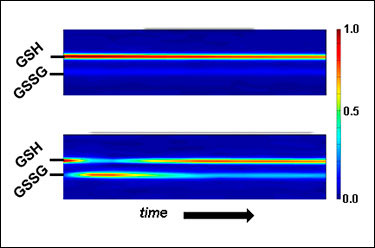
New method evaluates response to oxidation in live cells
Researchers at the National Institute of Standards and Technology (NIST) have developed a new method for accurately measuring a key process governing a wide variety of cellular functions that may become the basis for a 'health checkup' for living cells.
February 12, 2014 Read more
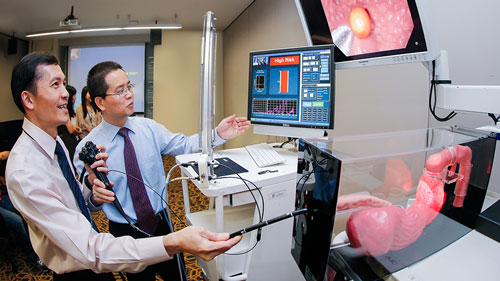
Researchers pioneer world's first real time in-vivo molecular diagnostic system that diagnoses even pre-cancerous tissues during endoscopy
In-Vivo Molecular Diagnostic System developed by NUS team makes objective, real time cancer diagnosis during endoscopic examination a reality.
February 11, 2014 Read more
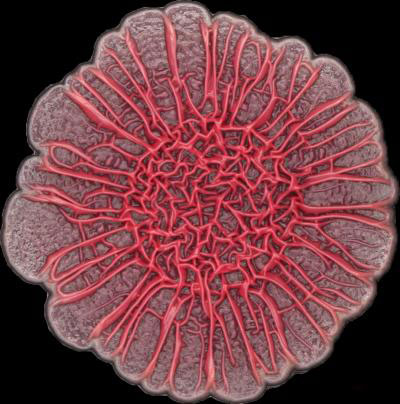
Chips that listen to bacteria
CMOS technology provides new insights into how biofilms form.
February 10, 2014 Read more
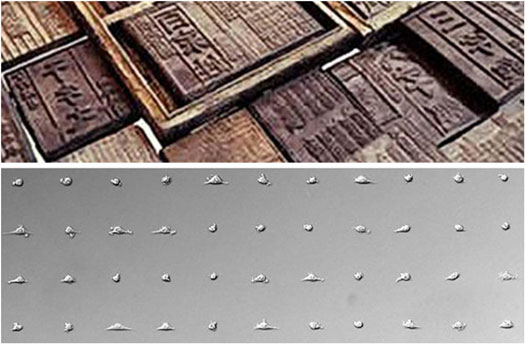
New live-cell printing technology works like ancient Chinese woodblocking
With a nod to 3rd century Chinese woodblock printing and children's rubber stamp toys, researchers in Houston have developed a way to print living cells onto any surface, in virtually any shape. Unlike recent, similar work using inkjet printing approaches, almost all cells survive the process.
February 10, 2014 Read more
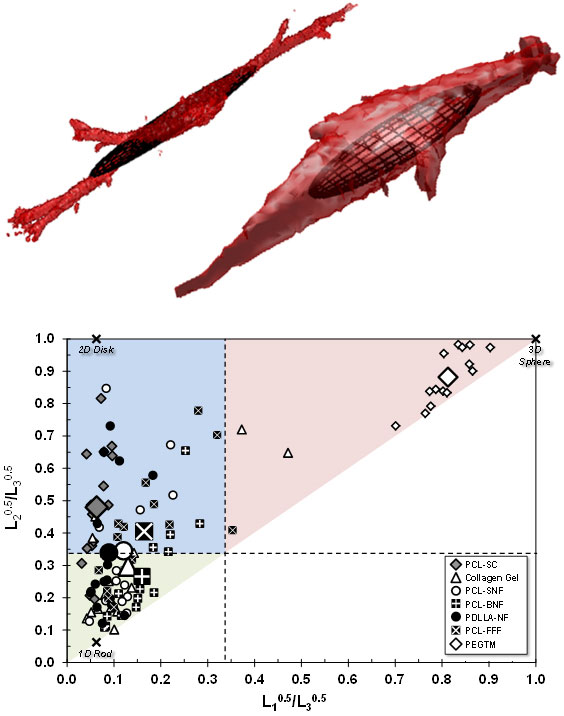
Shape-sifting: Researchers categorize bio scaffolds by characteristic cell shapes
Getting in the right shape might be just as important in a biology lab as a gym. Shape is thought to play an important role in the effectiveness of cells grown to repair or replace damaged tissue in the body. To help design new structures that enable cells to "shape up," researchers at the National Institute of Standards and Technology (NIST) have come up with a way to measure, and more importantly, classify, the shapes cells tend to take in different environments.
February 10, 2014 Read more
Cochlear implants - with no exterior hardware
A cochlear implant that can be wirelessly recharged would use the natural microphone of the middle ear rather than a skull-mounted sensor.
February 10, 2014 Read more
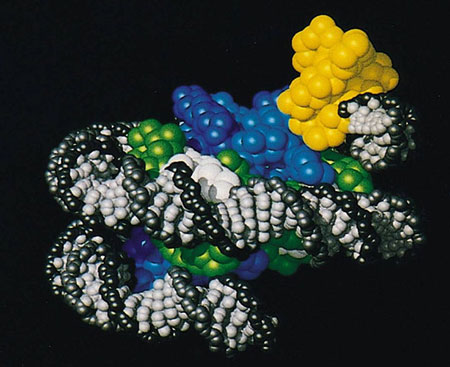
New application of physics tools used in biology
A Lawrence Livermore National Laboratory physicist and his colleagues have found a new application for the tools and mathematics typically used in physics to help solve problems in biology.
February 8, 2014 Read more
New study shows click chemistry could provide total chemical DNA synthesis
Researchers have shown for the first time that 'click chemistry' can be used to assemble DNA that is functional in human cells, which paves the way for a purely chemical method for gene synthesis.
February 7, 2014 Read more
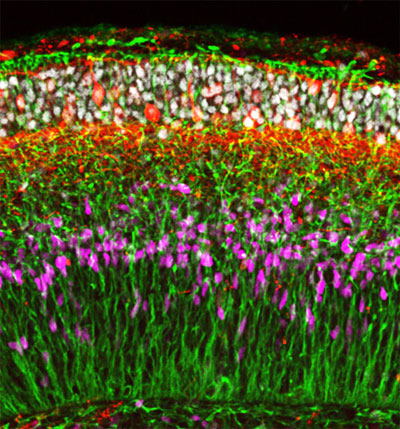
Growing brains in the lab
Human embryonic stem cells can be induced to spontaneously form developing brain tissue.
February 7, 2014 Read more
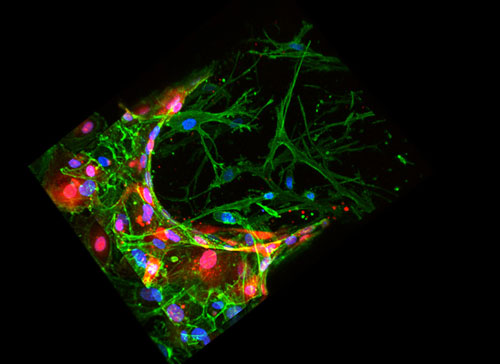
A microchip for metastasis
Researchers design a microfluidic platform to see how cancer cells invade specific organs.
February 6, 2014 Read more
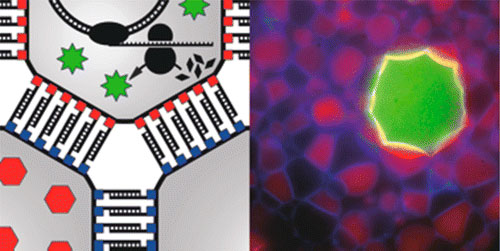
Scientists turn primitive artificial cell into complex biological materials
It is a big dream in science to start from scratch with simple artificial microscopic building blocks and end up with something much more complex: living systems, novel computers or every-day materials. For decades scientists have pursued the dream of creating artificial building blocks that can self-assemble in large numbers and reassemble to take on new tasks or to remedy defects. Now researchers from University of Southern Denmark have taken a step forward to make this dream come true.
February 4, 2014 Read more
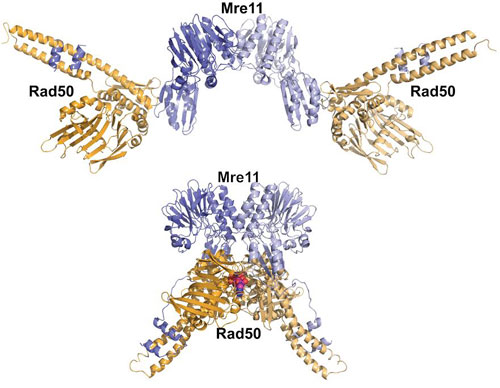
How a shape-shifting DNA-repair machine fights cancer
Maybe you've seen the movies or played with toy Transformers, those shape-shifting machines that morph in response to whatever challenge they face. It turns out that DNA-repair machines in your cells use a similar approach to fight cancer and other diseases.
February 3, 2014 Read more
Scientists develop an engineered cardiac tissue model to study the human heart
When it comes to finding cures for heart disease scientists have finally developed a tissue model for the human heart that can bridge the gap between animal models and human patients. Specifically, the researchers generated the tissue from human embryonic stem cells with the resulting muscle having significant similarities to human heart muscle.
January 30, 2014 Read more
Biochemist develops new form of synthetic nucleic acid molecule
Biochemists succeeded for the first time in creating mirror-image enzymes - so-called Spiegelzymes - out of nucleic acids. The Spiegelzymes can be used in living cells for the targeted cutting of natural nucleic acids.
January 30, 2014 Read more
UK establishes three new synthetic biology research centres
Three new multidisciplinary research centres in synthetic biology will be established in Bristol, Nottingham and through a Cambridge/Norwich partnership.
January 30, 2014 Read more
Blood and lymphatic capillaries grown for the first time in the lab
Researchers at the University Children's Hospital Zurich and the University of Zurich have engineered skin cells for the very first time containing blood and lymphatic capillaries. They succeeded in isolating all the necessary types of skin cells from human skin tissue and engineering a skin graft that is similar to full-thickness skin.
January 30, 2014 Read more
Protein synthesis and chance
In the process of protein synthesis there is a 'stochastic' component, i.e., involving random chance, which influences the time the process takes. This aspect has been investigated by two research scientists.
January 29, 2014 Read more