

Biotechnology News – Latest Headlines
 Subscribe to our Biotechnology News feed
Designer proteins provide new information about the body's signal processes
Researchers at the University of Copenhagen can radically alter the properties of proteins by redesigning their chemical structure. New fundamental research based on designer proteins highlights important communication processes in the human body. In the long term, this new knowledge may lead to pharmaceuticals with fewer side effects.
January 29, 2014 Read more
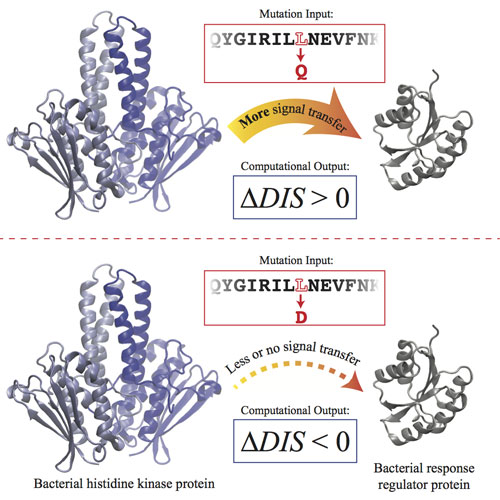
Researchers tune in to protein pairs
Scientists have created a way to interpret interactions among pairs of task-oriented proteins that relay signals. The goal is to learn how the proteins avoid crosstalk and whether they can be tuned for better performance.
January 27, 2014 Read more
Pressing the reset button in human cells with DNA-based small molecules
Researchers from the Institute of Integrated Cell-Material Sciences (iCeMS) at Kyoto University have designed a set of DNA-based molecules capable of controlling biological networks in cells.
January 27, 2014 Read more
Making therapeutic proteins last longer
Researchers developed a simple method to validate protein drugs in animal models.
January 24, 2014 Read more
Lab-grown, virus-free stem cells repair retinal tissue in mice
Investigators at Johns Hopkins report they have developed human induced-pluripotent stem cells (iPSCs) capable of repairing damaged retinal vascular tissue in mice. The stem cells, derived from human umbilical cord-blood and coaxed into an embryonic-like state, were grown without the conventional use of viruses, which can mutate genes and initiate cancers, according to the scientists.
January 24, 2014 Read more
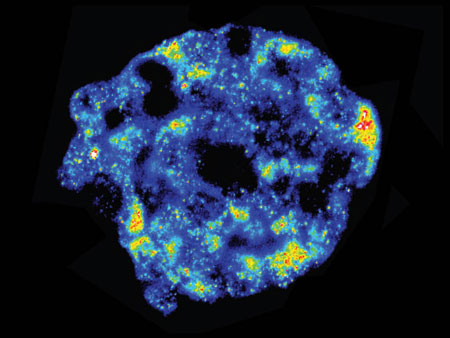
Tracing unique cells with mathematics
Stem cells can turn into heart cells, skin cells can mutate to cancer cells; even cells of the same tissue type exhibit small heterogeneities. Scientists use single-cell analyses to investigate these heterogeneities. But the method is still laborious and considerable inaccuracies conceal smaller effects. Scientists have now found a way to simplify and improve the analysis by mathematical methods.
January 23, 2014 Read more
Live feed into our bodies
A palm-top device developed by UCSB researchers provides real-time insight into how fast a living body metabolizes drugs, opening the door to highly personalized medicine.
January 22, 2014 Read more
New sequencing tools give up close look at yeast evolution
Using next-generation sequencing, researchers provide a detailed characterization of the genetic variation present within the baker's yeast species.
January 22, 2014 Read more
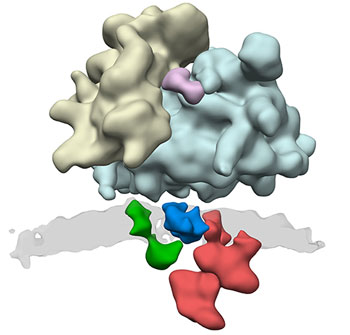
Insights into the structure of a protein transport assistant
Proteins are the molecular building blocks and machines of the cell and are involved in virtually every process of life. After protein production, many proteins are equipped with attachments such as sugar residues in order to perform their tasks properly. This process is directly coupled to the transport across a membrane. Employing various methods of structural biology, scientists have now gained insights into the architecture of the protein complex responsible for this process.
January 15, 2014 Read more
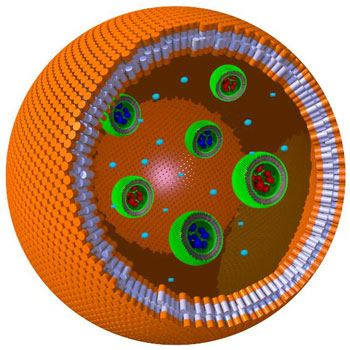
First artificial cell with working organelle
For the first time, chemists have successfully produced an artificial cell containing organelles capable of carrying out the various steps of a chemical reaction.
January 14, 2014 Read more
European network to carry out research on protein life cycle
The Proteostasis initiative, supported by the European Union (EU), is led by the Basque centre for research in biosciences, CIC bioGUNE, in collaboration with the Inbiomed foundation, and includes groups that carry out research on the degradation and modification of cellular proteins.
January 13, 2014 Read more
BLAST off! Exploring the universe of biochemical reactions
Scientists at EMBL-EBI have developed EC-BLAST: software that makes it easier to develop novel enzymes.
January 13, 2014 Read more
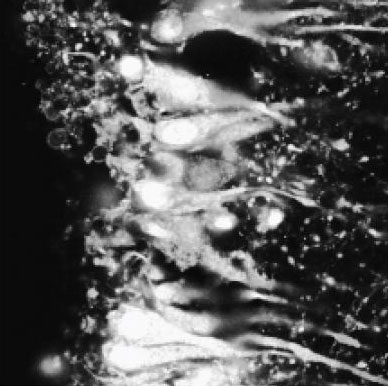
Designer 'swiss-army-knife' molecule captures RNA in single cells in their natural tissue environment
Findings allow for better understanding of how tissue microenvironment affects gene expression in healthy and diseased cells.
January 12, 2014 Read more
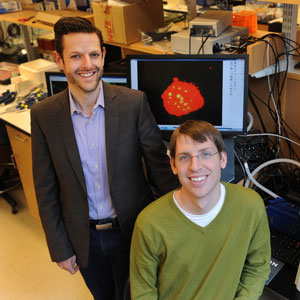
Scientists control cells following transplantation, from the inside out
Harvard stem cells scientists at Brigham and Women's Hospital and MIT can now engineer cells that are more easily controlled following transplantation, potentially making cell therapies, hundreds of which are currently in clinical trials across the United States, more functional and efficient.
January 10, 2014 Read more
Stem cells injected into nerve guide tubes repair injured peripheral nerve
When autologous, skin-derived stem cells were transplanted within collagen nerve guide tubes aimed at bridging gaps in damaged nerves, into the upper arms of a patient who was suffering peripheral nerve damage, the procedure successfully led to the rescue of peripheral nerves. The procedure spared the patient with poly-injury to motor and sensory nerve damage from amputation of the upper arms and resulted in 'suitable functional recovery'. Three year follow up revealed nerve regeneration.
January 10, 2014 Read more
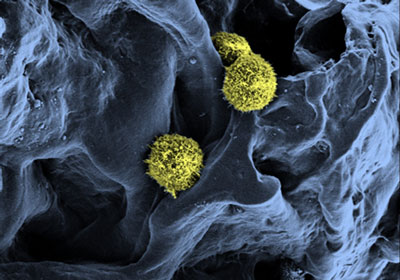
Researchers develop artificial bone marrow
Artificial bone marrow may be used to reproduce hematopoietic stem cells. A prototype has now been developed. The porous structure possesses essential properties of natural bone marrow and can be used for the reproduction of stem cells at the laboratory.
January 10, 2014 Read more
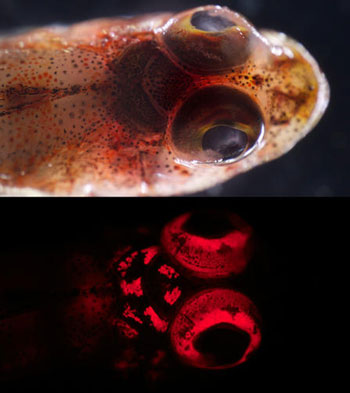
Researchers reveal covert world of fish biofluorescence (w/video)
A team of researchers led by scientists from the American Museum of Natural History has released the first report of widespread biofluorescence in the tree of life of fishes, identifying more than 180 species that glow in a wide range of colors and patterns.
January 9, 2014 Read more
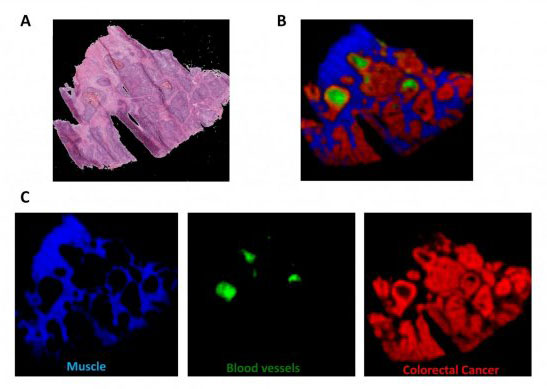
Chemical imaging brings cancer tissue analysis into the digital age
A new method for analysing biological samples based on their chemical makeup is set to transform the way medical scientists examine diseased tissue.
January 8, 2014 Read more