

Cleantech and Environmental News – Latest Headlines
 Subscribe to our Cleantech News feed

Wireless charging and discharging for electric vehicles
In the future, a wireless charging system will allow electric cars not only to charge their batteries, but also to feed energy back into the power grid, helping to stabilize it. The cost-effective charging system achieves high levels of efficiency across the whole power range, from 400 watts to 3.6 kilowatts, while the car and the charging coil can be up to 20 centimeters apart.
September 1, 2015 Read more

Gaming computers offer huge, untapped energy savings potential
In the world of computer gaming, bragging rights are accorded to those who can boast of blazing-fast graphics cards, the most powerful processors, the highest-resolution monitors, and the coolest decorative lighting. They are not bestowed upon those crowing about the energy efficiency of their system. If they were, gaming computers worldwide might well be consuming billions of dollars less in electricity use annually, with no loss in performance, according to new research.
August 31, 2015 Read more

As wind-turbine farms expand, research shows they could offer diminishing returns
Researchers evaluated the effects of large wind farms on atmospheric flow and its implications for how much renewable energy the turbines can generate.
August 31, 2015 Read more

A technique to forecast ocean wave energy
Intermittency is one of the problems affecting renewable energies, including marine energy: sometimes there's a lot; other times it's in short supply. So to properly manage sea energy and incorporate it into the mains, it is helpful to know when the waves are expected to be bringing sufficient power.
August 31, 2015 Read more
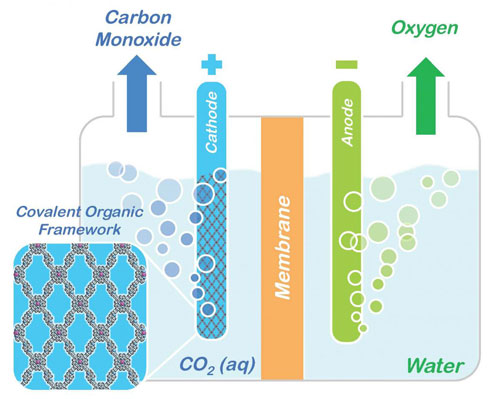
Soaking up carbon dioxide and turning it into valuable products
Researchers double down on a good thing by incorporating catalysts into crystalline sponges.
August 27, 2015 Read more
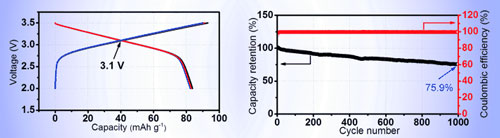
Sodium batteries for use in smart grids?
New high-performance electrode material for sodium full cells.
August 27, 2015 Read more
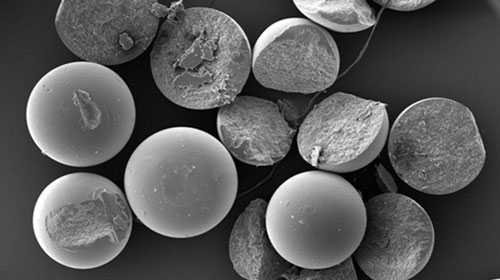
Research demonstrates millions of plastic particles exist in cosmetic products
Everyday cosmetic and cleaning products contain huge quantities of plastic particles, which are released to the environment and could be harmful to marine life, according to a new study.
August 26, 2015 Read more
We can turn CO2 in the air into new materials - but don't expect that to stop climate change
What if there were a way to suck carbon dioxide right out of the air and turn it into useful products? It might seem fantastic but scientists have actually proved it's possible. One of the challenges with making it a viable process, however, is manufacturing products that are valuable enough to cover the high costs of extracting the carbon dioxide.
August 26, 2015 Read more
How to store sunlight on a tight energy budget: Add more protons
The reaction to convert solar energy to fuel is 50 times faster with a simple change in the solvent used.
August 21, 2015 Read more
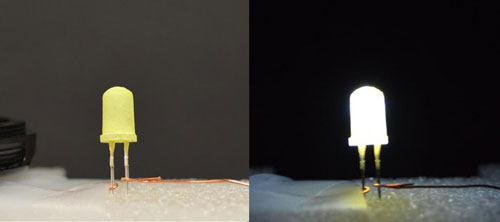
New technology can expand LED lighting, cutting energy use and greenhouse gas emissions
Highly efficient, light-emitting diodes (LEDs) could slash the world's electricity consumption. They are already sold in stores, but more widespread adoption of the technology has been hindered by high costs due to limited availability of raw materials and difficulties in achieving acceptable light quality. But researchers report today that they have overcome these obstacles and have developed a less expensive, more sustainable white LED.
August 19, 2015 Read more
New technology could reduce wind energy costs
Engineers have developed a novel technique to predict when bearings inside wind turbines will fail which could make wind energy cheaper. The method uses ultrasonic waves to measure the load transmitted through a ball bearing in a wind turbine.
August 13, 2015 Read more
Researchers use wastewater treatment to capture CO2, produce energy
Cleaning up municipal and industrial wastewater can be dirty business, but engineers have developed an innovative wastewater treatment process that not only mitigates carbon dioxide emissions, but actively captures greenhouse gases as well.
August 4, 2015 Read more

CO2 removal cannot save the oceans - if we pursue business as usual
Greenhouse-gas emissions from human activities do not only cause rapid warming of the seas, but also ocean acidification at an unprecedented rate. Artificial carbon dioxide removal from the atmosphere has been proposed to reduce both risks to marine life. A new study based on computer calculations now shows that this strategy would not work if applied too late.
August 3, 2015 Read more

Assessing the efficiency of solar-active-houses
Solar-Active-Houses heat themselves using heat collectors and water tanks. However, no one had conducted an objective assessment of how efficiently they do so. Researchers put some of these solar houses to the test, identified where there was room for improvement and laid the scientific groundwork for this housing concept.
August 3, 2015 Read more
THRIVE sets its sights on waste heat
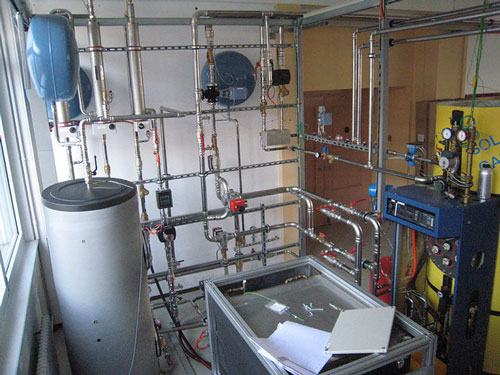
The partners in the interdisciplinary research project THRIVE will be teaming up until 2017 to develop a heat pump that is powered by waste heat.
July 27, 2015 Read more
Wind energy provides 8 percent of Europe's electricity
EU's grid connected cumulative capacity in 2014 reached 129 GW, meeting 8% of European electricity demand, equivalent to the combined annual consumption of Belgium, the Netherlands, Greece and Ireland.
July 24, 2015 Read more
Technologies, outlook and life cycle assessments for electric vehicles
The study comprehensively charts current progress in technology, identifies trends, and analyses life cycle assessments for a variety of vehicle concepts.
July 23, 2015 Read more
Perovskite solar technology shows quick energy returns
A new study reports that perovskite modules are better than any commercially available solar technology when products are compared on the basis of energy payback time.
July 20, 2015 Read more