

Cleantech and Environmental News – Latest Headlines
 Subscribe to our Cleantech News feed
Researchers building stronger, greener concrete with biofuel byproducts
Kansas State University civil engineers are developing the right mix to reduce concrete's carbon footprint and make it stronger. Their innovative ingredient: biofuel byproducts.
March 14, 2013 Read more
Monitoring manufacturing processes to optimize energy consumption
Saving energy is becoming ever more important for manufacturing companies. One prerequisite is to capture the machines' energy consumption for each step in the production process. This can be achieved with a monitoring system developed by Fraunhofer FIT that, due to its service-oriented architecture and its ability to use heterogeneous sensors, can easily be integrated in existing facilities.
March 14, 2013 Read more
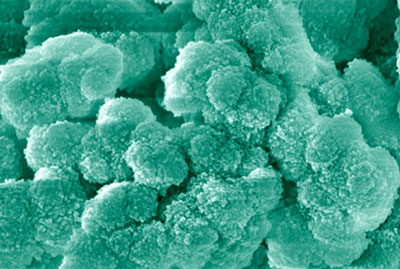
Paraffin encapsulated in beach sand material as a new way to store heat from the sun
The search for sustainable new materials to store heat captured from the sun for release during the night has led scientists to a high-tech combination of paraffin wax and sand.
March 13, 2013 Read more
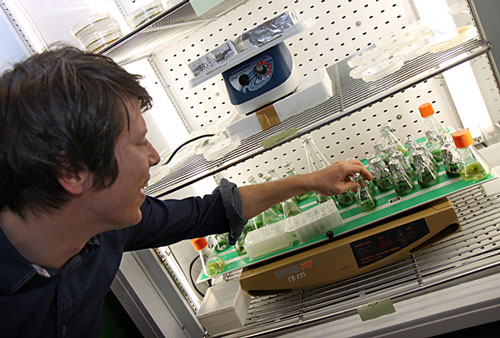
Making fuel from bacteria
In the search for the fuels of tomorrow, Swedish researchers are finding inspiration in the sea. Not in offshore oil wells, but in the water where blue-green algae thrive.
March 13, 2013 Read more
Biomass research collaboration seeks to improve biofuel efficiency, bio-products quality
A Kansas State University biochemical engineer is part of a national collaboration working to advance biomass as a leading source for more efficient drop-in biofuels, bio-power and animal feed.
March 13, 2013 Read more
Celluloseic ethanol heads for cost-competitiveness by 2016
The cost of enzymes, pre-treatment and fermentation have fallen significantly, but cellulosic biofuels still have some way to go to reduce project capital expenditure if they are to be competitive with corn-based ethanol and with gasoline.
March 13, 2013 Read more
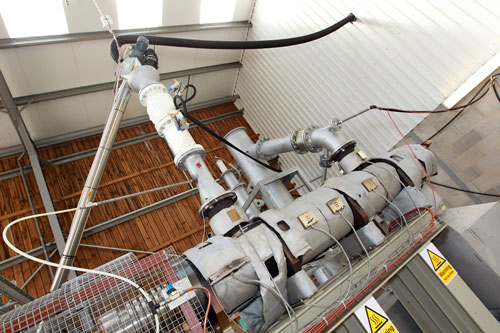
EBRI waste to energy technology awarded 'Best Technological Breakthrough'
The European Bioenergy Research Institute (EBRI) at Aston University has won 'Best Technological Breakthrough' for its innovative bioenergy technology, which transforms multiple waste products into cost effective heat and power.
March 12, 2013 Read more
Catalysts that produce 'green' fuel
The energy produced by solar panels, be it heat or electricity, has to be used right away. It is hard to store and preserve and also its transportation can be rather complicated. Creating solar cells capable of producing energy in an easily storable and transportable way, that is to say fuel, is therefore the future challenge of solar energy.
March 12, 2013 Read more
On-site electric current measurement to improve Smart Grid design
Measurement technology offers 839k tonnes of carbon savings and GBP250 million in economic benefit.
March 12, 2013 Read more
Researchers find a novel way to split water molecules into hydrogen and oxygen (w/video)
Using the power of the sun and ultrathin films of iron oxide (commonly known as rust), researchers have found a novel way to split water molecules into hydrogen and oxygen. The breakthrough could lead to less expensive, more efficient ways to store solar energy in the form of hydrogen-based fuels.
March 11, 2013 Read more
International conference to tackle climate-change threats to agriculture
Scientists and policymakers from around the world will gather March 20-22 at the University of California, Davis, to grapple with the threats of climate change for global agriculture and recommend science-based actions.
March 11, 2013 Read more
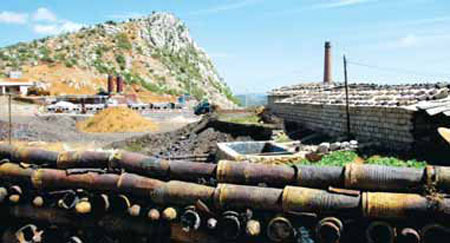
China to address mercury pollution
To address mercury pollution, an issue that has largely been overlooked in the country, China's environmental authorities are conducting a series of technology assessments and submitting proposals for policy solutions.
March 11, 2013 Read more
Tapping into previously unused green electricity
A highly dynamic technology should make it possible to store wind and solar-generated electricity that would previously have gone unused by converting excess power into hydrogen.
March 11, 2013 Read more
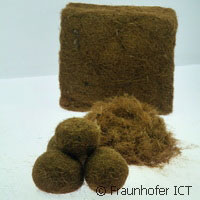
Insulating buildings with seaweed
Although this natural material is regarded as a waste product and generally ends up as landfill, this readily abundant and renewable material is in fact far too valuable to be thrown away. The seaweed displays a variety of characteristics that make it of interest to the building trade, such as virtual non-flammability and resistance to mould.
March 8, 2013 Read more
Student design competition for thermoelectric power generation products
Alphabet Energy Inc., the innovator of a platform silicon thermoelectric technology that generates power from a variety of waste-heat sources, is calling for undergraduate and graduate student applications to the company's first ever student product design competition.
March 7, 2013 Read more
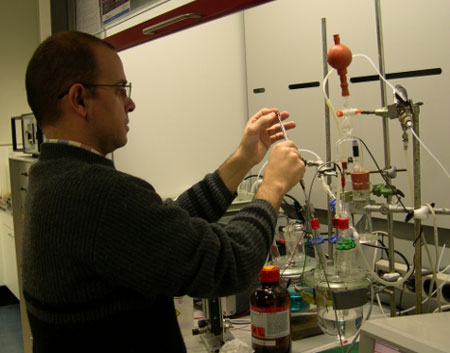
Doped carbon material produces low-cost energy and reduces CO2
Researchers from the University of Granada (UGR) have developed a new material using doped carbon that allows low-cost energy to be produced and also reduces the amount of CO2 released into the atmosphere. The recently-patented material is a gel that enables the CO2 to be turned back into hydrocarbons via electro-catalytic transformation, with great savings both in time and money.
March 7, 2013 Read more
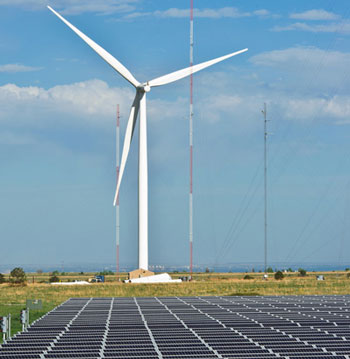
Scientists calculate the carbon footprint of grid-scale battery technologies
Stanford scientists have developed a novel way to calculate the energetic cost of building large batteries and other storage technologies for the electrical grid.
March 7, 2013 Read more

Fraunhofer-Delaware Technology Summit addresses solutions for sustainability
On Tuesday, March 5, academic scientists and engineers came together with CEOs and entrepreneurs at the inaugural Fraunhofer-Delaware Technology Summit to discuss energy and life sciences challenges in a rapidly changing global environment.
March 7, 2013 Read more