

Nanotechnology News – Latest Headlines
Institut f Nanostrukturtechnologie erforscht eine Zukunft ohne Elektrosmog und Kabelgewirr
Die ueberfluessige Strahlung des Elektrosmog koennte bald der Vergangenheit angehoeren, denn am Institut fuer Nanostrukturtechnologie und Analytik (INA) der Uni Kassel arbeiten Wissenschaftler derzeit daran, elektromagnetische Strahlen zu buendeln und punktgenau zum Bestimmungsort zu lenken.
November 15, 2010 Read more
European starting and advanced grant opportunities for research in Europe
On November 20, U.S. and international researchers will learn about the European Research Council's funding opportunities for research in Europe.
November 15, 2010 Read more
Europeans and biotechnologies in 2010 - Winds of change?
The European Commission has released their latest Eurobarometer survey on the Life Sciences and Biotechnology, which also specifically addresses nanotechnologies in the context of biotechnology. The report points to a new era in the relations between science and society. While entrenched views about GM food are still evident, the crisis of confidence in technology and regulation that characterised the 1990s - a result of BSE, contaminated blood and other perceived regulatory failures - is no longer the dominant perspective.
November 15, 2010 Read more
QUEST - Three years of research at the quantum limit
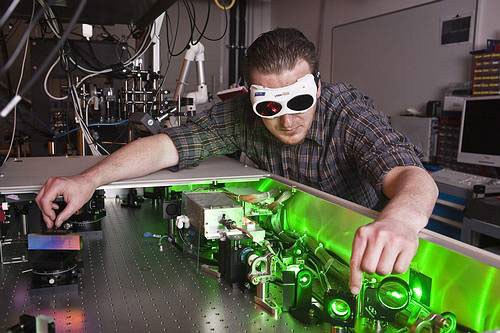
With its main research areas of quantum engineering and space-time research, QUEST is the only cluster of excellence for physics in the North of Germany. QUEST's recently published interim report gives an overview of current research topics and achievements so far.
November 15, 2010 Read more
Debunking and closing quantum entanglement 'loopholes'
An international team of physicists, including a scientist based at The University of Queensland, has recently closed an additional 'loophole' in a test explaining one of science's strangest phenomena - quantum entanglement.
November 15, 2010 Read more
AIST and CNSE plan nanotechnology research cooperation
The National Institute of Advanced Industrial Science and Technology (AIST) and College of Nanoscale Science and Engineering (CNSE) of the State University of New York signed a memorandum of understanding on September 30, 2010 on cooperative research cooperation in nanotechnology, electronics and other fields.
November 15, 2010 Read more
A new read on DNA sequencing
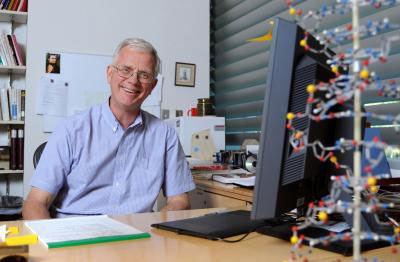
Stuart Lindsay, of the Biodesign Institute at Arizona State University, has demonstrated a technique that may lead to rapid, low cost reading of whole genomes, through recognition of the basic chemical units - the nucleotide bases that make up the DNA double helix.
November 14, 2010 Read more

Novel nanoscale light sensor compatible with 'Etch-a-Sketch' nanoelectronic platform
Combined optic and electronic technology holds promise for new nanoscale sensing devices.
November 14, 2010 Read more
New patent describes carbon nanotube binding peptides
Peptides have been generated that have binding affinity to carbon nanostructures and particularly carbon nanotubes. Peptides of or the invention are generally about twelve amino acids in length. Methods for generating carbon nanotube binding peptides are also disclosed.
November 13, 2010 Read more
Tracking nanoparticles could help in developing treatment for pulmonary disease
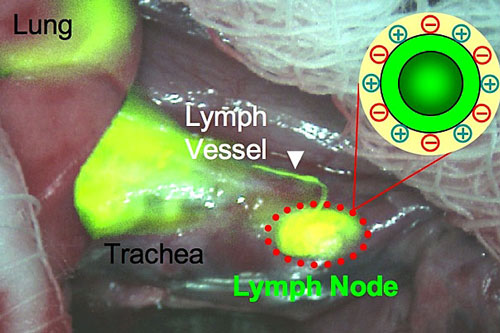
Using a real-time imaging system, scientists have tracked a group of near-infrared fluorescent nanoparticles from the airspaces of the lungs into the body and out again, providing a description of the characteristics and behavior of the particles that could be used in developing therapeutic agents to treat pulmonary disease. The findings could also offer a greater understanding of the health effects of air pollution.
November 13, 2010 Read more
Nanostructured materials repel water droplets before they have a chance to freeze
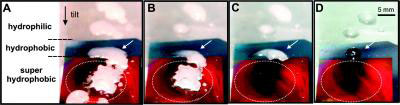
Engineers from Harvard University have designed and demonstrated ice-free nanostructured materials that literally repel water droplets before they even have the chance to freeze.
November 13, 2010 Read more
At IBM's Zurich nanotechnology laboratory, silence Is key
Inside laboratory No. 2 at IBM's new nanotechnology research facility, no can hear you scream. Once the heavy door is closed, the laboratory is essentially noise-free, insulated from electromagnetic waves and vibrations that can disrupt sensitive nanotech experiments.
November 12, 2010 Read more
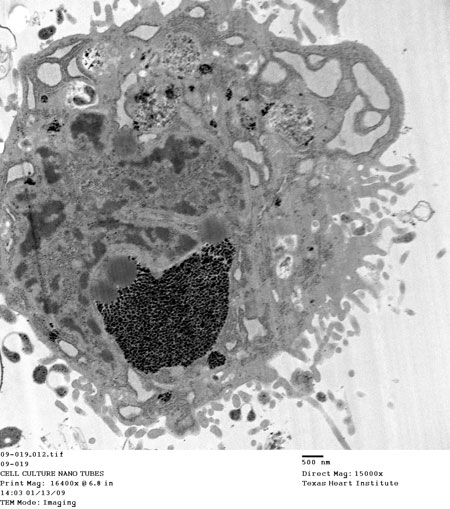
A bright future for gadonanotubes in stem cell tracking
Gadonanotubes (GNTs) developed at Rice University are beginning to show positive results in a study funded by a federal stimulus grant through the National Institutes of Health (NIH) last year.
November 12, 2010 Read more
nanoHUB.org forms User Group
To better serve its more than 150,000 users this year, nanoHUB.org is establishing a User Group to serve as a forum to facilitate the exchange of ideas among nanoHUB users.
November 12, 2010 Read more
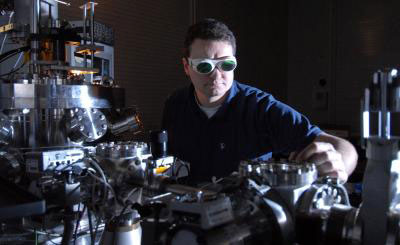
2010 ICO Prize is awarded to attosecond optics pioneer
TU Munich physicist Reinhard Kienberger received the 2010 ICO Prize for pioneering contributions to attosecond physics. One of the main goals of this new scientific discipline is to capture snapshots of the inner life of atoms.
November 12, 2010 Read more
NIEHS and NCL/NCI announce partnership to study nanotechnology safety
The National Cancer Institute (NCI)'s Nanotechnology Characterization Laboratory (NCL), part of NCI's Alliance for Nanotechnology in Cancer, is an accomplished source for testing nanomaterials for biomedical applications and is now partnering with the National Institute of Environmental Health Sciences (NIEHS) to characterize engineered nanomaterials used in risk/hazard studies.
November 12, 2010 Read more
 Subscribe to our Nanotechnology News feed