

Nanotechnology News – Latest Headlines
Using nanotechnology in cancer research
Biomedical researchers in Bergen are applying nanotechnology to mimic the body's natural processes, create new blood vessels to supply engineered tissue, and deepen our understanding of cancer.
March 23, 2010 Read more
P3SENS consortium launches project to revolutionise biosensors for Point of Care Diagnostics
A 3.6 million euro project cofunded by the 7th EU Framework Program is developing Photonic Crystal technology for multi-target biodetection of Cerebrovascular Disease.
March 23, 2010 Read more
Boulder Innovation Center brings tech transfer commercialization model to Colorado School of Mines
The Boulder Innovation Center (BIC), one of America's premier entrepreneurial support organizations, will expand and share its CU-Boulder-based research commercialization program with the Colorado School of Mines Office of Technology Transfer in Golden.
March 23, 2010 Read more
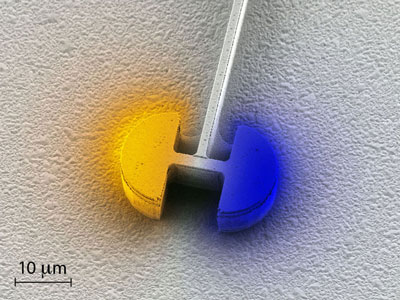
The world's smallest microlaser
ETH-Zurich physicists have developed a new kind of laser that shatters the boundaries of possibility: it is by far the smallest electrically pumped laser in the world and one day could revolutionize chip technology.
March 23, 2010 Read more
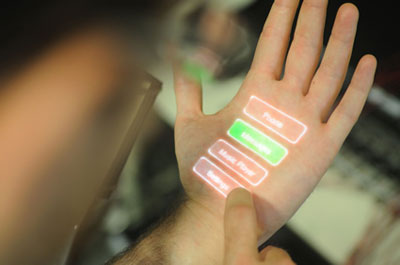
Skinput - appropriating the body as computer input surface
Skinput is a novel, non-invasive technology that appropriates the human body for acoustic transmission and allows the skin to be used as an input surface.
March 23, 2010 Read more
California NanoSystems Institute and Kyoto University enter academic and research collaboration
The California NanoSystems Institute (CNSI) at UCLA and the Institute for Integrated Cell-Material Sciences (iCeMS) at Japan's Kyoto University have signed a memorandum of understanding to collaborate on international research efforts and academic exchanges.
March 23, 2010 Read more
23 steps for a quantum walk
A team of scientists led by the Institute of Quantum Optics and Quantum Information (IQOQI) of the Austrian Academy of Sciences has successfully performed a quantum walk in a quantum system with up to 23 steps. \
March 23, 2010 Read more
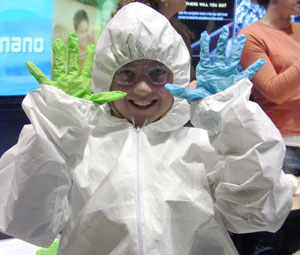
MSU celebrates NanoDays with free science outreach on March 29
Montana State University will celebrate nanoscience, the study of extremely small particles, with NanoDays, featuring free and fun family activities, set for 6-8 p.m. Monday, March 29.
March 23, 2010 Read more
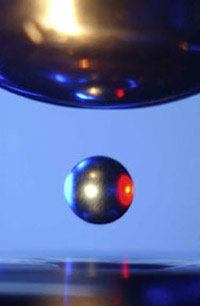
Giant 'microscope' will use neutrons to study glass transition
The National Science Foundation has awarded $1.65 million to a project led by Washington University in St. Louis physicist Ken Kelton to build an electrostatic levitation chamber that will be installed at the Spallation Neutron Source in Oakridge National Laboratory.
March 22, 2010 Read more
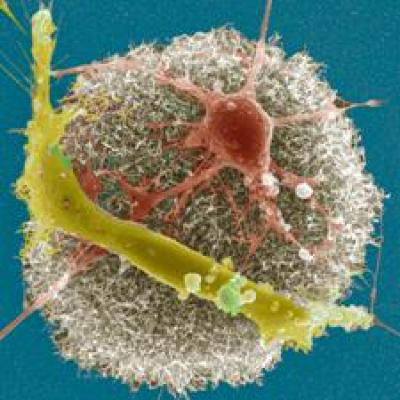
Nanotechnology-based retinal implant technology could lead to bionic eye
Television's Six Million Dollar Man foresaw a future when man and machine would become one. New research at Tel Aviv University is making this futuristic 'vision' of bionics a reality.
March 22, 2010 Read more
Leading nanotechnology website launches free job posting service
Nanowerk, the leading information provider for all areas of nanotechnologies, today added to its nanotechnology information portal a new free job posting service. The new application, called nanoJOBS, is available immediately on the Nanowerk website.
March 22, 2010 Read more
Governing uncertainty: Environmental regulation in the age of nanotechnology
This is the first volume to engage scholarly perspectives on environmental regulation in light of the challenges posed by nanotechnology. Contributors focus on the overarching lessons of decades of regulatory response, while posing a fundamental question: How can government regulatory systems satisfy the desire for scientific innovation while also taking into account the direct and indirect effects of 21st century emerging technologies, particularly in the face of scientific uncertainties?
March 22, 2010 Read more
Emergent properties of the cytoskeleton: Molecules to cells
A conference from October 3-8, 2010 in Sant Feliu de Guixols, Spain (ESF-EMBO Symposium: Emergent Properties of the Cytoskeleton: Molecules to Cells), will address the best and the newest developments in this research area.
March 22, 2010 Read more
TAU pioneers sensor technology for industry using carbon nanotubes
Electro-mechanical sensors tell the airbag in your car to inflate and rotate your iPhone screen to match your position on the couch. Now a research group of Tel Aviv University's Faculty of Engineering is making the technology even more useful.
March 22, 2010 Read more
Flexible Elektronik aus dem Drucker
Elektronische Anwendungen effektiver, sparsamer und umweltfreundlicher zu gestalten - dieses Ziel verfolgen Chemiker der Friedrich-Schiller-Universitaet Jena. Das Team um Prof. Dr. Ulrich S. Schubert vom Institut fuer Organische Chemie und Makromolekulare Chemie ist Partner im neuen europaeischen Gemeinschaftsprojekt LOTUS.
March 22, 2010 Read more
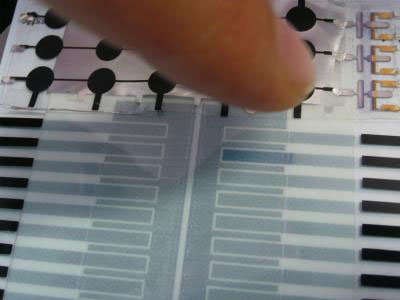
Printable sensor reacts to finger's heat signal without being touched
The cellphone is switched off but immediately springs into action at the point of a finger. It is not necessary to touch the display. This touchless control is made possible by a polymer sensor affixed to the cellphone which, like human skin, reacts to the tiniest fluctuations in temperature and differences in pressure and recognizes the finger as it approaches.
March 22, 2010 Read more
 Subscribe to our Nanotechnology News feed