

Nanotechnology News – Latest Headlines
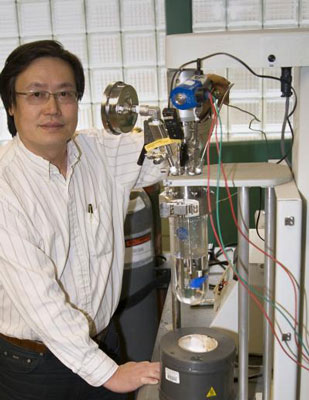
Tiny bubbles clean oil from water
Small amounts of oil leave a fluorescent sheen on polluted water. Oil sheen is hard to remove, even when the water is aerated with ozone or filtered through sand. Now, a University of Utah engineer has developed an inexpensive new method to remove oil sheen by repeatedly pressurizing and depressurizing ozone gas, creating microscopic bubbles that attack the oil so it can be removed by sand filters.
November 16, 2009 Read more
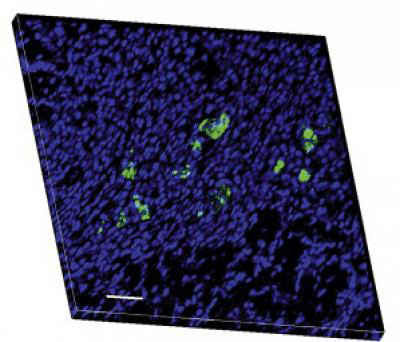
Polymer beads deliver antioxidant enzyme to injured heart cells
Researchers at Emory University and the Georgia Institute of Technology have developed microscopic polymer beads that can deliver an antioxidant enzyme made naturally by the body into the heart.
November 16, 2009 Read more
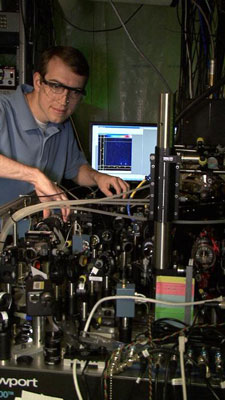
First demonstration of a 'universal' programmable quantum processor
Physicists at the National Institute of Standards and Technology (NIST) have demonstrated the first 'universal' programmable quantum information processor able to run any program allowed by quantum mechanics using two quantum bits (qubits) of information.
November 15, 2009 Read more
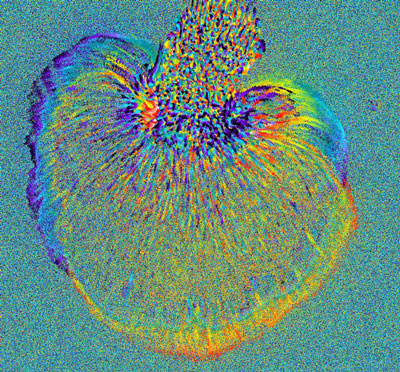
Cross-country runabouts - immune cells on the move
In order to effectively fight pathogens, even at remote areas of the human body, immune cells have to move quickly and in a flexible manner. Scientists have now deciphered the mechanism that illustrates how these mobile cells move on diverse surfaces.
November 15, 2009 Read more
Synopsys to establish a Center of Excellence for Nanoelectronic Design at KACST in Riyadh
Synopsys, Inc., a world leader in software and IP for semiconductor design, verification and manufacturing and KACST, the King Abdulaziz City of Science and Technology in Saudi Arabia, today signed an agreement to work together to promote a knowledge-based society in The Kingdom of Saudi Arabia.
November 15, 2009 Read more
Carolina Center of Cancer Nanotechnology announces new grant cycle
The Carolina Center of Cancer Nanotechnology Excellence (C-CCNE) has announced the fourth cycle of its Pilot Grant Program in Cancer Nanotechnology. Proposal must be submitted by December 14, 2009
November 14, 2009 Read more
NanoSystems Institute at UCLA to host global symposium on nanobiotechnology
The impact of nanotechnology developments on the current state of medicine and their implications for the future will be explored at the third annual Global Symposium on NanoBioTechnology, 'New Directions in NanoHealth: Diagnostics, Therapies, Drug Delivery, NanoSafety' on November 19-20, 2009 at California NanoSystems Institute at UCLA.
November 13, 2009 Read more
MEMS Executive Congress attendees laud the opportunities for MEMS in 2010 and beyond
MEMS industry execs attending the annual MEMS Executive Congress last week were rapt by presentations and panel discussions by leading innovators in automotive, bio/medical, consumer electronics, mobile communications and energy.
November 13, 2009 Read more
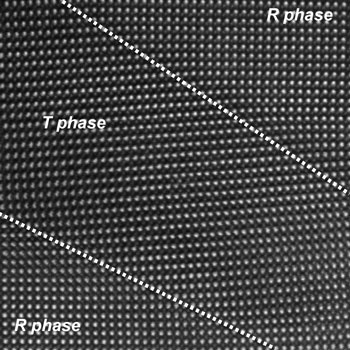
Researchers take the lead out of piezoelectrics
There is good news for the global effort to reduce the amount of lead in the environment and for the growing array of technologies that rely upon the piezoelectric effect. A lead-free alternative to the current crop of piezoelectric materials has been identified by researchers with the U.S. Department of Energy's Lawrence Berkeley National Laboratory (Berkeley Lab) and the University of California (UC), Berkeley.
November 13, 2009 Read more
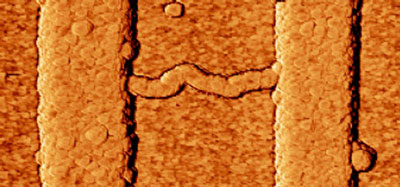
Innovationspreis ehrt patentierte Entwicklung nanoelektronischer Bauelemente
Mit dem Innovationspreis des Leibniz-Instituts fuer Polymerforschung Dresden und des Vereins zur Foerderung des IPF werden in diesem Jahr Dr. Anton Kiriy und Dr. Vera Bocharova ausgezeichnet. Sie erhalten den Preis fuer ihre Arbeiten zur Entwicklung von nanoelektronischen Bauelementen auf der Basis von einzelnen Polymermolekuelen.
November 13, 2009 Read more
Institutes join forces to tackle quantum issues
University of Queensland's School of Mathematics and Physics has strengthened its bonds with Canada's Perimeter Institute for Theoretical Physics.
November 13, 2009 Read more
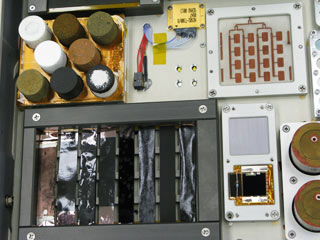
Next space shuttle mission will test performance of nanocomposites in orbit
Novel nanomaterials developed at Rensselaer Polytechnic Institute are scheduled to blast off into orbit on November 16 aboard Space Shuttle Atlantis.
November 12, 2009 Read more
NSF CAREER award for research on microtransfer printing
Reliable flexible displays are only one of a variety of new microelectronic and micromechanical devices that may become possible thanks to fundamental research by Mechanical Engineering Assistant Professor Kevin Turner.
November 12, 2009 Read more
Invisibility visualized: German team unveils new software for rendering cloaked objects
A team of researchers at the Karlsruhe Institute of Technology in Germany has created a new visualization tool that can render a room containing such an object, showing the visual effects of such a cloaking mechanism and its imperfections.
November 12, 2009 Read more
LLNL licenses carbon nanotube technology to local company
Lawrence Livermore National Laboratory has exclusively licensed to Porifera Inc. of Hayward a carbon nanotube technology that can be used to desalinate water and can be applied to other liquid based separations.
November 12, 2009 Read more
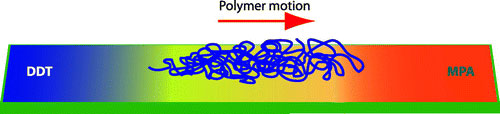
Getting molecules to move quickly in a desired direction without help from outside forces
Scientists in the United Kingdom are reporting an advance toward overcoming one of the key challenges in nanotechnology: Getting molecules to move quickly in a desired direction without help from outside forces.
November 12, 2009 Read more
 Subscribe to our Nanotechnology News feed