

Nanotechnology News – Latest Headlines
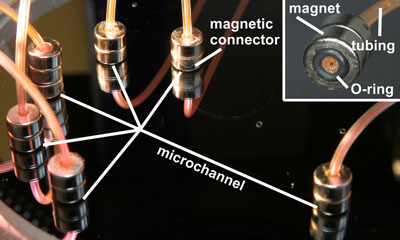
Novel connector uses magnets for leak-free microfluidic devices
NIST researchers have developed a new, inexpensive, reusable and highly efficient microfluidic connector.
November 17, 2009 Read more
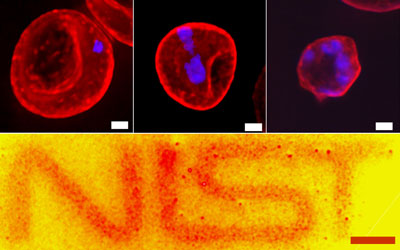
Nanoparticles bring big improvement to medical imaging
New research makes it possible to scrutinize activities that occur over hours or even days inside cells, potentially solving many of the mysteries associated with molecular-scale events occurring in these tiny living things.
November 17, 2009 Read more
Researchers create entangled photons from quantum dots
Physicists have developed a promising new source of entangled photons using quantum dots tweaked with a laser.
November 17, 2009 Read more
New study confirms exotic electric properties of graphene
Understanding the electrical properties of graphene is important because, unlike the other materials used by the electronics industry, it remains stable and conductive down to the molecular scale. As a result, when the current silicon technology reaches it's a fundamental miniaturization limit in coming years, graphene could very well take its place.
November 17, 2009 Read more
Nanotechnology webinar: Why thinking big about small things is important
A webinar on December 9, 2009 by Gradient and Day Pitney, LLP addresses the issues of how engineered nanomaterials may present health and safety risks in the workplace and how to prepare your business
November 17, 2009 Read more
Argonne to construct $95 million energy research facility
The Energy Sciences Building (ESB) will provide an environment that will accelerate the pace of discovery by bringing together interdisciplinary teams of researchers in a space that can be adjusted to accommodate an evolving energy-related science agenda. Construction is scheduled to begin during fiscal year 2011.
November 17, 2009 Read more
Swansea nanotechnology center home for one of UK's most sophisticated electron-microscopes
Known as a cryo-scanning electron microscope, the device is capable of examining single cells or even single molecules and will be used to help researchers within the Multidisciplinary Nanotechnology Centre (MNC) carry out high level research and development in a range of sectors from healthcare and steel to printed electronics and solar cells.
November 17, 2009 Read more
NSF grant to make fluorescence lifetime imaging more efficient and simpler to implement
With a new grant of more than $675,000 from the National Science Foundation, Warren Zipfel, associate professor of biomedical engineering, is working to make fluorescence lifetime imaging more efficient and simpler to implement.
November 17, 2009 Read more
Nanotechnology team discover how to capture tumor cells in bloodstream
A team led by University of Arkansas for Medical Sciences researchers on the cutting edge of nanotechnology has found a way to capture tumor cells in the bloodstream that could dramatically improve earlier cancer diagnosis and prevent deadly metastasis.
November 17, 2009 Read more
European Research Council funds nanobiotechnology at TU Delft with 2.5 million euros
The European Research Council (ERC) has awarded a prestigious EUR 2.5 million Advanced Grant to the Institute of Nanoscience at Delft University of Technology in the Netherlands (TU Delft) for its work in bio-nano research.
November 17, 2009 Read more

Start-up develops and commercializes large area screen printed electronics for advertising and packaging
The nanoelectronics research center IMEC, Hasselt University and the Belgian screen printing company Artist Screen announce the start of their spin-off Lumoza NV. The new company develops and commercializes large area screen printed electronics for the advertising and packaging industry.
November 17, 2009 Read more
IMEC shows optimizations for next-generation transistors
IMEC has achieved promising results in the race to scale CMOS to 22nm and below. The breakthroughs from its transistor scaling programs include a successful integration of the laser-anneal technique in a high-K/metal-gate first process and a step forward towards fabricating aggressively scaled germanium-pFET transistors.
November 17, 2009 Read more
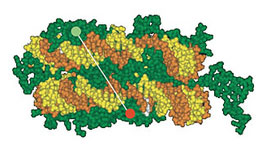
Single molecule spectroscopy shows how genetic material is unwrapped
Using a new biophysical method called single molecule spectroscopy, scientists were able to directly observe the unwrapping mechanisms and characterize the intermediate stages leading to free genetic material.
November 17, 2009 Read more
Predicting the effectiveness of metal catalysts
Researchers at the Laboratoire de Chimie de Lyon have used numerical simulation methods to show how the selectivity of reaction mechanisms at the surface of a metal catalyst can be understood far more simply.
November 17, 2009 Read more
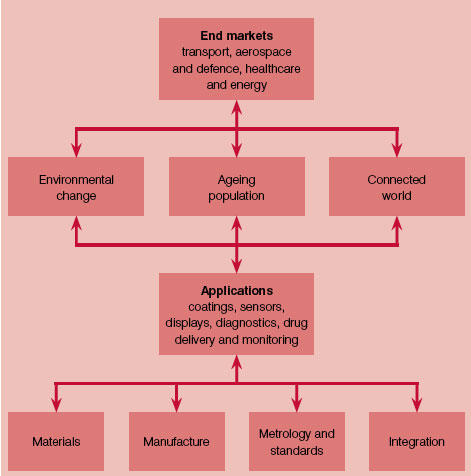
UK strategy for nanotechnology business development
The UK's Technology Strategy Board has developed a nanotechnology strategy document that sets out the processes the Technology Strategy Board will use to determine how it will invest in the nanotechnology space in a way that helps UK businesses to succeed on a global scale.
November 17, 2009 Read more
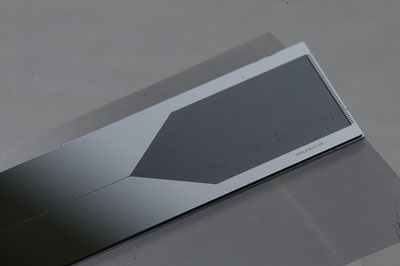
IBM scientists reinvent medical diagnostic testing with new lab-on-chip
IBM scientists have created a one-step point-of-care-diagnostic test, based on an innovative silicon chip that requires less sample volume, is significantly faster, portable, easy to use and can test for many diseases, including one of world's leading cause of death, cardiovascular disease.
November 17, 2009 Read more
 Subscribe to our Nanotechnology News feed