

Nanotechnology News – Latest Headlines
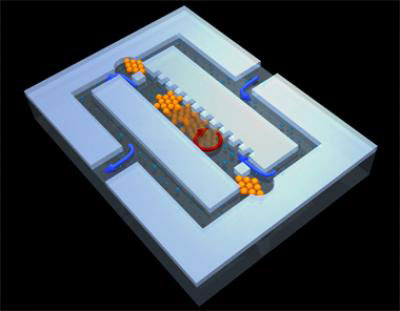
Ship-in-a-bottle kit on a microchip
Scientists at the Max Planck Institute for Metals Research, the University of Stuttgart and the Colorado School of Mines have constructed micromachines using the same trick that model makers use to get ships into a bottle where the masts and rigging of the sailing ship are not erected until it is in the bottle.
December 2, 2008 Read more
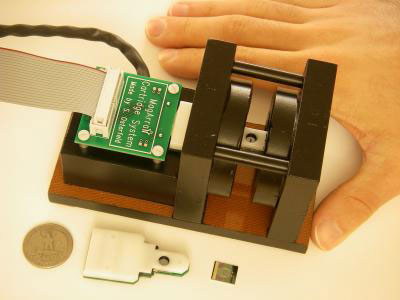
Magnetic nanotechnology scanner detects even faint indicators of cancer
A team led by Stanford researchers has developed a prototype blood scanner that can find cancer markers in the bloodstream in early stages of the disease, potentially allowing for earlier treatment and dramatically improved chances of survival.
December 2, 2008 Read more
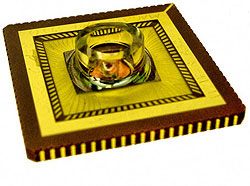
Magnetic nanotags allow sensitive detection of cancer biomarkers
A team led by researchers at Stanford University and the University of California, Santa Cruz, has developed a compact prototype detector that uses magnetic nanotechnology to spot cancer-associated proteins in a human blood serum sample with much higher sensitivity than current detectors.
December 1, 2008 Read more
Bringing lab-on-a-chip to a surgery near you
If doctors were able to conduct efficient genetic analysis at the point of care, using inexpensive, portable equipment, it would revolutionise disease detection and treatment. European researchers are close to enabling this revolution.
December 1, 2008 Read more
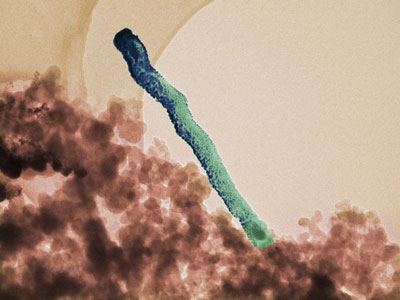
How plasma technology promises to greatly reduce the cost of fuel cell manufacture
Professor Rod Boswell and the Space Plasma, Power and Propulsion Group at ANU have been working with plasmas for many years and recently became interested in the possibility using plasma deposition technology to dramatically reduce the cost of making fuel cells.
December 1, 2008 Read more
Nanotechnology piezoelectronics will make self-powered devices possible
A certain type of piezoelectric material can covert energy at a 100 percent increase when manufactured at a very small size ? in this case, around 21 nanometers in thickness.
December 1, 2008 Read more
European Technology Platform for Sustainable Chemistry brokerage event
The event will cover the recent FP7 project calls announced in the Nanosciences, Nanotechnologies. Materials and new Production technologies (NMP) area.
December 1, 2008 Read more
Leeds University and King Saud University agree nanotechnology research cooperation
The partnership will oversee the development of collaborations in nanoscience, technology and engineering with the King Abdullah Institute of Nanotechnology.
December 1, 2008 Read more
Gap Awards to move nanotechnology from the lab to market
Judith Sheft, associate vice president for technology development at NJIT, has been awarded funds from the New Jersey Commission on Science and Technology to assist faculty researchers with the most promising patentable inventions with funding grants of up to $50,000. The money, known as Gap grants, is designed to help bridge the chasm between an interesting idea and a commercial product.
December 1, 2008 Read more
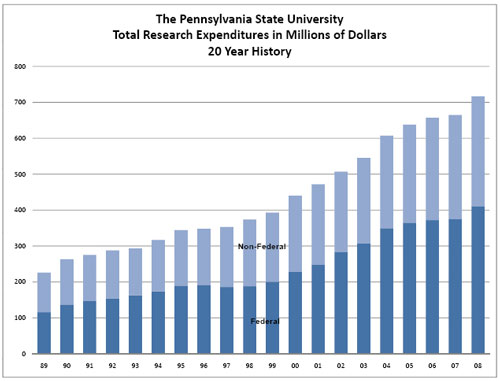
Growth in research funding at Penn State spurs innovation, economic development
Penn State reports a record $717 million in research funding for 2007-2008, ranking the University among top universities nationwide. Such a vibrant enterprise plays a key role in finding solutions to public problems and growing the economies in Pennsylvania and the nation, according to the University.
December 1, 2008 Read more
Powerful antioxidant properties to fight diseases, efficient catalyst for converting biofuels
Scientists at Singapore's Institute of Bioengineering and Nanotechnology (IBN) have uncovered new properties of imidazolium salts (IMSs), which suggest that they could play a vital role in disease prevention and treatment.
December 1, 2008 Read more
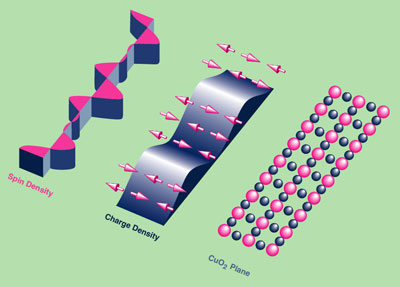
'Striped' material offers more clues to high-temperature superconductivity
Scientists studying a material that appeared to lose its ability to carry current with no resistance say new measurements reveal that the material is indeed a superconductor - but only in two dimensions.
December 1, 2008 Read more
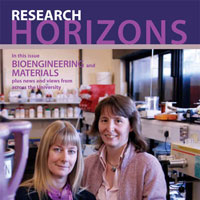
University of Cambridge launches online research magazine
A magazine that showcases the latest research, discoveries and innovations from the University of Cambridge has now been launched online.
November 30, 2008 Read more
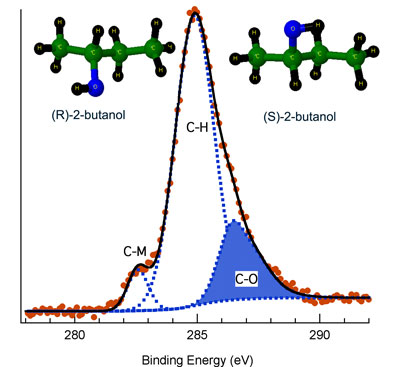
Scientists induce chirality in pre-biological molecules
The creation of chirality from the elementary building blocks of matter is one of the great mysteries of the origin of life. Scientists at the U.S. Department of Energy's Argonne National Laboratory have discovered a way to induce this handedness in pre-biological molecules.
November 29, 2008 Read more
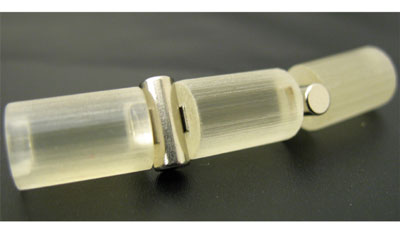
Surgery with swallowed, self-assembling stomach robot
In the future, tablet-shaped robots could perform some surgical operations without injuring the body.
November 29, 2008 Read more
New nanotechnology educational resource offers teachers ready-to-use modules
AccessNano provides teachers with 13 ready-to-use, versatile, web-based teaching modules, featuring PowerPoint presentations, experiments, activities, animations and links to interactive websites. Topics covered fit into current Australian curricula requirements, and include teaching units for Years 7-11.
November 29, 2008 Read more
 Subscribe to our Nanotechnology News feed