

Nanotechnology News – Latest Headlines
Could nanotechnology solve the water crisis?
Researchers in India explain how carbon nanotubes could replace conventional materials in water-purification systems.
September 15, 2008 Read more
Nanopartikel als Kuriere in der Krebstherapie
Prof. Dr. Katharina Landfester, neue Direktorin am Max-Planck-Institut fuer Polymerforschung in Mainz, untersucht, wie Nanopartikel als Kuriere unter anderem in der Krebstherapie eingesetzt werden koennen.
September 15, 2008 Read more
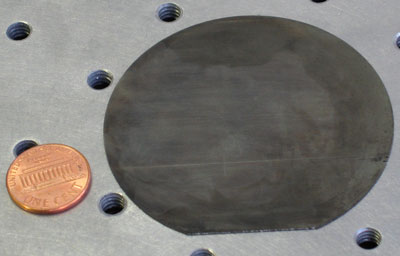
New method cuts waste in making most efficient solar cells
University of Utah engineers devised a new way to slice thin wafers of the chemical element germanium for use in the most efficient type of solar power cells. They say the new method should lower the cost of such cells by reducing the waste and breakage of the brittle semiconductor.
September 14, 2008 Read more
Three scientists share 2008 Lasker Award for Basic Medical Research
Top US medical science award honors discovery of small regulatory RNAs.
September 13, 2008 Read more
Symposium: Transnational Models for Regulation of Nanotechnology
The University of Dayton School of Law's Intellectual Property Law Society and its Program in Law and Technology are hosting 'Transnational Models for Regulation of Nanotechnology' on Tuesday, October 7, 2008.
September 12, 2008 Read more
Nanotechnology pioneer honored at Montana State University
Professor Trevor Douglas has been appointed Letters and Science Distinguished Professors at Montana State University.
September 12, 2008 Read more
Cornell brings its medical researchers closer to cutting-edge nanotechnology
Symposium on nanomedicine to introduce new nanotechnology facility office at New York's Weill Cornell Medical College.
September 12, 2008 Read more
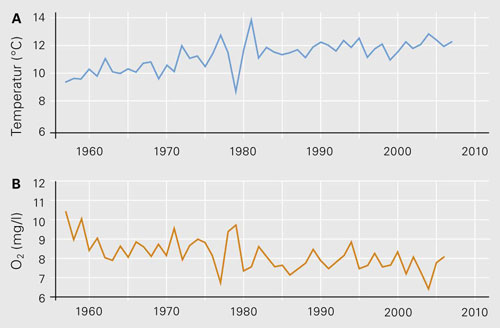
Nanofiltration method could play a role in search for innovative drinking water treatments
In industrialized countries water utilities are ageing and need to be renewed. In partnership with the water sector, the aquatic research institute Eawag is identifying ways of ensuring that high-quality drinking water supplies remain available in the future.
September 12, 2008 Read more
Quadrupole DNA sequencing
Research at Oak Ridge National Laboratory is exploring how a system of nanotubes, magnets and electrically charged particles could lead to a quicker, cheaper way to conduct DNA sequencing.
September 12, 2008 Read more

Exploiting quantum entanglement could lead to a million times more efficient detectors
A bizarre but well-established aspect of quantum physics could open up a new era of electronic detectors and imaging systems that would be far more efficient than any now in existence, according to new insights by an MIT leader in the field.
September 12, 2008 Read more
Novel tungsten oxide nanotubes expected to be useful as indoor photocatalysts
Researchers in Japan have successfully synthesized tungsten oxide nanotubes by a simple hydrothermal method. These nanotubes are composed of aggregates of crystallites and have a nanoporous structure with fine, nanometer-scale pores on their walls. This structure provides the nanotubes with a large specific surface area, enabling high photocatalytic activity.
September 12, 2008 Read more
NIST seeks suggestions for future R+D funding areas
The National Institute of Standards and Technology (NIST) is soliciting suggestions on areas of critical national and societal needs that could be addressed by transformative new technologies.
September 12, 2008 Read more
Trends in Nanotechnology event covered new and existing European projects
The ninth edition of the Trends in Nanotechnology Conference (September 1-5, 2008) held in Oviedo, Spain, presented a broad range of current research in Nanoscience and Nanotechnology as well as related policies (European Commission, etc.) or other kind of initiatives (iNANO, CIC nanoGUNE, GDR-E, etc.).
September 12, 2008 Read more
Yet another technique for making an invisibility cloak
Scientists in Spain have managed, by means of a numerical technique known as Transmission Line Matrix (TLM) Modelling method, to hide an object or make it invisible in a certain frequency, inside an electromagnetic simulator.
September 12, 2008 Read more
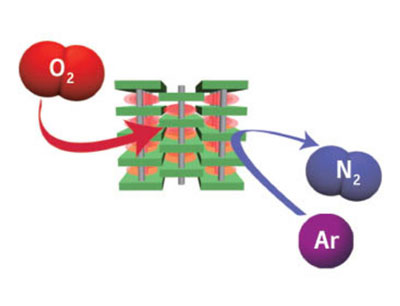
Researchers reveal reason behind selective gas adsorption of flexible PCPs
Researchers in Japan have revealed important information about why the threshold of gas pressure required for the structural transformation of flexible, three-dimensional molecular networks known as porous coordination polymers (PCPs) varies for different gases.
September 11, 2008 Read more
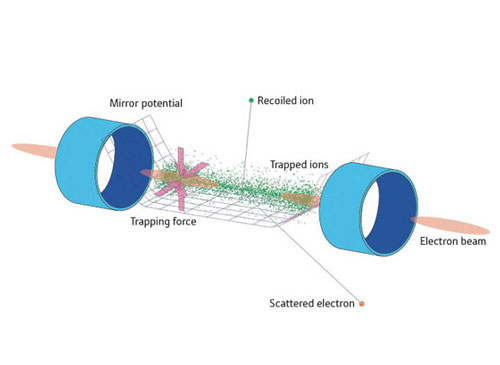
New technique enables study of the internal structure of unstable nuclei
A team of Japanese researchers has developed a technique that will enable the study of the internal structure of unstable (radioactive) nuclei with electron scattering
September 11, 2008 Read more
 Subscribe to our Nanotechnology News feed