

Biotechnology News – Latest Headlines
 Subscribe to our Biotechnology News feed
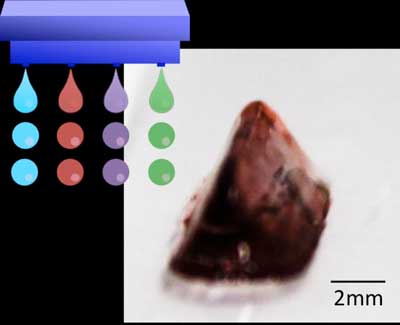
Growing organs a few ink drops at a time
Researchers refine method of making bio-ink droplets stick to each other, enabling 3D printing of highly complex biological structures with a wide variety of cell types using inkjet printers.
December 27, 2017 Read more
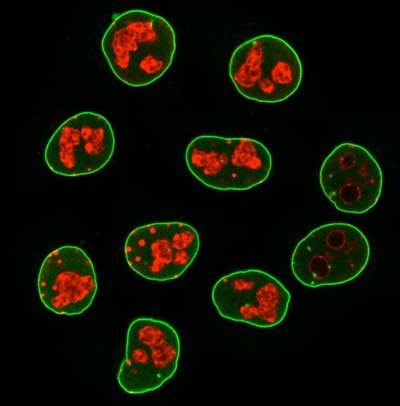
Fewer laboratory animals thanks to secondary nanobodies
Scientists have developed so-called secondary nanobodies that can replace the most-used antibodies and may drastically reduce the number of animals in antibody production. This is possible because the secondary nanobodies can be produced in large scale by bacteria.
December 21, 2017 Read more
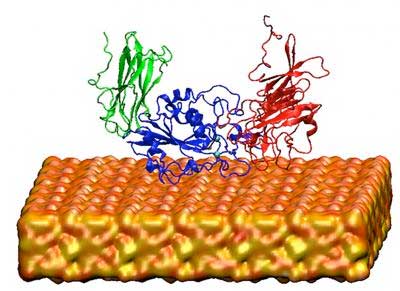
Silky secrets to make bones
Some secrets to repair our skeletons might be found in the silky webs of spiders, according to recent experiments guided by supercomputers.
December 19, 2017 Read more
Scientists make research 'jelly' grow more like biological tissues
Opens up new possibilities in tissue engineering and soft robotics.
December 19, 2017 Read more
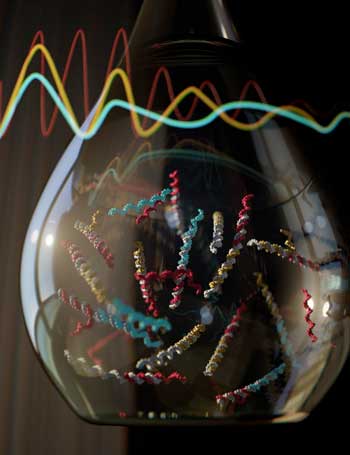
First-of-its-kind chemical oscillator offers new level of molecular control (w/video)
Researchers successfully constructed a first-of-its-kind chemical oscillator that uses DNA components. DNA molecules that follow specific instructions could offer more precise molecular control of synthetic chemical systems, a discovery that opens the door for engineers to create molecular machines with new and complex behaviors.
December 14, 2017 Read more
Revealing the best-kept secrets of proteins
Scientists develop new approach to identify important undiscovered functions of proteins.
December 14, 2017 Read more
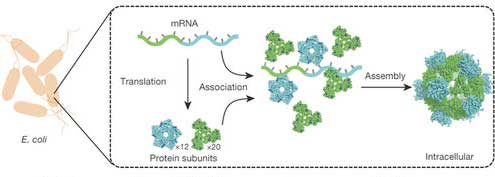
Synthetic protein packages its own genetic material and evolves
Computationally designed protein assemblies are advancing research in synthetic life and in targeted drug delivery.
December 14, 2017 Read more
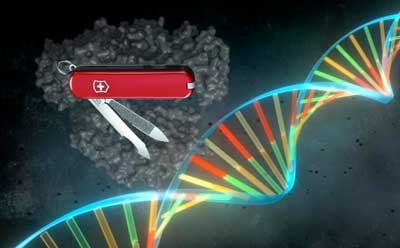
Searching for the CRISPR Swiss-army knife
Researchers have visualized the atomic structures of the Cpf1 and Cas9 proteins to analyse each of their properties and peculiarities that make them ideal for different applications in gene modification.
December 11, 2017 Read more
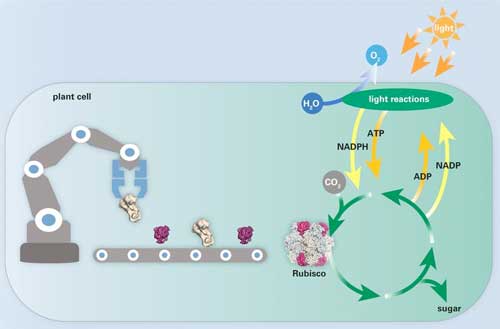
The future of crop engineering
Scientists aim to boost photosynthesis to meet the increasing global demand for food by engineering its key enzyme Rubisco. Now, researchers have succeeded in producing functional plant Rubisco in a bacterium. This allows genetic engineering of the enzyme.
December 8, 2017 Read more
DNA has gone digital - what could possibly go wrong?
Biology is becoming increasingly digitized. Researchers like us use computers to analyze DNA, operate lab equipment and store genetic information. But new capabilities also mean new risks - and biologists remain largely unaware of the potential vulnerabilities that come with digitizing biotechnology.
December 7, 2017 Read more
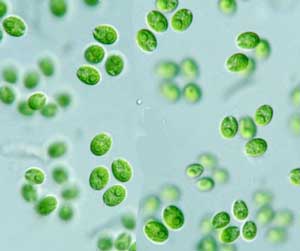
Algae could feed and fuel planet with aid of new high-tech tool
Vast quantities of medicines and renewable fuels could be produced by algae using a new gene-editing technique, a study suggests.
December 7, 2017 Read more
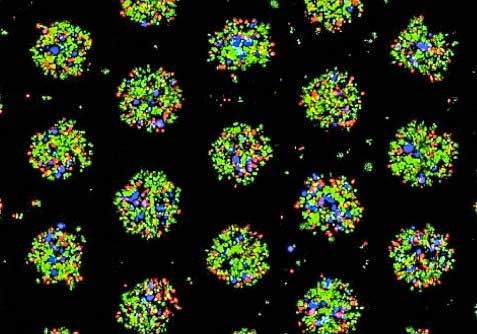
Scientists create successful mass production system for bioengineered livers
Technology overcomes hurdles to making human liver tissues for patient transplant.
December 5, 2017 Read more
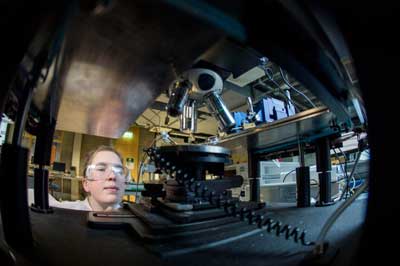
Researchers generate electricity from low-cost biomaterial
Researchers squeeze low-cost electricity from sustainable biomaterial.
December 4, 2017 Read more
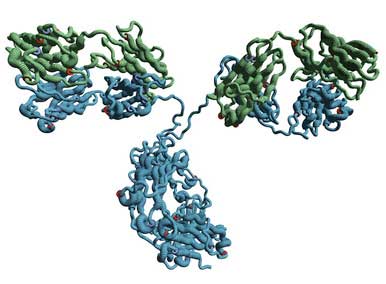
Computer analysis fills gaps in antibody blueprint
Antibodies consist of proteins with attached sugars. However, the blueprint directing the processing of these sugars on the protein was not well understood until now. Scientists used computer analysis to complete this blueprint and confirmed their findings in the laboratory.
November 30, 2017 Read more
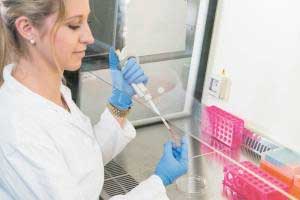
Organs on microchips for safe drug testing
Miniaturized organs on a chip enable drug tests prior to application to humans. Researchers have developed such an organ-on-a-chip system with accurately modeled blood vessels.
November 30, 2017 Read more

World's smallest tape recorder is built from microbes (w/video)
Microscopic data recorder takes advantage of CRISPR to monitor biological surroundings.
November 23, 2017 Read more
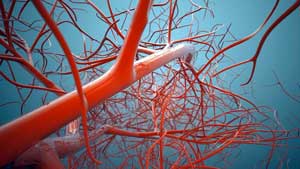
Scientists find key to regenerating blood vessels
Findings may lead to therapies to repair ischemic tissue.
November 23, 2017 Read more

Report highlights opportunities and risks associated with synthetic biology and bioengineering
Human genome editing, 3D-printed replacement organs and artificial photosynthesis - the field of bioengineering offers great promise for tackling the major challenges that face our society. But as a new article highlights, these developments provide both opportunities and risks in the short and long term.
November 21, 2017 Read more