

Biotechnology News – Latest Headlines
 Subscribe to our Biotechnology News feed
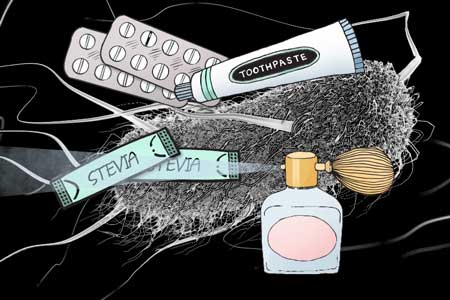
Microbial manufacturing
Engineered bacteria produce rare and commercially useful compounds in large quantities.
February 3, 2017 Read more
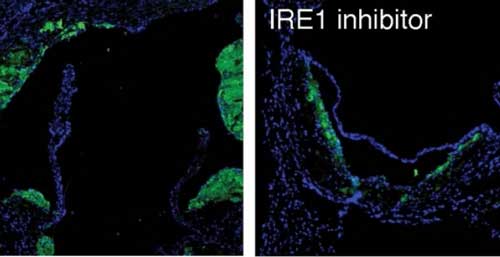
Origami of the cell
Cell biologists show that blocking a critical enzyme helps to mitigate diseases associated with protein folding and lipid stress.
January 31, 2017 Read more
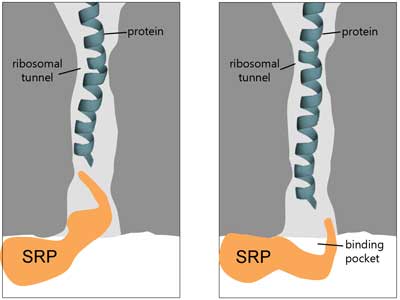
The role of the tunnel
Researchers discover new molecular details about protein sorting in the cell.
January 31, 2017 Read more
A better way to farm algae
Researchers have developed a method that improves the growth of microalgae, which could have big implications for production of biofuels and other valuable chemicals.
January 30, 2017 Read more
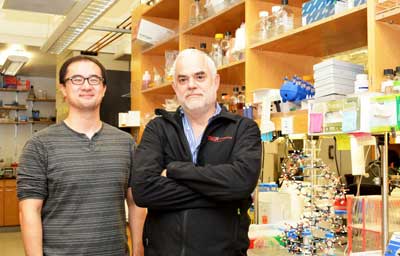
Scientists create first stable semisynthetic organism
Researchers created a new bacterium that uses the four natural bases (called A, T, C and G), which every living organism possesses, but that also holds as a pair two synthetic bases called X and Y in its genetic code.
January 23, 2017 Read more
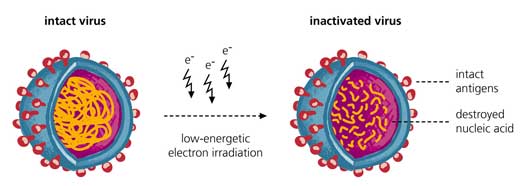
More efficient vaccine production
Many vaccines contain viruses that are inactivated to prevent them from harming recipients. This is generally achieved by adding chemicals. Now scientists are taking a different approach, using low-energy-electrons to irradiate the pathogens. The advantages of this new method are that it produces no toxic waste and provides a faster and less aggressive way of rendering pathogens inactive.
January 18, 2017 Read more
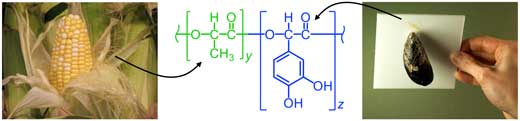
Shellfish chemistry combined with polymer to create new biodegradable adhesive (w/video)
A new type of adhesive that combines the bonding chemistry of shellfish with a bio-based polymer has been shown to perform as well as commercially available products and can be easily degraded, representing a potential non-toxic alternative.
January 17, 2017 Read more
New tool can help policymakers prioritize information needs for synthetic biology tech
Scientists have developed a model that can be used to assess emerging synthetic biology products, well before they are ready for the market, to determine what needs to be done to inform future policies.
January 17, 2017 Read more
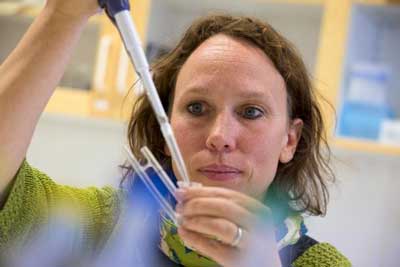
How solvents affect the skin
Researchers have developed a method that makes it possible to see how individual molecules from solvents in skin creams, medicated ointments and cleaning products affect and interact with the skin's own molecules.
January 17, 2017 Read more
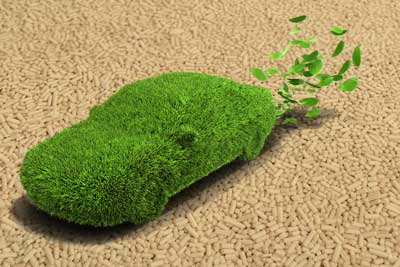
A step toward renewable diesel
Chemical engineers have genetically reprogrammed a strain of yeast so that it converts sugars to fats much more efficiently, an advance that could make possible the renewable production of high-energy fuels such as diesel.
January 17, 2017 Read more
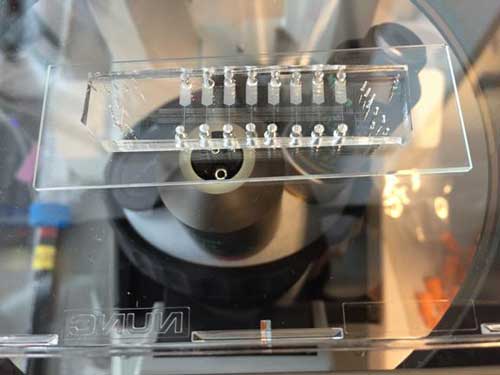
SMiLE-seq: A new technique speeds up genetics
Scientists have developed a technique that can be a game-changer for genetics by making the characterization of DNA-binding proteins much faster, more accurate, and efficient.
January 16, 2017 Read more
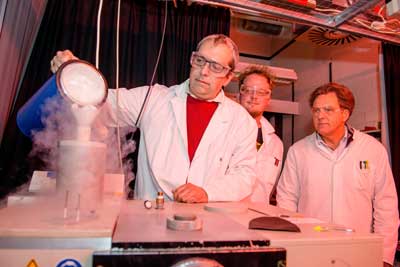
Protein research: the computer as microscope
Using a combination of infrared spectroscopy and computer simulation, researchers have gained new insights into the workings of protein switches. With high temporal and spatial resolution, they verified that a magnesium atom contributes significantly to switching the so-called G-proteins on and off.
January 16, 2017 Read more
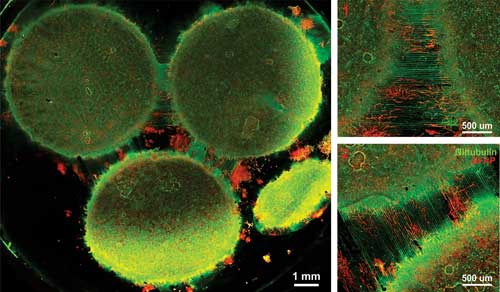
Multiregional brain on a chip
Researchers have developed a multiregional brain-on-a-chip that models the connectivity between three distinct regions of the brain. The in vitro model was used to extensively characterize the differences between neurons from different regions of the brain and to mimic the system's connectivity.
January 13, 2017 Read more
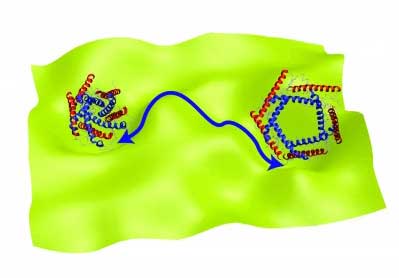
Chemist develops new theory for explaining the function of proteins
Researcher bases explanation on shape and movement of proteins and other biomolecules, rather than historical model of composition.
January 13, 2017 Read more
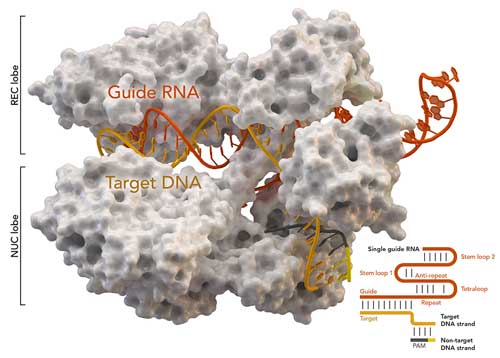
Catching CRISPR in action
Researchers use supercomputers to create first all-atom simulation of genome editing in action.
January 11, 2017 Read more
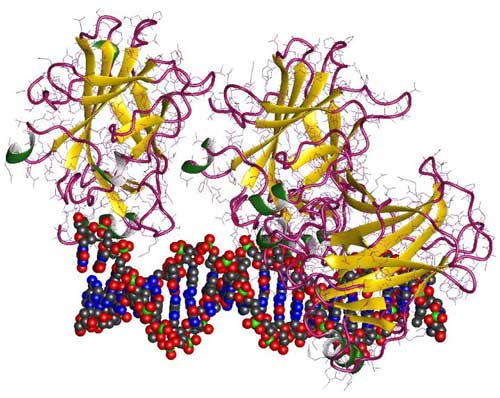
A biosensor is able to detect tumors at early stages
Researchers have developed a biosensor that has been able to detect cancer antibodies in serum samples of patients with colorectal and ovarian cancer. The developed method is faster and more accurate than traditional methods.
January 11, 2017 Read more
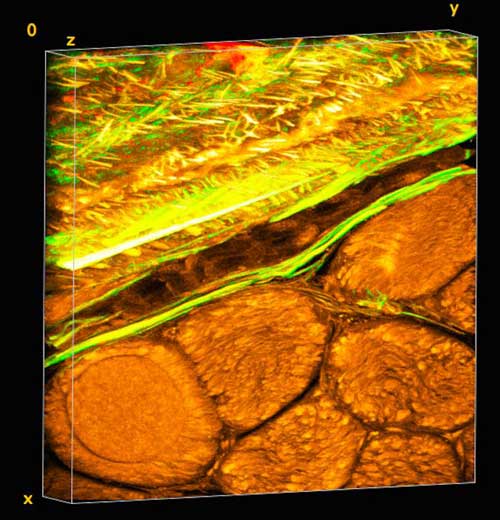
Researchers use nature's weaving formula to engineer advanced functional materials
For the first time, biomedical engineers have woven a 'smart' fabric that mimics the sophisticated and complex properties of one nature's ingenious materials, the bone tissue periosteum.
January 11, 2017 Read more
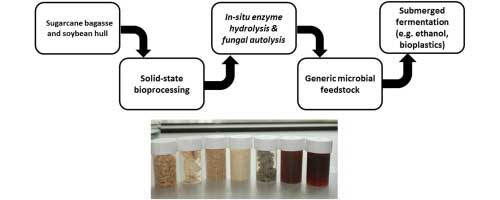
Environmental friendly methodology for production of ethanol from bagasse by sequential bio-processing
Researchers have developed a new methodology that significantly reduces the time and cost involved in producing reducing sugars (ethanol and other alcohols).
January 11, 2017 Read more