

Cleantech and Environmental News – Latest Headlines
 Subscribe to our Cleantech News feed

Abandoned wells can be 'super-emitters' of greenhouse gas
Researchers have uncovered a previously unknown, and possibly substantial, source of the greenhouse gas methane to the Earth's atmosphere.
December 9, 2014 Read more
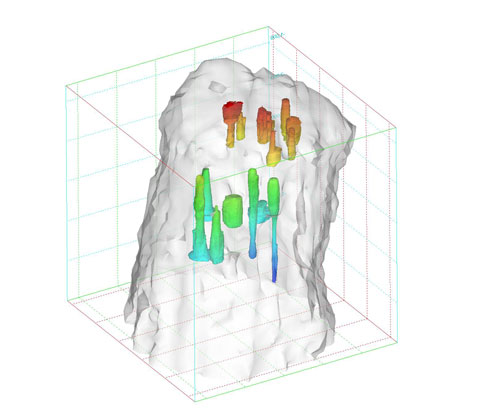
Storing hydrogen underground could boost transportation, energy security
Large-scale storage of low-pressure, gaseous hydrogen in salt caverns and other underground sites for transportation fuel and grid-scale energy applications offers several advantages over above-ground storage, says a recent study.
December 9, 2014 Read more
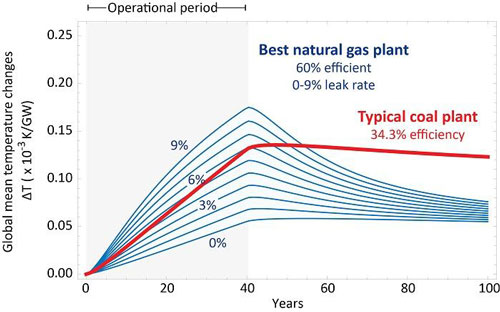
Is natural gas a 'bridge' to a hotter future?
Natural gas power plants produce substantial amounts of gases that lead to global warming. Replacing old coal-fired power plants with new natural gas plants could cause climate damage to increase over the next decades, unless their methane leakage rates are very low and the new power plants are very efficient.
December 8, 2014 Read more
Put algae in your tank
Novel LED technology enables detailed investigation of algae productivity.
December 8, 2014 Read more
Researchers convert sunlight to electricity with over 40 percent efficiency
Solar researchers have converted over 40 percent of the sunlight hitting a solar system into electricity, the highest efficiency ever reported.
December 7, 2014 Read more
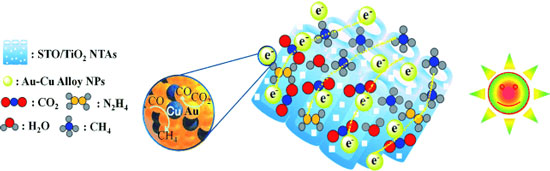
Fuel from carbon dioxide coming soon?
Efficient catalytic system for the photocatalytic reduction of CO2 to hydrocarbons.
December 5, 2014 Read more
Where there's muck there's aluminium (w/video)
Technology developed at the University of Cambridge lies at the heart of a commercial process that can turn toothpaste tubes and drinks pouches into both aluminium and fuel in just three minutes.
December 4, 2014 Read more
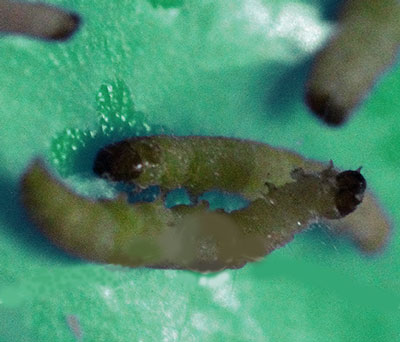
Gut bacteria from a worm can degrade plastic
Plastic is well-known for sticking around in the environment for years without breaking down, contributing significantly to litter and landfills. But scientists have now discovered that bacteria from the guts of a worm known to munch on food packaging can degrade polyethylene, the most common plastic.
December 3, 2014 Read more
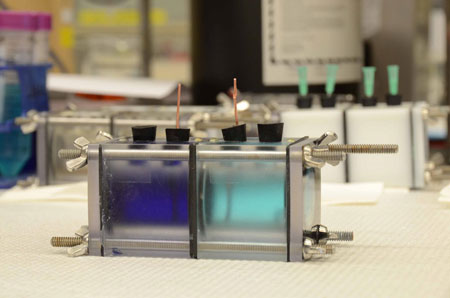
Low-grade waste heat regenerates ammonia battery
An efficient method to harvest low-grade waste heat as electricity may be possible using reversible ammonia batteries.
December 3, 2014 Read more
Global Weirding is here - A climate guide to a weird future (w/video)
Global Weirding is an interactive visualization of the most comprehensive scientific report on climate change ever made - the IPCC's Fifth Assessment Report.
December 3, 2014 Read more
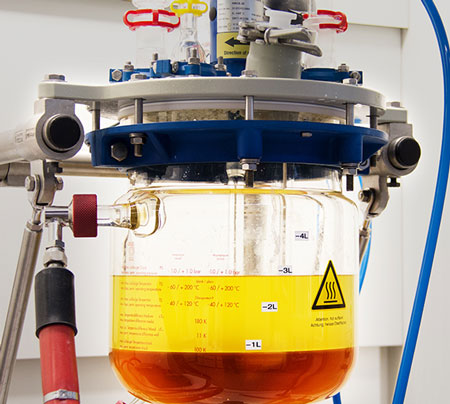
Bioplastic - greener than ever
Polylactic acid is a degradable plastic used mostly for packaging. To meet the rising demand, researchers have developed an eco-friendly process to make large amounts of lactic acid from glycerol, a waste by-product in the production of biodiesel.
December 3, 2014 Read more

Missing ingredient in energy-efficient buildings: People
More than one-third of new commercial building space includes energy-saving features, but without training or an operator's manual many occupants are in the dark about how to use them.
December 2, 2014 Read more

Smartphone app - Energy efficiency you can count on
The building sector accounts for 40 percent of primary energy consumption in Europe. Home owners seeking for energy efficiency are faced with confusing and sometimes contradictory information. Now, researchers have developed a smartphone app in the EU project ENBUS! that helps home owners calculate the tangible benefits of energy efficiency measures before investing.
December 2, 2014 Read more
Aircraft fuels must be sustainable in the future
The National Food Institute, Technical University of Denmark aims to develop new and environmentally friendly liquid fuels for aircraft based on biomass from plant material.
December 2, 2014 Read more
New research highlights the key role of ozone in climate change
The models which are used to predict how climate change will occur could be much improved by including the key role of ozone, which is often overlooked in current models.
December 1, 2014 Read more

Energy-efficient factories with 'water-powered' machines
The basic idea behind HYDRACT is to replace compressed air with water pressure as the power source for operating process valves. The water hydraulic technology can potentially be used for many other applications as a replacement for compressed air.
December 1, 2014 Read more
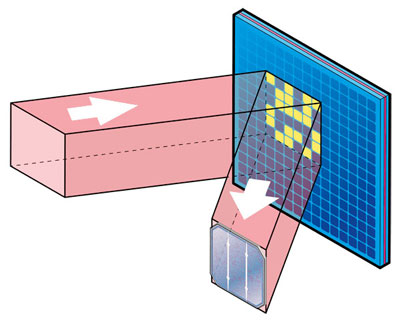
Detecting defects in solar cells
Scientists have developed a new method for detecting defects in solar cells using a technique called 'compressed sensing'.
December 1, 2014 Read more
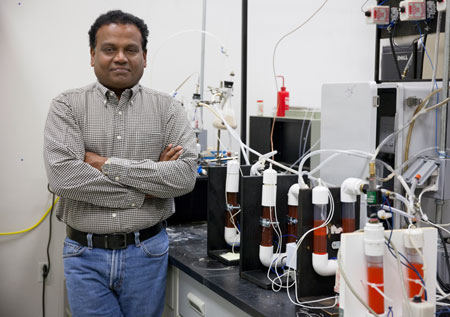
Process converts human waste into rocket fuel
Buck Rogers surely couldn't have seen this one coming, but at NASA's request, University of Florida researchers have figured out how to turn human waste - yes, that kind - into rocket fuel.
November 26, 2014 Read more