

Nanotechnology News – Latest Headlines
Proteins assemble and disassemble on command
Scientists have deciphered the genetic code that instructs proteins to either self-assemble or disassemble in response to environmental stimuli, such as changes in temperature, salinity or acidity. The discovery provides a new platform for drug delivery systems and an entirely different view of cellular functions.
September 21, 2015 Read more
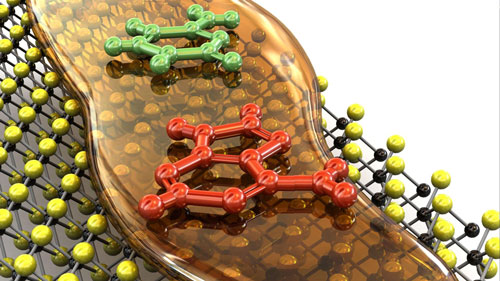
Nanopores improve the accuracy of DNA sequencing up to a thousand times
Scientists have developed a method that improves the accuracy of DNA sequencing up to a thousand times. The method, which uses nanopores to read individual nucleotides, paves the way for better - and cheaper - DNA sequencing.
September 21, 2015 Read more
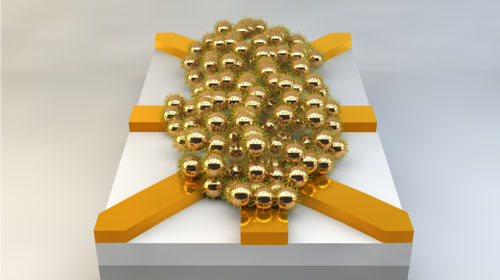
Darwin on a chip
Researchers have demonstrated working electronic circuits that have been produced in a radically new way, using methods that resemble Darwinian evolution.
September 21, 2015 Read more
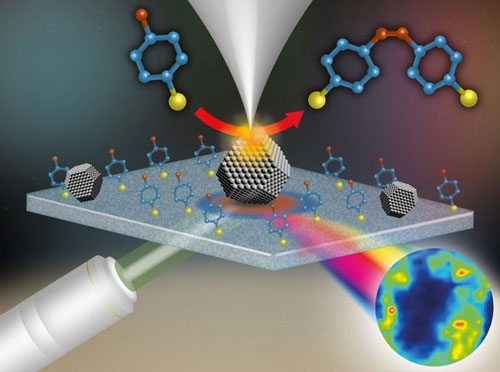
Exploring catalytic reactions at the nanoscale
Scientists have used a novel imaging capability - tip-enhanced Raman spectroscopy - to map catalytic reactions at the nanoscale for the first time.
September 21, 2015 Read more
How to make large 2-D sheets
Researchers develop method for scaling up production of thin electronic material.
September 21, 2015 Read more
Measuring machines for the nanoscale
The NanoCMM project set out to develop the technology needed for a universal coordinate measuring machines (CMM) that could measure to an accuracy of 50 to 200 nanometres in all three dimensions over a volume several centimetres across.
September 18, 2015 Read more
Surfing over simulated ripples in graphene
Scientists elucidate the theory governing the characteristics of curved or rippled graphene using a simulation model based on an optical lattice.
September 18, 2015 Read more
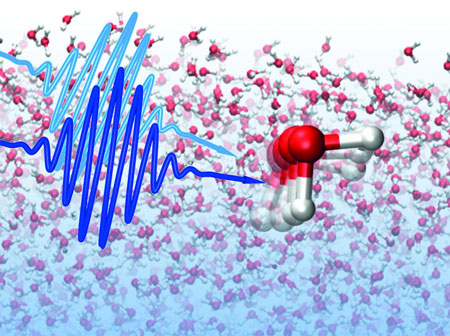
The structural memory of water persists on a picosecond timescale
Long-lived sub-structures exist in liquid water as discovered using novel ultrafast vibrational spectroscopies.
September 18, 2015 Read more
Discovery of a new photonic crystal where light propagates through the surface without being scattered
By merely slightly adjusting positions of insulator or semiconductor cylinders (nanorods) in a honeycomb lattice, electromagnetic waves can propagate without being scattered even at corners of crystal or by defects.
September 18, 2015 Read more

Physicists discover spiral vortex patterns from electron waves
Physicists report an unusual pattern of wave interference produced when an electron is ejected, or ionized, from its orbit around a helium atom.
September 18, 2015 Read more
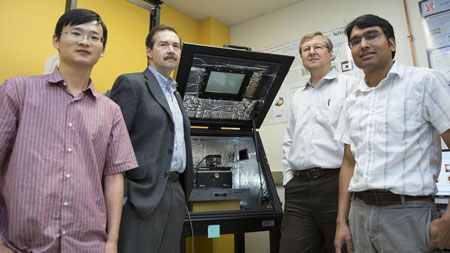
Physicists defy conventional wisdom to identify ferroelectric material
A team of physicists has defied conventional wisdom by inducing stable ferroelectricity in a sheet of strontium titanate only a few nanometers thick.
September 18, 2015 Read more
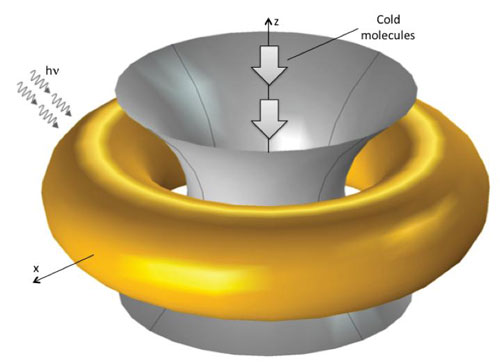
Nano-trapped molecules are potential path to quantum devices
Single atoms or molecules imprisoned by laser light in a doughnut-shaped metal cage could unlock the key to advanced storage devices, computers and high-resolution instruments.
September 18, 2015 Read more
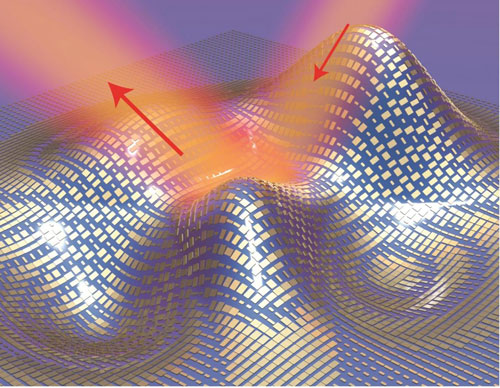
Nano-thin invisibility cloak makes 3D objects disappear (w/video)
Invisibility cloaks are a staple of science fiction and fantasy, from Star Trek to Harry Potter, but don't exist in real life, or do they? Scientists have devised an ultra-thin invisibility 'skin' cloak that can conform to the shape of an object and conceal it from detection with visible light. Although this cloak is only microscopic in size, the principles behind the technology should enable it to be scaled-up to conceal macroscopic items as well.
September 18, 2015 Read more
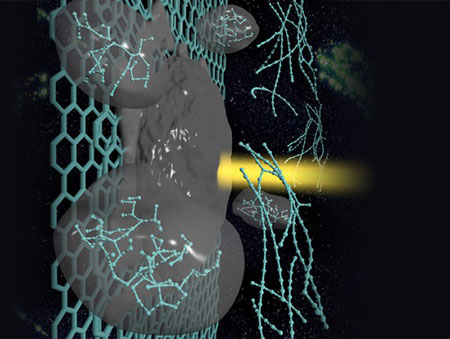
Carbyne research may boost nanoelectronics
Scientists have investigated a way to create linear chains of carbon atoms from laser-melted graphite. The material, called carbyne, could have a number of novel properties, including the ability to adjust the amount of electrical current traveling through a circuit, depending on the user's needs.
September 18, 2015 Read more
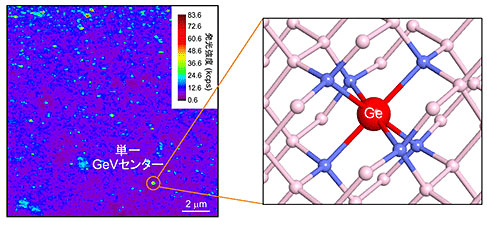
New diamond structures produce bright luminescence for quantum cryotography and biomarkers applications
Germanium defects in a diamond crystal lattice act as a reliable source for single photons, new research shows. The results provide a promising new route to building components for quantum cryptography and biomarkers.
September 18, 2015 Read more
Designing switchable electric and magnetic order for low-energy computing
Scientists have developed a new material that combines both electrical and magnetic order at room temperature, using a design approach which may enable the development of low-energy computer memory technologies.
September 17, 2015 Read more
 Subscribe to our Nanotechnology News feed