

Nanotechnology News – Latest Headlines
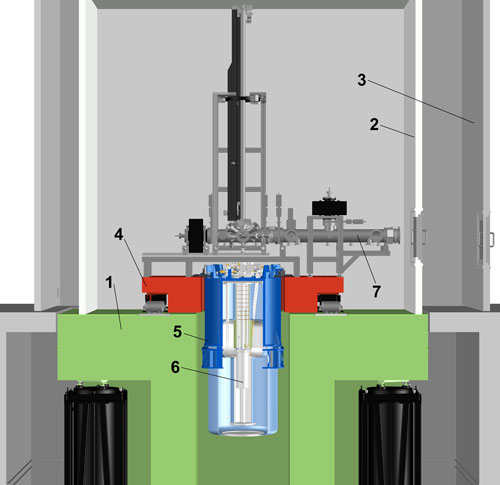
NIST's new scanning probe microscope is supercool
The discoveries of superconductivity, the quantum Hall effect and the fractional quantum Hall effect were all the result of measurements made at increasingly lower temperatures. Now, pushing the regime of the very cold into the very small, a research team from the National Institute of Standards and Technology (NIST), the University of Maryland, Janis Research Company, Inc., and Seoul National University, has designed and built the most advanced ultra-low temperature scanning probe microscope (ULTSPM) in the world.
December 9, 2010 Read more
Indian defence research agency plans $110 million nanotechnology foundry
India's state-run Defence Research and Development Organisation (DRDO) plans to set up a nano foundry with Rs.500 crore (about USD 110 million) investment to roll out products for various applications.
December 9, 2010 Read more
Asian nations driving innovation in nanofiltration to address impending water crisis
Water scarcity is driving a wave of innovation in water filtration technology from Asian nations, according to a report issued today by Chemical Abstracts Service (CAS). The report, CAS Chemistry Research Report: Nanofiltration Shows Promise in the Quest for Pure Water, found that Asian researchers now lead the world in patent activity related to nanofiltration, the most-researched method of water filtration.
December 9, 2010 Read more
UAlbany NanoCollege welcomes 5000th student for NanoCareer Day
The College of Nanoscale Science and Engineering ("CNSE") of the University at Albany welcomed the 5000th student to participate in its NanoCareer Day program when it hosted more than 300 elementary, middle- and high-school students from upstate New York at CNSE's Albany NanoTech Complex on December 8.
December 9, 2010 Read more
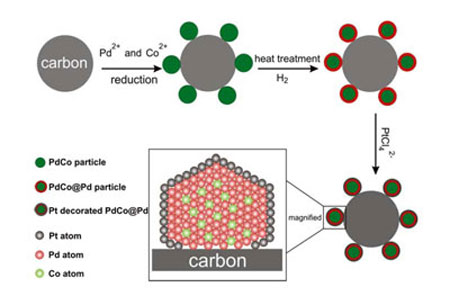
Platinum-coated nanoparticles could power fuel cell cars
Fuel cells may power the cars of the future, but it's not enough to just make them work -- they have to be affordable. Cornell researchers have developed a novel way to synthesize a fuel cell electrocatalytic material without breaking the bank.
December 9, 2010 Read more
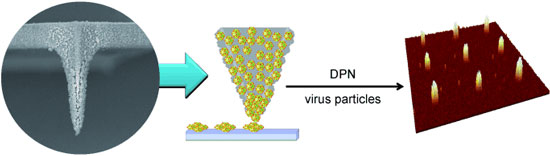
Dip-pen nanolithography with a porous tip generates nanopatterns with viruses
A Korean research team led by Jung-Hyurk Lim at Chungju National University in Chungju have now introduced a refined nanotip for this technique. With their "nanoquill", it is possible to produce complex nanopatterns from large biomolecules -- such as complete virus particles -- rapidly, precisely, and flexibly.
December 9, 2010 Read more
Breakthrough towards lab-on-chip system for fast detection of single nucleotide variations in DNA
Panasonic, core partner within imec's Human++ program, and imec today presented at the International Electron Devices Meeting in San Francisco various critical components of a biomedical lab-on-chip sensor enabling fast detection of Single Nucleotide Polymorphisms (SNPs) in DNA, such as a miniaturized pump for on-chip generation of high pressures, a micropillar filter optimized for DNA separation achieving world-record resolution, and a SNP detector allowing on-chip detection using very small sample volumes.
December 9, 2010 Read more
World's first microlaser emitting in 3-D
Versatile electronic gadgets should employ a number of important criteria: small in size, quick in operation, inexpensive to fabricate, and deliver high precision output. A new microlaser, developed at the Jozef Stefan Institute in Ljubljana, Slovenia embodies all these qualities. It is small, tunable, cheap, and is essentially the world's first practical three-dimensional laser.
December 8, 2010 Read more
Team develops 'logic gates' to program bacteria as computers
A team of University of California, San Francisco (UCSF) researchers has engineered E. coli with the key molecular circuitry that will enable genetic engineers to program cells to communicate and perform computations.
December 8, 2010 Read more
Physicists discover ultrasensitive microwave detector
Researchers use magnets to tune supercooled gallium arsenide semiconductors.
December 8, 2010 Read more
Elusive spintronics success could lead to single chip for processing and memory
Researchers from Queen Mary, University of London (UK) and the University of Fribourg (Switzerland) have shown that a magnetically polarised current can be manipulated by electric fields.
December 8, 2010 Read more

Molecular beam epitaxy facility to design custom materials for scientists
The MBE facility, located at Argonne National Laboratory, could provide the basis for new materials to improve fuel cells, electronics and batteries.
December 8, 2010 Read more
Theorists find generalized connection between spin currents, magnetic torques, and mechanical torques
Paul Haney and Mark Stiles of the CNST have developed a theory of current-induced torques that generalizes the relationship between spin transfer torques, total angular momentum current, and mechanical torques, and is applicable to a much wider range of materials than previous theories.
December 8, 2010 Read more
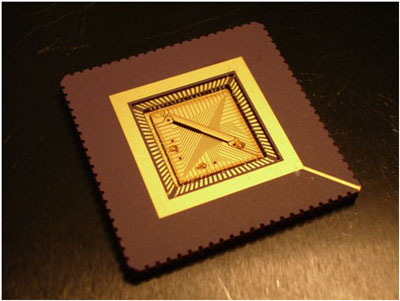
Verbundprojekt soll Quantentechnologien in die Anwendung bringen
Das Bundesministerium fuer Bildung und Forschung (BMBF) hat rund 13 Millionen Euro fuer insgesamt vier Verbundprojekte im bereich Anwendung von Quantentechnologien in der Informationstechnik zur Verfuegung gestellt.
December 8, 2010 Read more
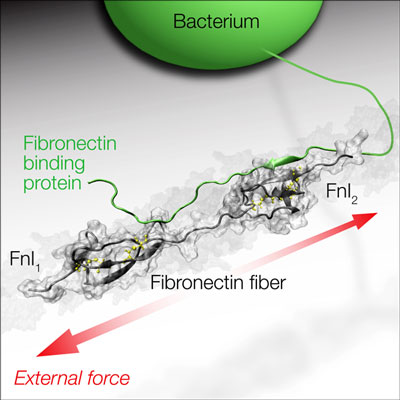
Bacteria with 'force sensors'
Researchers studied how the tensile forces by which cells stretch connective tissue fibres affect the interaction between bacteria and fibronectin.
December 8, 2010 Read more
NanoTrust documents now available in English
The NanoTrust project of the Institute of Technology Assessment of the Austrian Academy of Sciences has published several dossiers on important information about nanotechnology.
December 8, 2010 Read more
 Subscribe to our Nanotechnology News feed