

Nanotechnology News – Latest Headlines

Researchers ping key material in sonar, close gap on structural mystery
Using a neutron beam as a probe, researchers working at the National Institute of Standards and Technology (NIST) have begun to reveal the crystal structure of a compound essential to technologies ranging from sonar to computer memory.
November 9, 2010 Read more
TIP seeks comments on potential funding areas and solicits suggestions for future competitions
In two Federal Register notices, the Technology Innovation Program (TIP) of the National Institute of Standards and Technology (NIST) asks for public comments on six NIST-prepared white papers outlining potential areas for research grants and, separately, requests detailed suggestions of critical national needs and associated technical needs for future TIP funding competitions.
November 9, 2010 Read more
AFM positioning: Shining light on a needle in a haystack
The researchers characterize their new technique as a neat solution to the 'needle in a haystack' problem of nanoscale microscopy, but it's more like the difference between finding the coffee table in a darkened room either by walking around until you fall over it, or using a flashlight.
November 9, 2010 Read more
NCI $4 million grant supports cancer nanotechnology partnership between University of New Mexico and Sandia Labs
The National Cancer Institute recently announced two five-year awards totaling nearly $4 million for a partnership between the University of New Mexico Cancer Center and Sandia National Laboratories. One $1.95 million grant will fund the creation of a joint Cancer Nanotechnology Platform Partnership, and another $1.8 million grant will pay for a new Cancer Nanotechnology Training Center to train a new generation of multidisciplinary scientists.
November 9, 2010 Read more
Softening crystals without heat: Using terahertz pulses to manipulate molecular networks
As if borrowing from a scene in a science fiction movie, researchers at Kyoto University have successfully developed a kind of tractor beam that can be used to manipulate the network of the molecules.
November 9, 2010 Read more
Researchers aim to harvest solar energy from pavement to melt ice, power streetlights, heat buildings
The heat radiating off roadways has long been a factor in explaining why city temperatures are often considerably warmer than nearby suburban or rural areas. Now a team of engineering researchers from the University of Rhode Island is examining methods of harvesting that solar energy to melt ice, power streetlights, illuminate signs, heat buildings and potentially use it for many other purposes.
November 9, 2010 Read more
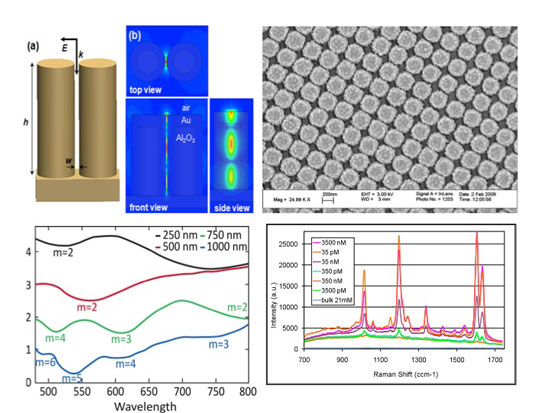
Fingerprinting materials with Raman spectroscopy
Laboratory researchers may have found a way to improve Raman spectroscopy as a tool for identifying substances in extremely low concentrations. Potential applications for Raman spectroscopy include medical diagnosis, drug/chemical development, forensics and highly portable detection systems for national security.
November 9, 2010 Read more
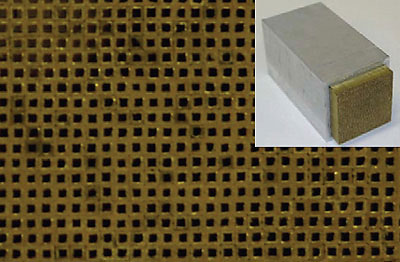
Novel metamaterial vastly improves quality of ultrasound imaging
University of California, Berkeley, scientists have found a way to overcome one of the main limitations of ultrasound imaging - the poor resolution of the picture.
November 9, 2010 Read more
Oil will run dry before substitutes roll out
At the current pace of research and development, global oil will run out 90 years before replacement technologies are ready, says a new University of California, Davis, study based on stock market expectations.
November 9, 2010 Read more
Nanotechnology researcher to receive prestigious award fo laser science and quantum physics
Ben-Gurion University of the Negev's Prof. Ron Folman has been named as a recipient of the prestigious 2011 Willis E. Lamb Award for Laser Science and Quantum Optics.
November 9, 2010 Read more
The cellular basis of neural impulse transmission
Information coded as impulses is transferred from one neuron to its target at synapses. At these close neuron-neuron contacts the impulse opens voltage sensitive calcium channels allowing the influx of calcium ions (Ca2+) and this ion then acts as a 'second messenger' to trigger the release of neurotransmitters by the fusion of a secretory vesicle with the surface membrane. Scientists have now established that the relationship between the calcium channel and the secretory vesicle is very intimate, so much so that the fusion of a secretory vesicle can be triggered by the plume of Ca2+ entering through a very closely situated single calcium channel.
November 9, 2010 Read more
Quantum computers a step closer to reality thanks to new finding
Quantum computers should be much easier to build than previously thought, because they can still work with a large number of faulty or even missing components, according to a study published today.
November 9, 2010 Read more
New drugs, materials unveiled at nanotechnology conference in Israel
A material just one atom thick that is stronger than steel but flexes like rubber. A 'mini-submarine' that can trick the immune system and deliver a payload of chemotherapy deep inside a tumour. They sound like the fantasies of science fiction writers, but they are among the discoveries being presented at Nano Israel 2010, a nanotech conference in Tel Aviv that has attracted researchers from across the science world, united by their work with the very, very small.
November 9, 2010 Read more
European research alliance for the simplified production of organic solar cells
A tunable infrared laser system for the selective processing of organic layers in opto-electronical components is the goal of the new research project IMPROV, which started in September, 2010. The EU has provided approximately 2.4 million Euros support from the 7th Framework Programme for the project, which will run until 2013.
November 9, 2010 Read more
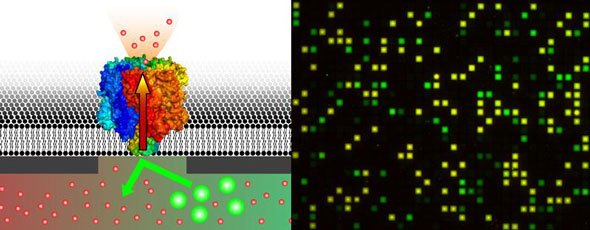
Ein Labor auf dem Chip
Der Arbeitsgruppe Prof. Robert Tampe an der Goethe-Universitaet ist es in Zusammenarbeit mit dem Walter-Schottky Institut der TU Muenchen gelungen, eine neue Methode zur automatisierbaren und Hochdurchsatz-geeigneten Untersuchung der hochempfindlichen Membranproteine zu entwickeln.
November 9, 2010 Read more
EPA urges Americans to consider using 'final barrier' water filtration in their homes
A new report from the inspector general of the U.S. EPA on the lack of sufficient monitoring of water supplies provides more reason for Americans to consider using 'final barrier' technology in their homes, according to the Water Quality Association.
November 9, 2010 Read more
 Subscribe to our Nanotechnology News feed