

Nanotechnology News – Latest Headlines
Nanotechnology product inventory exposes a game of roulette
The European Consumers' Organisation (BEUC) has published its 2010 inventory of products containing nanomaterials.
October 27, 2010 Read more
New laser to bring spectroscopic technique up to speed
Physicist Robert Huber, who leads a Junior Research Group at Ludwig-Maximilians-University (LMU) Munich, becomes the latest recipient of one of the coveted Starting Grants awarded by the European Research Council (ERC). The grant is worth 1.2 million Euros over a period of 5 years.
October 27, 2010 Read more
Nanodrug enables image-guided breast cancer therapy
By combining an iron oxide nanoparticle, a tumor-targeting peptide, and a therapeutic nucleic acid into one construct, a team of investigators from the Massachusetts General Hospital and Harvard Medical School have created an agent that holds potential as targeted therapy for breast cancer.
October 27, 2010 Read more
Understanding how cells respond to nanoparticles
Scientists have shown that the safety of gold nanoparticle-nucleic acid formulations depends significantly on how the nucleic acids and nanoparticles are linked to one another, a finding with important implications for those researchers developing such constructs.
October 27, 2010 Read more
Nanoparticles deliver combination chemotherapy directly to prostate cancer cells
Researchers at the Massachusetts Institute of Technology (MIT) and Brigham and Women's Hospital have developed a nanoparticle that can deliver precise doses of two or more drugs to prostate cancer cells. Such particles, say the researchers, could improve the effectiveness of chemotherapy while minimizing the side effects normally seen with these drugs.
October 27, 2010 Read more
Tracking tumor-targeting nanoparticles in the body
Though targeted nanoparticle-based imaging agents and therapeutics for diagnosing and treating cancer are making their way to and through the clinical trials process, researchers still do not have a good understanding of how nanoparticles reach tumors and how they then bind to and enter the targeted tumor. To overcome that knowledge deficit, two teams of investigators, both part of the Alliance for Nanotechnology in Cancer have undertaken studies aiming to track nanoparticles as they move through living animals.
October 27, 2010 Read more
National Nanotechnology Coordination Office announces new deputy director
The National Nanotechnology Coordination Office (NNCO) is pleased to announce the appointment of Dr. Sally Tinkle as the Deputy Director of the NNCO and Coordinator for Environment, Health, and Safety (EHS).
October 26, 2010 Read more
Microrobotics challenge seeks miniature medics and maze masters
The National Institute of Standards and Technology (NIST), in collaboration with IEEE, is inviting teams currently engaged in microrobotic, microelectronic or microelectromechanical systems (MEMS) research to participate in the NIST Mobile Microrobotics Challenge 2011. The competition will be held as part of the IEEE International Conference on Robotics and Automation, May 9-13, 2011, in Shanghai, China.
October 26, 2010 Read more

NIST, Harvard researchers share 2010 Julius Springer Prize for Applied Physics
National Institute of Standards and Technology (NIST) physical scientist Henri Lezec and Federico Capasso of Harvard have received the Julius Springer Prize for Applied Physics 2010 for their 'pioneering achievements in nanoscale physics and applications'.
October 26, 2010 Read more
Missouri NanoFrontiers nanotechnology conference draws scientists from across the state
Scientists from across Missouri will meet Wednesday, Oct. 27, at Washington University in St. Louis to learn about the latest advances in nanotechnology and opportunities for commercializing them.
October 26, 2010 Read more
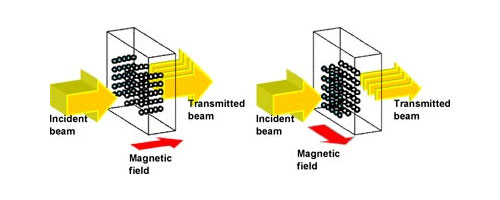
Biosensing and biomolecular recognition: Self Assembly and chains of rotating magnetic particles
Japanese scientists report on a new biosensing protocol based on monitoring changes in optical transmittance of a solution containing self-assembled chains of functionalized magnetic beads being rotated by an external magnetic field.
October 26, 2010 Read more
Silicon whiskers detect neural responses
Researchers in Japan successfully demonstrate the neural recording capability of micrometer sized VLS-silicon wires -'Toyohashi Probe' - using the retina of a fish.
October 26, 2010 Read more
UAlbany NanoCollege announces third annual 'NANOvember' outreach initiative
From innovations that enable improved health care and clean energy technologies, to the advent of exciting video games and new crime-solving techniques, the growing impact of nanotechnology on society will take center stage when the College of Nanoscale Science and Engineering of the University at Albany holds its third annual celebration of 'NANOvember'.
October 26, 2010 Read more
Chitin-Siliciumdioxid-Nanokomposite per Selbstorganisation und Sol-Gel-Chemie
Selbstorganisationsprozesse chemischer Bausteine sind die Basis fuer viele biologische Vorgaenge, zunehmend stossen sie auch auf Interesse im Bereich der Materialsynthese. Beispielsweise um hochgeordnete Nanokomposite oder hochporoese Materialien mit besonderen Eigenschaften herzustellen. Forscher stellen nun einen neuartigen, sehr vielseitigen Ansatz vor, mit dem die Synthese einer neuen Familie bioorganisch-anorganischer Nanoverbundmaterialien im grossen Massstab gelingt - mit bisher unerreichter Kontrolle ueber die Beschaffenheit und Struktur der Produkte.
October 26, 2010 Read more
Honey, I shrunk the synchrotron
If you say 'synchrotron' to most scientists, they will picture an immense, highly expensive and rather rare facility designed to produce highly intense beams of light, such as the UK's Diamond Light Source that boasts a 500 metre circumference and cost GBP 263 million (EUR 297 million) to build. However, that could soon change, as EU-funded scientists have created a table-top device capable of producing synchrotron X-rays that are as intense as those produced by some of the world's largest X-ray facilities.
October 26, 2010 Read more
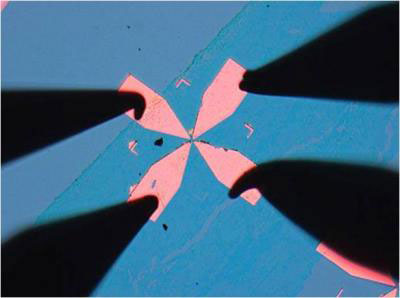
Water could hold answer to graphene nanoelectronics
Researchers at Rensselaer Polytechnic Institute use water to open, tune graphene's band gap.
October 26, 2010 Read more
 Subscribe to our Nanotechnology News feed