

Nanotechnology News – Latest Headlines
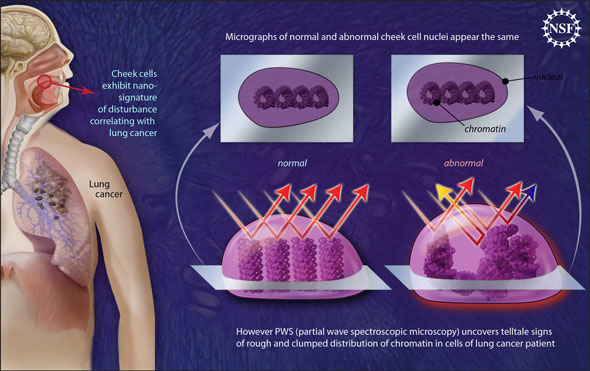
Cheek swab may detect lung cancer
Nanoscale disturbances in cheek cells indicate the presence of lung cancer.
October 7, 2010 Read more
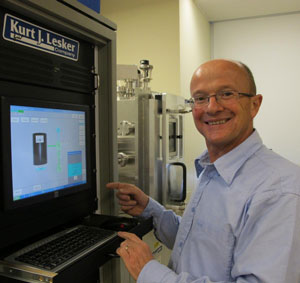
New discovery could impact how the body receives medicine
Researchers at Queen's University have discovered how molecules in glass or plastic are able to move when exposed to light from a laser. The findings could one day be used to facilitate medicinal drug distribution by allowing doctors to control the time and rate at which drugs are delivered into the body. The drugs, in a solid plastic carrier, could be released through the body when exposed to light.
October 7, 2010 Read more
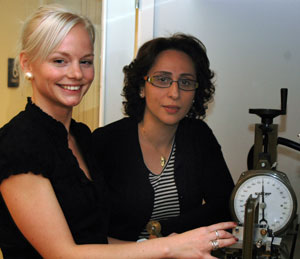
Hip patients benefit from new research in biotribology
Foreign material in the human body, such as implants for hip and knee joints, can be enhanced by ongoing biotribologisk research on lubrication, abrasion and friction. Researchers at Lulea University of Technology can reduce the frequency of painful hip operations and reduce healthcare costs by their research.
October 7, 2010 Read more
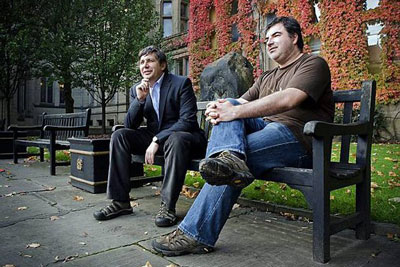
EU-funded scientists clinch Nobel Prize in physics
The EU is proud to announce that two of its grantees, Professor Konstantin Novoselov and Professor Andre Geim of the University of Manchester in the UK, have been awarded the Nobel Prize in Physics for their groundbreaking work in two-dimensional graphene.
October 7, 2010 Read more
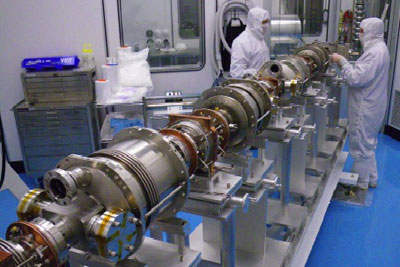
$109 million NSF award funds X-ray science, research and development for revolutionary new X-ray source
In a major boost for X-ray science and accelerator physics, the National Science Foundation (NSF) has committed about $109 million to Cornell's continued operation of an X-ray synchrotron facility, as well as to develop a new kind of X-ray source that promises to revolutionize the field.
October 7, 2010 Read more
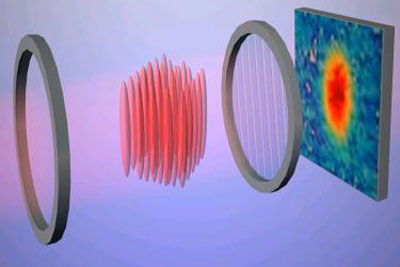
Researchers find way for superconductivity and magnetism to coexist
Superconductivity, the flow of electrons without resistance, is typically suppressed by magnetic fields, which disrupt the intricately choreographed electron motion. Theoretical physicists at Cornell, working with experimental physicists at Rice University, have carefully engineered a system in which these conflicting properties are believed to put aside their differences.
October 7, 2010 Read more
New computer switches handle heat that renders transistors useless
Researchers at Case Western Reserve University have taken the first step to building a computer capable of operating in the heat of a jet engine or the sunny side of the planet Mercury.
October 7, 2010 Read more
Workshop 'Optimization in stochastic nano-systems' am Hanse-Wissenschaftskolleg
Physiker wollen Nano-Motoren auf die Spur kommen. Vom 10. bis zum 13. Oktober 2010 treffen sich 45 internationale Experten der Nano-Physik im Hanse-Wissenschaftskolleg Delmenhorst, um neueste Forschungsergebnisse auszutauschen.
October 7, 2010 Read more
Nanotechnology safety remains a concern says Llody's
An article on Lloyd's website says that for insurers, uncertainty still surrounds the increasing use of nanotechnology in products and how safe they are.
October 7, 2010 Read more
Cooperation to develop innovative nanoelectronic technologies berween RF Micro and University of North Carolina
Under the agreement, JSNN and RFMD intend to collaborate on the development of innovative nanoelectronics technologies related to RF amplification, filter, and switch functions.
October 7, 2010 Read more
Nanoinformatics 2010 - data, tools, sharing
Nanoinformatics 2010 is a collaborative roadmapping and workshop project designed to survey the landscape, generate a roadmap, and stimulate collaborative activities in the area of nanoinformatics.
October 7, 2010 Read more
UCLA Engineering receives $6M to construct new state-of-the-art building
The U.S. Commerce Department's National Institute of Standards and Technology (NIST) has awarded UCLA's Henry Samueli School of Engineering and Applied Science $6 million to support the construction of the new state-of-the-art Western Institute of Nanotechnology on Green Engineering and Metrology.
October 6, 2010 Read more
Discovery of nanodiamonds proves comet struck Earth 13 000 years ago
An international team of scientists has discovered nanosize diamonds in the Greenland ice sheet. The diamonds, which number in the trillions and are so tiny that they can only be observed with special, highly magnifying microscopes, add credence to the controversial hypothesis that fragments of a comet struck North America and Europe approximately 12900 years ago.
October 6, 2010 Read more
Scientists claim smart materials used in medical devices are safe
Contrary to popular belief, modern technological materials such as shape memory alloys that are increasingly used in a wide range of medical devices and implants are entirely biocompatible and should not induce health problems, according to a European team of scientists.
October 6, 2010 Read more
Microfluidic devices advance 3-D tissue engineering
A new paper describes a new method that generates three-dimensional (3D) tissue models for studying bacterial infection of orthopedic implants.
October 6, 2010 Read more
Insoluble medicines can be made orally available if in nano crystal form
Researchers in India have demonstrated that producing nanoscopic crystals of a pharmaceutical product can allow the medication to be absorbed by the gut even if the drug is not soluble in water.
October 6, 2010 Read more
 Subscribe to our Nanotechnology News feed