

Nanotechnology News – Latest Headlines
Nanotechnology research - bridge to Siberia
On 16.-17. September 2010, a German-Russian Forum on 'Nanophotonics and Nanomaterials' took place in Tomsk.
October 6, 2010 Read more
Pioneering biophotonics technology for early lung cancer detection
Optical technology shows potential for prescreening patients at high risk for the disease.
October 5, 2010 Read more
Structure of plastic solar cells impedes their efficiency
A team of researchers from North Carolina State University and the U.K. has found that the low rate of energy conversion in all-polymer solar-cell technology is caused by the structure of the solar cells themselves. They hope that their findings will lead to the creation of more efficient solar cells.
October 5, 2010 Read more
Molecules are motifs in nanosymphony
Rice University composer Anthony Brandt has compressed an entire evening at the symphony into a six-minute opus - a 'nanosymphony' - as part of Rice University's Year of Nano celebration. The River Oaks Chamber Orchestra will premiere the piece Sunday at Rice's Buckyball Discovery Gala.
October 5, 2010 Read more
Advancements in Thermal Management 2010 showcases the future of thermal mitigation technologies
Advancements in Thermal Management 2010 is a technical symposium for design engineers and product developers looking to push the capabilities of their electronics designs. Being held on Oct. 19th, 2010 at the Gaylord Texan in Dallas, Texas, this event will feature presentations on the latest advancements in thermal management and thermal technology for electronics packaging and cooling, temperature sensing and control, thermal materials, systems design and management for optimizing thermal properties.
October 5, 2010 Read more
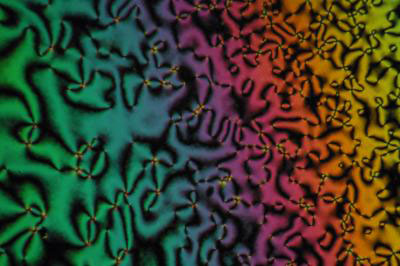
New type of liquid crystal promises to improve performance of digital displays
Chemists at Vanderbilt University have created a new class of liquid crystals with unique electrical properties that could improve the performance of digital displays used on everything from digital watches to flat panel televisions.
October 5, 2010 Read more
A nano-gyroscope tracking device that fits on the head of a pin
Optical gyroscopes, also known as rotation sensors, are widely used as a navigational tool in vehicles from ships to airplanes, measuring the rotation rates of a vehicle on three axes to evaluate its exact position and orientation. Prof. Koby Scheuer of Tel Aviv University's School of Physical Engineering is now scaling down this crucial sensing technology for use in smartphones, medical equipment and more futuristic technologies.
October 5, 2010 Read more
Fuel cells in operation: A closer look
Traditional x-ray photoelectron spectroscopy (XPS) works only in a vacuum, while fuel cells need gases under pressure to function. Now a team of scientists from the University of Maryland, the U.S. Department of Energy's Sandia National Laboratories, and DOE's Lawrence Berkeley National Laboratory has used a new kind of XPS, called ambient-pressure XPS (APXPS), to examine every feature of a working solid oxide electrochemical cell.
October 5, 2010 Read more
New graphene fabrication method uses silicon carbide templates to create desired growth
Researchers at the Georgia Institute of Technology have developed a new 'templated growth' technique for fabricating nanometer-scale graphene devices. The method addresses what had been a significant obstacle to the use of this promising material in future generations of high-performance electronic devices.
October 5, 2010 Read more
Building a smaller, lighter future: Understanding polymer behaviors below 1 nanometer
A recent paper in Nature Communications sheds light on key behaviors of polymers in specially engineered confined spaces, opening the door to a level of control that has previously been impossible.
October 5, 2010 Read more
Free access to Nature article: 'The rise of graphene'
The 2007 landmark article in Nature Materials "The rise of graphene" by the just announced winners of the 2010 Nobel prize in physics, Andre Geim and Kosta Novoselov, has now been made available as a free access article.
October 5, 2010 Read more
Building blocks of nanotechnology to be named National Historic Chemical Landmark
The American Chemical Society (ACS) will honor the discovery of fullerenes, the scientific achievement that gave birth to nanotechnology, as a National Historic Chemical Landmark in a ceremony to be held at Rice University in Houston, Texas, on Oct. 11.
October 5, 2010 Read more
For future chips, smaller must also be better
Two teams of researchers from China and France report success in making and testing tiny high-frequency capacitors made from a complex manmade mineral: barium strontium titanate (BST). By introducing an ultrathin (1.2 nanometer) titanium oxide seed layer, the researchers made thin BST films that exhibited excellent microwave properties up to 40 GHz.
October 5, 2010 Read more
Gem of an idea: A flexible diamond-studded electrode implanted for life
Two Case Western Reserve University researchers are building implants made of diamond and flexible polymer that are designed to identify chemical and electrical changes in the brain of patients suffering from neural disease, or to stimulate nerves and restore movement in the paralyzed.
October 5, 2010 Read more
The effects of hydrogen on growing carbon nanotubes
Researchers shed new light on the growth process of carbon nanotubes. In particular, the researchers examined the influence of hydrogen gas.
October 5, 2010 Read more
Anti-tumor drugs tested by microfluidic device
A prototype device developed in Hong Kong will allow laboratory researchers to non-invasively test drugs for their ability to kill tumors by subjecting cancerous cells with different concentration gradients.
October 5, 2010 Read more
 Subscribe to our Nanotechnology News feed