

Nanotechnology News – Latest Headlines
Novel graphene hybrid exciting for materials scientists
One-atom-thick sheet offers new microelectronic possibilities.
March 1, 2010 Read more
Antifreeze proteins can stop ice melt, new study finds
The same antifreeze proteins that keep organisms from freezing in cold environments also can prevent ice from melting at warmer temperatures.
March 1, 2010 Read more
Institute for NanoBioTechnology's summer 2010 International Research Experience for Students program now accepting applications
Applications are now being accepted for Johns Hopkins Institute for NanoBioTechnology's summer 2010 International Research Experience for Students (IRES) program. Both undergraduate and graduate positions are available. Application deadline is March 19, 2010.
March 1, 2010 Read more
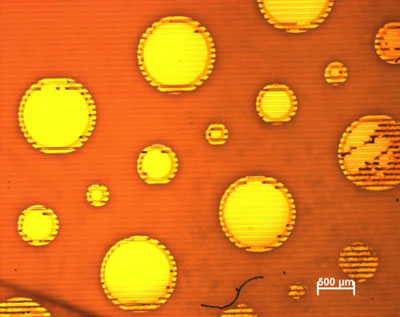
A simpler way to make micromachines
Microelectromechanical devices gave us the Wii and the digital projector. MIT researchers have found a way to manufacture them by stamping them on plastic, opening up the possibility of coating large areas with tiny sensors.
March 1, 2010 Read more
'Green' nanomagnets made from natural bacteria
Scientists in Manchester have found a clean and green way of making tiny magnets for high tech gadgets - using natural bacteria that have been around for millions of years.
March 1, 2010 Read more
European TRAMS project designs the memory for future nanoscale processors
The TRAMS project aims to guarantee that the memory for future nanoscale processors, with teraflop capacity, is resilient, reliable, fault tolerant, and energy efficient, with advanced features.
March 1, 2010 Read more
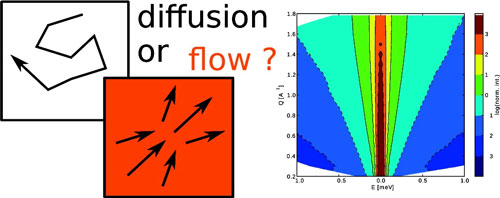
Scientists discover the motion of molecules in cell membranes
Researchers have demonstrated that the molecules in cell membranes move in a flowing motion rather than chaotically, as previously thought.
March 1, 2010 Read more
Diamond-like tip better than the best
German and US researchers have produced a super-sharp, strong, and resilient carbon tip that has earned top place as the industry's current benchmark.
March 1, 2010 Read more
NanoCentral in partnership with IntertechPira brings 4th annual NanoMaterials back to UK
The leading UK nanotechnology event, focused on commercialization of nanomaterials, will take place on 8-10 June 2010 at the Hotel Russell in London, UK.
March 1, 2010 Read more
Molecular imaging technique uses ultrasound and microscopic bubbles to target cancer cells
An imaging technique combining ultrasound and specially modified contrast agents may allow researchers to noninvasively detect cancer and show its progression.
March 1, 2010 Read more
Atmospheric nanoparticles impact health, weather professor says
Nanoparticles are atmospheric materials so small that they can't be seen with the naked eye, but they can very visibly affect both weather patterns and human health all over the world - and not in a good way, according to a new study.
March 1, 2010 Read more
Novel MRI sensor provides molecular view of the brain
MIT neuroscientists have designed a new MRI sensor that responds to the neurotransmitter dopamine, an achievement that may significantly improve the specificity and resolution of future brain imaging procedures.
March 1, 2010 Read more
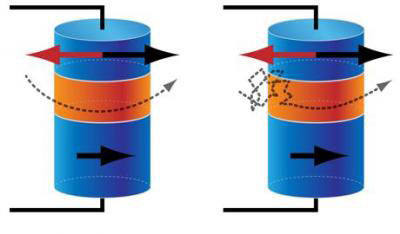
Greener memory from random motion
Heat helps in low power data storage scheme.
March 1, 2010 Read more
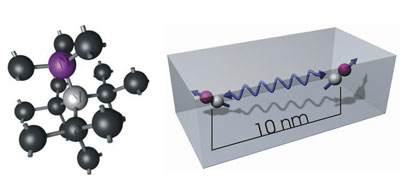
Another step towards quantum computing: coupling of nitrogen centers in a diamond
Another decisive step forward in the development of quantum computers has been successful. For the first time ever, researchers have accomplished to place two nitrogen atoms in a distance of only few nanometers, so that laser excitation will be capable of creating a quantum mechanical coupling.
March 1, 2010 Read more
Microbe detective seeks out germs
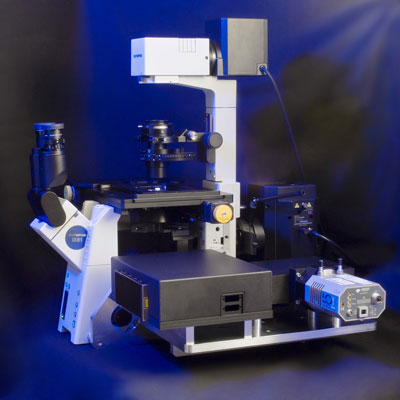
Microorganisms are everywhere and most of them are harmless, but they can do a lot of damage in the manufacture of pharmaceuticals or in tissue transplants. With the aid of a new device, germs can be detected in artificial cartilage within a few hours.
March 1, 2010 Read more
Printable sensors from EU project 3Plast
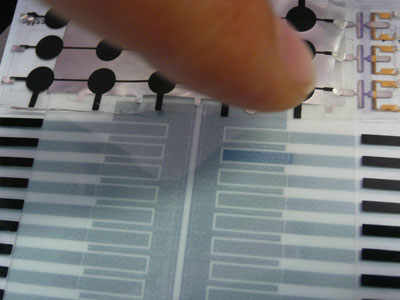
The companies and institutes involved from industry and research have set themselves the goal of mass producing pressure and temperature sensors which can be cheaply printed onto plastic film and flexibly affixed to a wide range of everyday objects, such as electronic equipment.
March 1, 2010 Read more
 Subscribe to our Nanotechnology News feed