

Nanotechnology News – Latest Headlines
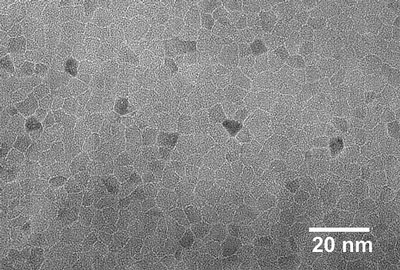
The mechanism behind superinsulation may lead to new types of electronics
Scientists have discovered the microscopic mechanism behind the phenomenon of superinsulation, the ability of certain materials to completely block the flow of electric current at low temperatures.
December 12, 2009 Read more
3D microchips for more powerful and environmentally-friendly computers
The world of IT pursues its race for performance. CMOSAIC could boost the computing performance of central processors by a factor 10 while consuming less energy.
December 11, 2009 Read more

Study of ultracold atoms proves theory about universal quantum mechanism
Using atoms at temperatures colder than deep space, Rice University physicists have delivered overwhelming proof for a once-scoffed-at theory that's become a hotbed for research some 40 years after it first appeared.
December 11, 2009 Read more
Julian Wess Award for outstanding achievements in elementary particle and astroparticle physics
The KIT Center Elementary Particle and Astroparticle Physics (KCETA) of Karlsruhe Institute of Technology (KIT) will celebrate the Julius Wess Award ceremony on December 10, 2009. This year's laureate is the British physicist Professor Dr. Jonathan Ellis, who is working at CERN in Geneva.
December 11, 2009 Read more
Students send microbe nanobiotechnology experiment on Space Shuttle Atlantis
An experiment by college students that will study how microbes grow in microgravity is heading to orbit aboard space shuttle Atlantis.
December 11, 2009 Read more
Environmental and human health impacts of nanotechnology
This book addresses the generic chemical aspects of nanoparticle properties, behaviour, life-cycle analysis, ecotoxicity and modelling as these relate to their effects in the environment - aquatic, terrestrial and atmospheric.
December 11, 2009 Read more
Elusive 'hot' electrons captured in ultra-thin solar cells
Shrinking cells snares charges in less than one-trillionth of a second.
December 11, 2009 Read more
Light-generating transistors to power labs on chips
What started out as 'blue-sky' thinking by a group of European researchers could ultimately lead to the commercial mass production of a new generation of optoelectronic components for devices ranging from mobile laboratories to mobile phones.
December 11, 2009 Read more
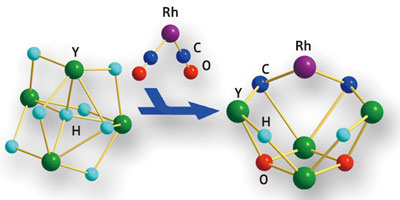
Combining rare-earth clusters with traditional metal catalysts reveals secrets of chemical transformation
The constant search for new catalysts that can improve existing methods has spurred chemists to investigate a relatively unknown part of the periodic table - the rare-earth elements.
December 11, 2009 Read more
Researchers engineer bacteria to turn carbon dioxide into liquid fuel
Researchers have genetically modified a cyanobacterium to consume carbon dioxide and produce the liquid fuel isobutanol, which holds great potential as a gasoline alternative.
December 11, 2009 Read more
Argonne creates green home for world-class nanotechnology research
The U.S. Department of Energy's (DOE) Argonne National Laboratory is more than just a hub of prizewinning science. It's also the home of award-winning - and green - architecture.
December 11, 2009 Read more
Reaching the summit of protein dynamics
In a groundbreaking study this week in Cell, Brandeis researchers reveal for the first time computationally and experimentally the molecular pathway that a protein takes to cross the energy barrier, the 'climb over the mountain'.
December 10, 2009 Read more
Cambridge scientists archive 500,000th crystal structure
The Cambridge Crystallographic Data Centre (CCDC) is proud to announce an important milestone in the history of crystallography - the archiving of the 500,000th small molecule crystal structure to the Cambridge Structural Database (CSD).
December 10, 2009 Read more
A speedy CAT scan for cells
Think of it as an emergency room exam for cells. In the span of a few minutes, scientists at Lawrence Berkeley National Laboratory can produce three-dimensional CAT scans of entire cells, revealing their internal structure down to the smallest organelle.
December 10, 2009 Read more
DARPA to provide funding to quell Casimir force
Scientists at Argonne National Laboratory are developing a way to control the Casimir force, a quantum mechanical force, which attracts objects when they are only hundred nanometers apart.
December 10, 2009 Read more
Organic photovoltaics nearing mass production
Organic photovoltaics (OPV) is an innovative solar cell technology based on conductive plastic materials such as polymers. Current trends and the latest developments in this field will be on display at LOPE-C in Frankfurt, Germany from May 31 - June 2, 2010.
December 10, 2009 Read more
 Subscribe to our Nanotechnology News feed