

Nanotechnology News – Latest Headlines
European researchers provide minimal cell blueprint
A German-Spanish team of researchers has successfully provided the first comprehensive image of a minimal cell that triggers atypical pneumonia, Mycoplasma pneumoniae.
December 16, 2009 Read more
Singapore-French nanotechnology laboratory opens in Singapore
Just two months after the Nanyang Technological University (NTU) signed the Memorandum of Understanding in Paris with the National Center for Scientific Research (CNRS) and the Thales Group of Companies to set up a joint research laboratory, the three parties are meeting again in Singapore to inaugurate the CNRS-International-NTU-Thales Research Alliance (CINTRA) Laboratory at NTU.
December 16, 2009 Read more
National Institute of Standards and Technology invests up to $71 million in new manufacturing, infrastructure research and development
The new projects will include developing unmanned, hovering aircraft for bridge inspections, a high-speed sorting system for recycling aerospace metals, and nanomaterials for advanced batteries, among other projects.
December 15, 2009 Read more
Nanolithographic technique allows multiple chemicals on a single chip
Scientists at Georgia Tech have developed a nanolithographic technique that can produce high-resolution patterns of at least three different chemicals on a single chip at writing speeds of up to one millimeter per second.
December 15, 2009 Read more
Study documents puzzling movement of electricity-producing bacteria near energy sources
Bacteria dance the electric slide, officially named electrokinesis by the USC geobiologists who discovered the phenomenon.
December 15, 2009 Read more
Erstmals Daten aus lebenden Zellen: Optisches Verfahren misst molekulare Reaktionszeiten
Ein Team um den LMU-Biophysiker Professor Dieter Braun untersuchte mit einem optischen Verfahren die Reaktionszeiten fuer die Kopplung zweier Straenge des Erbmolekuels DNA direkt in der Zelle.
December 15, 2009 Read more
Chemical Nanotechnology Talks X: Green nano - challenges of sustainability
The next event 'Chemical Nanotechnology Talks' will take place on January 26-27, 2010 in Frankfurt am Main on the topic 'Green Nano: Challenges of Sustainability'.
December 15, 2009 Read more
International Network CONTACT researches the use of carbon nanotubes in various applications
Within the Marie Curie Network, CONTACT, industrial partners will work closely together with research institutions. The young researchers, who will be mainly be recruited over the next year, will have the opportunity of working both at well-known research institutions and commercial companies - in seven different European countries.
December 15, 2009 Read more
Uncovering military nanotechnology applications
The military have been quicker than most to appreciate the potential of nanotechnology. More money is being spent on nanotechnology research for military applications than for any other area. The latest issue of NANO Magazine sheds light on this 'dark corner' of nanotechnology.
December 15, 2009 Read more
Gel electrophoresis detects proteins that make us age
Chemists and biologists from the University of Bath have developed a new technique that could be used to diagnose and develop treatments for age-related conditions like Alzheimer's disease, diabetes and cancer.
December 15, 2009 Read more
Simulation vom Atom zum Produkt mit MUSIC
Kostenguenstig Simulieren statt aufwendig Testen - die Graduiertenschule 'Multiscale Methods for Interface Coupling' (MUSIC) an der Leibniz Universitaet Hannover hilft dabei.
December 15, 2009 Read more
European Research Council funds biofilms project with two million euros
Prof. Regine Hengge at the Department of Biology, Chemistry, and Pharmacy at Freie Universitaet Berlin has been awarded funding from the European Research Council (ERC) for her research project to investigate the formation of bacterial biofilms.
December 15, 2009 Read more
Hydrogen from microalgae
In cooperation with eight partners, KIT scientists are currently working on the development of highly efficient methods for hydrogen production from microalgae. The German BMBF is funding the 'HydroMicPro' project with a total of 2.1 million euros.
December 15, 2009 Read more
New center aims to be a world-class IC design house focusing on ultra low power green microchips and circuits
The S$50 million jointly funded centre by Nanyang Technological University (NTU) and EDB named VIRTUS (Latin for 'excellence'), aims to be a world-class IC design house, developing key technologies required to design integrated circuits and systems for applications in medical technology, clean technology and consumer electronics.
December 15, 2009 Read more
FIRST and MIT announce strategic alliance to inspire K-12 students about science and technology education and careers
FIRST (For Inspiration and Recognition of Science and Technology), a not-for-profit organization founded by inventor Dean Kamen to inspire young people's interest and participation in science and technology and the Massachusetts Institute of Technology (MIT) today announced a global strategic alliance and a U.S. pilot program to promote the importance of science, technology, engineering and math (STEM) in K-12 education.
December 14, 2009 Read more
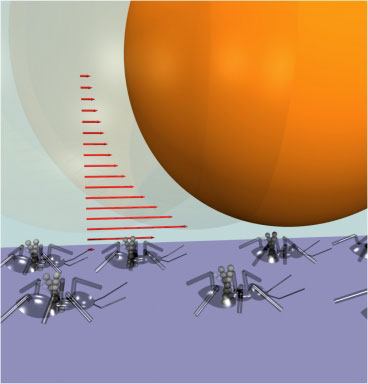
New microscopic system could provide method for moving tiny objects inside a microfluidic chip
A new microscopic system devised by researchers in MIT's department of materials science and engineering, in collaboration with researchers in Germany and Boston University, could provide a novel method for moving tiny objects inside a microchip, and could also provide new insights into how cells and other objects are transported around within the body.
December 14, 2009 Read more
 Subscribe to our Nanotechnology News feed