

Nanotechnology News – Latest Headlines
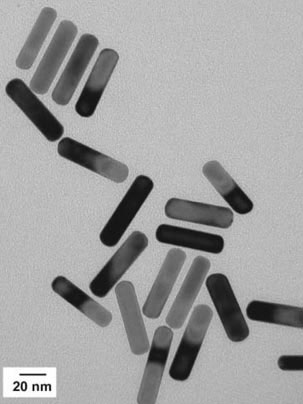
Gold nanorods could detect, treat cancer
MIT researchers have developed tiny gold particles that can home in on tumors, and then, by absorbing energy from near-infrared light and emitting it as heat, destroy tumors with minimal side effects.
May 4, 2009 Read more
Shanghai synchrotron radiation facility ready for service
Shanghai Synchrotron Radiation Facility (SSRF), a third-generation of synchrotron radiation light source, is completed and ready for use.
May 4, 2009 Read more
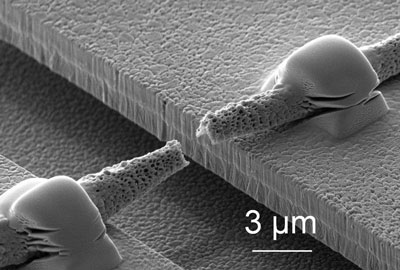
Non-wovens as scaffolds for artificial tissue
In future, cartilage, tendon and blood vessel tissue will be produced in the laboratory, with cells being grown on a porous frame, such as non-wovens. A new software program helps to characterize and optimize the non-wovens.
May 4, 2009 Read more
Scientists develop first fully automated pipeline for multiprotein complex production
In a new paper, researchers describe ACEMBL, the first fully automated pipeline for the production of multiprotein complexes.
May 4, 2009 Read more
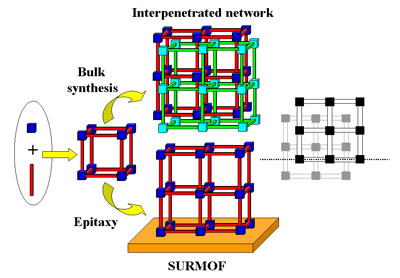
Chemists develop new preparation process for metal-organic frameworks
Void spaces are too small for metals.
May 4, 2009 Read more
Nanoparticles show promise for treating high grade glioma brain tumors
Researchers at the University of Virginia Health Science Center evaluated a novel glioma therapy through the targeted delivery of controlled-release nanoparticles to an immunocompromised mouse model.
May 4, 2009 Read more
When atoms are getting close - shortest carbon-chlorine single bond detected
Chemists at Ludwig-Maximilians-University Munich have analyzed a molecule, which has an extremely short bond length. As reported by the researchers in Nature Chemistry, the carbon atom and the chlorine atom in the so-called chlorotrinitromethane molecule are only 1.69 Angstroms apart from one another.
May 4, 2009 Read more
Carbon nanotubes and their environmental impact in water
Carbon nanotubes have made a meteoric career in the past 15 years, even if their applications are still limited. One aspect which has rarely been considered so far is now addressed by researchers of the research center Forschungszentrum Dresden-Rossendorf.
May 4, 2009 Read more
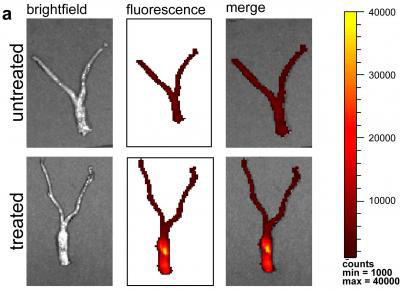
Nanotechnology holds promise for STD drug delivery
Yale researchers describe a breakthrough in safe and effective administration of potential antiviral drugs - small interfering RNA (siRNA) molecules that silence genes - the first step in development of a new kind of treatment for sexually transmitted diseases (STDs).
May 3, 2009 Read more
Gel-based glue fastens snails to wet surfaces, model for surgical adhesive
New findings could lead to developing surgical adhesives that would bind to wet surfaces and be less invasive than suturing mechanisms.
May 1, 2009 Read more
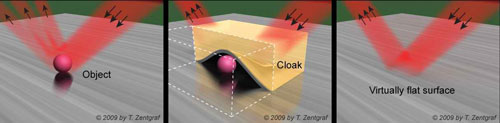
Never mind Harry Potter, researchers at Berkeley have made an invisibility cloak of their own
Blurring the lines between magic and science: Berkeley researchers create an 'invisibility cloak'.
May 1, 2009 Read more
SAFENANO to host Nanotechnology Risk Management Workshop at NanoMaterials '09
SAFENANO, the UK's premier resource on Nanotechnology Health and Safety, is pleased to announce it is to host a Pre-Conference workshop on Nanotechnology Risk Management at the forthcoming NanoMaterials '09 conference in Bonn, Germany.
May 1, 2009 Read more
Atomic physics study sets new limits on hypothetical new particles
In a forthcoming Physical Review Letters article, a group of physicists at the University of Nevada, Reno are reporting a refined analysis of experiments on violation of mirror symmetry in atoms that sets new constraints on a hypothesized particle, the extra Z-boson.
May 1, 2009 Read more
University of South Carolina receives $12.5 million for alternative energy research center
The University of South Carolina has been selected by the U.S. Department of Energy to house a research center that is expected to bring $12.5 million in federal funding, the largest award in the university's history, to a team of internationally recognized energy researchers in the College of Engineering and Computing.
May 1, 2009 Read more
New study of 24 nanoparticles clearly highlights the difference of sensitivity between cell types and cytotoxicity assays
A new study clearly highlights the difference of sensitivity between cell types and cytotoxicity assays that has to be carefully taken into account when assessing nanoparticles toxicity.
May 1, 2009 Read more
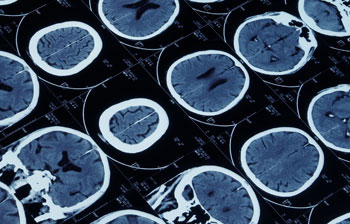
A safer nanocolloid contrast agent for magnetic resonance imaging
US and UK scientists have discovered a safer contrast agent for magnetic resonance imaging (MRI). The agent is an alternative to commonly used, but potentially harmful, gadolinium-based agents.
May 1, 2009 Read more
 Subscribe to our Nanotechnology News feed