

Nanotechnology News – Latest Headlines
Carbon nanotubes detect lung cancer markers in the breath
Using an array of nanotube devices, each coated with a different organic material, researchers at the Israel Institute of Technology have developed diagnostic system that may be able to diagnose lung cancer simply by sampling a patient's breath.
November 20, 2008 Read more
Targeted nanoparticles boost platinum-based anticancer therapy
A research team from the Massachusetts Institute of Technology (MIT)-Harvard Center for Nanotechnology Excellence has custom-designed nanoparticles that can deliver the anticancer drug cisplatin specifically to prostate cancer cells.
November 20, 2008 Read more
Carbon nanotubes improve cancer diagnosis through better protein array detection limits
To detect cancer as early as possible, dozens of research groups are developing methods to detect trace levels of cancer-related proteins and genes in blood or other biological samples.
November 20, 2008 Read more
4D microscope revolutionizes the way we look at the nano world
A breakthrough technology based on new concepts has allowed, for the first time, the real-time, real-space visualization of fleeting changes in the structure and shape of matter barely a billionth of a meter in size.
November 20, 2008 Read more
Complimentray educational webinar series to share nanotechnology best practices and application innovations
Microfluidics is introducing a series of complimentary educational webinars created to share best practices and innovation knowledge with nanotechnology researchers and drug formulators around the world.
November 20, 2008 Read more
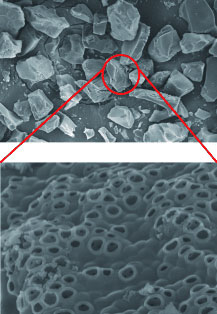
Three-dimensional porous silicon is a highly efficient lithium-storing anode
Researchers in Korea have developed a new material for anodes, which could clear a path for a new generation of rechargeable batteries.
November 20, 2008 Read more
Electronics that twist
They've made electronics that can bend. They've made electronics that can stretch. And now, they've reached the ultimate goal - electronics that can be subjected to any complex deformation, including twisting.
November 20, 2008 Read more
Call for applications: European Conference on Synthetic Biology
ECSB 2008 is the second conference in the series, and will draw on international expertise from, on the one hand, biological disciplines (e.g. genomics, proteomics, metabolomics, etc) and on the other hand, computational and engineering experts, to present a balanced overview of the very latest key technologies and research advances as pertaining to synthetic biology in general and to the quest for minimal living forms in particular.
November 20, 2008 Read more
European project breaks solar cell efficiency record
Scientists of the Commission-financed project FULLSPECTRUM have developed photovoltaic (PV) multi-junction (MJ) solar cells which are able to convert 39.7 % of the energy of sun light into electricity.
November 20, 2008 Read more
EPA seeks comment on nanosilver petition
The U.S. Environmental Agency is seeking public review and comment on a petition asking the agency to classify nanoscale silver as a pesticide.
November 20, 2008 Read more
IBM gets DARPA funding for building revolutionary computer modeled after the brain
In an unprecedented undertaking, IBM Research and five leading universities are partnering to create computing systems that are expected to simulate and emulate the brain's abilities for sensation, perception, action, interaction and cognition while rivaling its low power consumption and compact size.
November 20, 2008 Read more
Graphene Week
The European Science Foundation (ESF), the Austrian Science Fund (FWF) and the University of Innsbruck, Austria, are jointly organising a conference on graphene science on March 2-7, 2009 in Obergurgl, Austria.
November 19, 2008 Read more
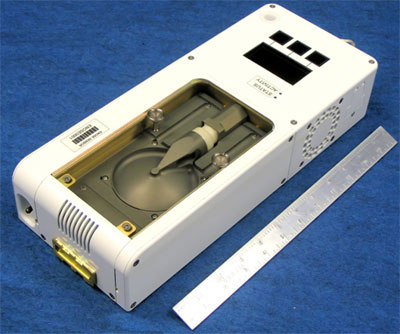
NASA plans test of 'electronic nose' on International Space Station
NASA astronauts on Space Shuttle Endeavour's STS-126 mission will install an instrument on the International Space Station that can 'smell' dangerous chemicals in the air.
November 19, 2008 Read more
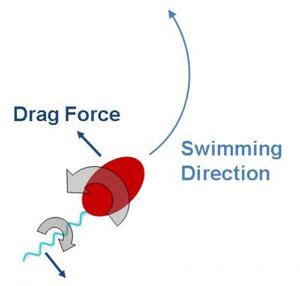
Physicists explain how bacteria swim
Researchers at Brown University have just completed the most detailed study of the swimming patterns of one particular bacterium, Caulobacter crescentus.
November 19, 2008 Read more
New technique lets scientists view step-by-step breakdown of water pollutant
Rice University scientists on the hunt for a better way to clean up the stubborn pollutant TCE have created a method that lets them watch molecules break down on the surface of a catalyst as individual chemical bonds are formed and broken.
November 19, 2008 Read more
Nanotechnology at the 2009 U.S. Army Corrosion Summit
This year the U.S. Army Corrosion Summit will feature a full day specialty track titled 'Anti-Corrosion Nanotechnology R+D'. The technical track will focus on basic and applied nanotechnology corrosion R+D within academia, industry, and government.
November 19, 2008 Read more
 Subscribe to our Nanotechnology News feed