

Nanotechnology News – Latest Headlines
European research project turns plant cells into medical factories
VTT Technical Research Centre of Finland will coordinate the large EU research project called SmartCell. The four-year project focuses on developing methods for production of valuable pharmaceutical compounds using plant cells as a production host in an effective and controlled manner.
September 19, 2008 Read more
Unique nanostructures paving the way for safer, greener and more efficient chemical reactors
Unique nanostructures which respond to stimuli, such as pH, heat and light will pave the way for safer, greener and more efficient chemical reactors.
September 19, 2008 Read more
Teppiche aus Nanodraht: Wissenschaftler entwickeln neuartige Solarzellen
Nanodraehte aus Silizium kombiniert mit Polymer-Schichten sind der Schluessel zu neuartigen Solarzellen mit hohem Wirkungsgrad, die derzeit am Institut fuer Photonische Technologien in Jena (IPHT) entwickelt werden.
September 19, 2008 Read more
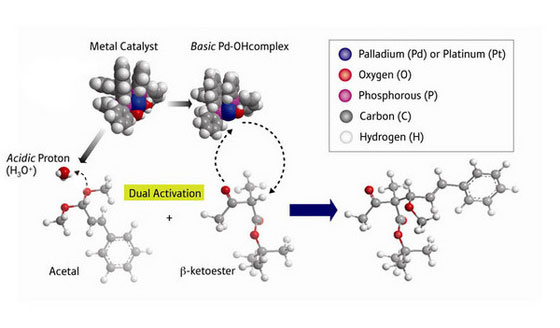
A metal catalyst teaches an old chemical reaction new tricks
A new twist on a common chemical reaction has enabled RIKEN scientists to create molecules that are useful building blocks for making new pharmaceuticals.
September 19, 2008 Read more

A 'toy' theoretical model may advance our understanding of a fundamental concept in particle physics
From a recent theoretical study, Japanese high-energy particle physicists have provided an important new method to apply to a fundamental concept known as supersymmetry.
September 19, 2008 Read more
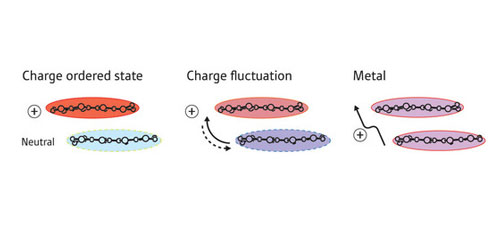
Findings could prove essential in explaining the origin of superconductivity in organic materials
Recent findings by a team of researchers from Japan and the United Kingdom could prove essential in explaining the origin of superconductivity in organic materials, and pave the way for the development of new organic materials.
September 19, 2008 Read more
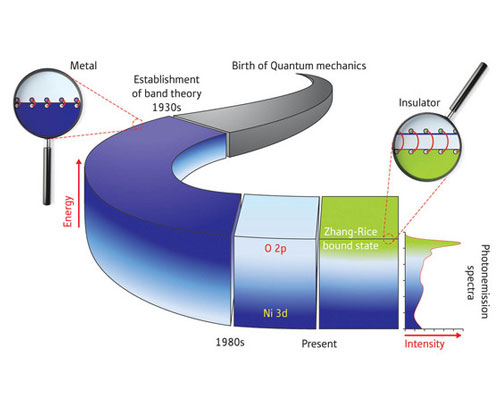
New experiments and calculations clarify the origin of the insulating behavior of nickel oxide
Researchers from the RIKEN SPring-8 Center in Harima have uncovered the fundamentals of the nickel oxide's insulating behavior.
September 19, 2008 Read more
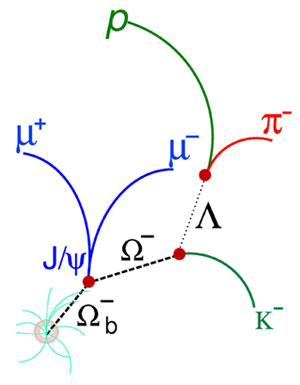
Scientists discover an exotic relative of the proton
It's not every day that scientists discover a new particle of matter. Florida State University physicists were part of just such a historic event recently while collaborating with researchers from 18 countries at Fermi National Accelerator Laboratory (Fermilab).
September 18, 2008 Read more
New catalytic system through nanoparticle coated fungi?
When fungi, such as penicillium, grow, they form a thread-like network, the mycelium. If the fungus is grown in a medium containing nanoscopic particles of a noble metal, the resulting mycelium is coated with the nanoparticles.
September 18, 2008 Read more
Fullerenes high potential to accumulate in living tissue
Research at Purdue University suggests synthetic carbon molecules called fullerenes, or buckyballs, have a high potential of being accumulated in animal tissue, but the molecules also appear to break down in sunlight, perhaps reducing their possible environmental dangers.
September 18, 2008 Read more
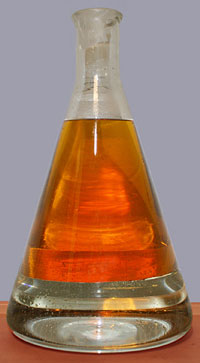
Green gasoline from sugar
Following independent paths of investigation, two research teams are announcing this month that they have successfully converted sugar-potentially derived from agricultural waste and non-food plants-into gasoline, diesel, jet fuel and a range of other valuable chemicals.
September 18, 2008 Read more
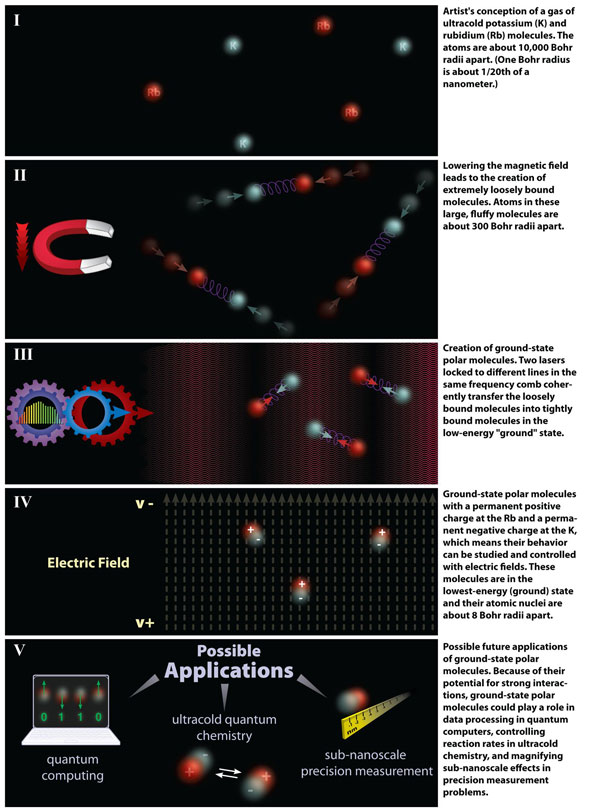
Scientists produce first high-density gas of ultracold molecules
Scientists at JILA, a joint institute of the National Institute of Standards and Technology (NIST)and the University of Colorado at Boulder (CU-Boulder), have applied their expertise in ultracold atoms and lasers to produce the first high-density gas of ultracold molecules - two different atoms bonded together - that are both stable and capable of strong interactions.
September 18, 2008 Read more
2008 International Environmental Nanotechnology Conference hosted by EPA
Researchers from Asia, Australia and Europe will join U.S. scientists and government officials to discuss nanotechnology applications for environmental cleanup, pollution control and the implications of releasing engineered nanoparticles into the environment.
September 18, 2008 Read more
First nanotechnology center in Arab countries
Egypt will establish a nanotechnology center, the first one in the Arab countries and North Africa.
September 18, 2008 Read more
Nanotechnology: A brave new world requires bold new research approaches
To ensure nanotechnology is developed in a responsible manner, the National Science Foundation (NSF) and EPA awarded $38 million to establish two Centers for the Environmental Implications of Nanotechnology (CEINs).
September 18, 2008 Read more
Projekt Nanodetect - Nanosensoren verbessern Produktsicherheit in der Lebensmittelindustrie
Im Rahmen des EU-Projektes Nanodetect entwickelt ein internationales Konsortium unter der Leitung des ttz Bremerhaven einen auf biotechnologischen Schnellverfahren basierenden Nanosensor.
September 18, 2008 Read more
 Subscribe to our Nanotechnology News feed