| Mar 06, 2026 |
Eco-friendly cotton that repels water and separates oilHydrophobic nanoparticles create fluorine-free, water-repellent cotton with micro- and nanoscale surface textures. Stain-resistant, breathable, and eco-friendly.(Nanowerk News) Cotton is well-known for its breathability, comfort, and versatility. However, its natural tendency to absorb water (a property known as hydrophilicity), limits its use in specialised applications such as easy-cleaning surfaces or oil–water separation. |
| Traditional methods to make textiles superhydrophobic (i.e., water-repellent) often rely on fluorinated compounds, which, although effective, are harmful to the environment. |
| INL researchers Diana Alves, João Rodrigues, and Juliana Sousa have developed a simple, scalable, and fluorine-free method to give cotton new properties. By combining hydrophobic nanoparticles with hexadecyltrimethoxysilane (HDMTS), a chemical that lowers surface energy to make fabrics water-repellent, the researchers created cotton that resists water and stains while still allowing oil to pass through. This selective behaviour enables the material to efficiently separate oil from water. |
| Their approach also introduces textures at the micro- and nanoscale on the cotton surface, helping liquids slide off easily while keeping the fabric breathable and durable. |
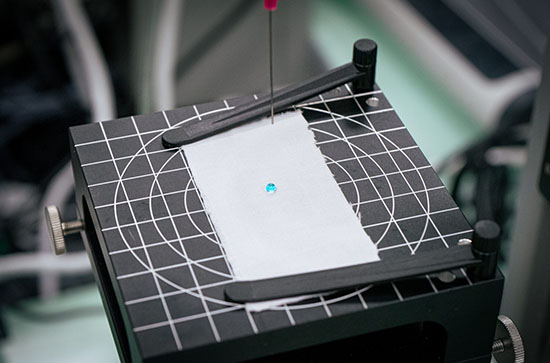 |
| Hydrophobic nanoparticles with HDMTS forming a blue-colored droplet (dye added for visibility). The droplet on cotton shows low surface tension: water and stains are repelled. (Image: INL) |
| The research team tested the new material under harsh mechanical and chemical conditions. The modified cotton maintained its water-repellent performance and resisted stains from red wine, coffee, milk, orange juice, and tea, without compromising its natural breathability. |
| This straightforward approach makes the method well-suited for large-scale production and environmentally conscious textile applications. Published in Applied Surface Science ("Co-functionalization of cotton with hydrophobic nanoparticles and HDMTS as a durable, simple and fluorine-free approach for water-repellent, easy-cleaning and oil–water separation applications"), this work demonstrates a durable, fluorine-free pathway for water-repellent and easy-cleaning textiles, combining simplicity, performance, and sustainability. |
| Source: By Catarina Moura, International Iberian Nanotechnology Laboratory (Note: Content may be edited for style and length) |