Showing Spotlights 1393 - 1400 of 2786 in category All (newest first):
 Nanotechnology-enabled bio-pharmaceuticals are the most innovative and highly specialized alternative medicines for curing chronic diseases. These functionally modified nanomaterials help in early detection of chronic diseases. In addition to this, they also detect the microorganisms and viruses associated with infections. In this article, the authors analyze the immense potential of nanotechnology in India's pharmaceutical and biotechnology industries.
Dec 13th, 2012
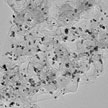 Fuel cells are able to convert chemical energy to electrical energy with little pollutant emission and high energy conversion efficiency. Despite these advantages, the performance of fuel cells depends largely on the oxygen reduction reaction (ORR), which is substantially affected by the activity of the cathode catalyst. Since the sluggish kinetics of ORR is the major factor impeding large-scale application of fuel cells, most research focuses on developing efficient catalysts for ORR.
Dec 12th, 2012
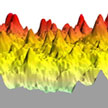 Energy-relevant materials like selenium have photovoltaic and photoconductive properties that make them interesting for the manufacture of solar cells and lighting devices. In most of these applications, as with all nanomaterials, the material surface plays a critical role. Therefore, their surface properties, and more particularly their solid surface energy - the energy required to create a new surface - have to be carefully determined in order to fully understand and control relevant manufacturing parameters for devices based on these materials.
Dec 11th, 2012
 Will nanotechnology impact future global security? According to Jayshree Pandya, such technology is indeed about to change large-scale security dynamics, defense policies and possibly even the global balance of power. All states are eager to benefit from nanoscience, nano-engineering and nanotechnology initiatives - either directly or indirectly. While most states do not yet have dedicated nano-defense initiatives, rapid advances within the aforementioned fields are exciting many and becoming a cause of concern for the rest.
Dec 10th, 2012
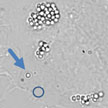 Researchers are very interested in investigating the biomechanical properties of the inner structure of cells due to their relevance in many important topics in biology such as intracellular and intercellular dynamics; tissue and organs formation and their homeostasis; but also in medicine as the formation and development of diseases like inflammatory disorders or tumor. In order to study inner cell properties, researchers have now presented a biophotonic holographic workstation that combines the complementary features of holographic optical tweezers (HOT) and self-interference digital holographic microscopy, in order to investigate biomechanics properties at the single cell level.
Dec 7th, 2012
 The subventricular zone (SVZ) is a region in the mammalian brain where self-renewing and multipotent neural stem cells give rise to new brain cells such as neurons, astrocytes, and oligodendrocytes. Neuroscientists and cell biologists are keen to use nanotechnologies to manipulate endogenous stem cell niches such as the SVZ. New work describes the first example in the manipulation of the neural stem cell niche by the use of nanoparticles releasing a pro-neurogenic agent - retinoic acid.
Dec 6th, 2012
 Nanoscience and nanotechnology have emerged as important priorities not only for science but also for economic development. In this article, the authors propose an analytical framework that considers the socioeconomic effects of nanotechnology in six key areas: institutional development, knowledge flows, and network efficiency; research and education capabilities; industrial and enterprise development; regional spread; cluster and network development; and product innovation. This framework is applied to assess the early impacts of the evolving domain of nanotechnology for development, with a focus on China and its transitioning economy.
Dec 5th, 2012
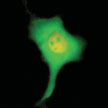 Fluidic force microscopy (FluidFM) is an emerging technology which combines atomic force microscopy (AFM) with microfluidics. In a new study, researchers in Switzerland have now developed an innovative method for straightforward injection into the nucleus of a living cell, taking advantage of the nanoscale accuracy and small probe size of AFM and the possibility to handle fluid under pressure-control through the integrated microchannel.
Nov 29th, 2012

 Subscribe to our Nanotechnology Spotlight feed