

Biotechnology News – Latest Headlines
 Subscribe to our Biotechnology News feed
Supramolecular polymers - a possible biomaterial for artificial human parts
Researchers are on the way to making parts of a bioartificial kidney out of a novel polymer - which could reduce the risk of transplants being rejected by the human body.
October 24, 2013 Read more
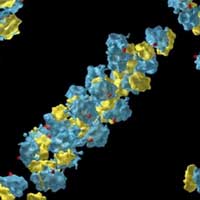
Molecular biology: Designer of protein factories exposed
For 10 years, Patrick Cramer and his colleagues at Ludwig-Maximilians-Universitaet (LMU) in Munich have probed the structure of RNA polymerase I, a crucial cog in the machinery of all cells. Now they unveil the full three-dimensional conformation of the enzyme - at atomic resolution.
October 24, 2013 Read more
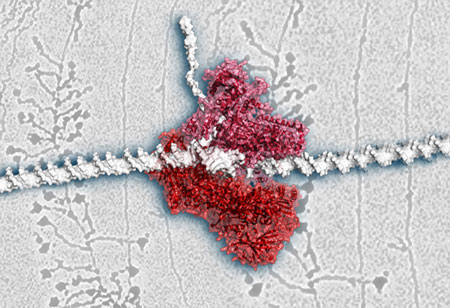
Bigger, better, faster: 3D structure reveals protein's Swiss-army knife strategy
The molecular machine that makes essential components of ribosomes - the cell's protein factories - is like a Swiss-army knife, researchers at the European Molecular Biology Laboratory in Heidelberg, Germany, and the Centro de Investigaciones Biológicas in Madrid, Spain, have found.
October 24, 2013 Read more
Physicists decode decision circuit of cancer metastasis
Researchers from Rice University's Center for Theoretical Biological Physics have deciphered the operating principles of a genetic circuit that allows cancer to metastasize. The study revealed that the decision circuit has three settings, an oddity that could open the door to cancer treatments that disrupt the circuit.
October 24, 2013 Read more
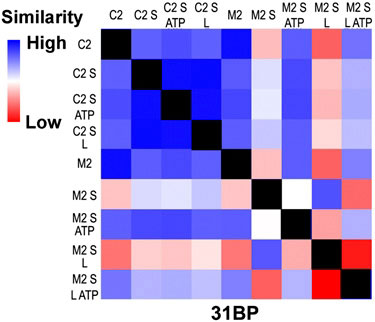
Researchers get a detailed look at a DNA repair protein in action
Berkeley Lab researchers at the Advanced Light Source (ALS) have invented a new technique for studying the process by which certain errors in the genetic code are detected and repaired.
October 23, 2013 Read more
TopoChip reveals the Braille code of cells
A new tool is uncovering the fundamentals of how cells respond to surfaces and could potentially improve the effectiveness of biomedical implants.
October 23, 2013 Read more
SRC launches synthetic biology research on biomedical and minimal-power electronic devices for novel semiconductor applications
Semiconductor Research Corporation, the world's leading university-research consortium for semiconductor technologies, today launched the Semiconductor Synthetic Biology (SSB) research program on hybrid bio-semiconductor systems to provide insights and opportunities for future information and communication technologies. The program will initially fund research at six universities: MIT, the University of Massachusetts at Amherst, Yale, Georgia Tech, Brigham Young and the University of Washington.
October 23, 2013 Read more

Biomolecules for the production line
To produce proteins on an industrial scale without using living cells is the ambitious goal of cell-free bioproduction. This method could help us to produce biological ingredients more quickly and with fewer resources than conventional techniques allow.
October 23, 2013 Read more
Hair-like constructs offer drug screening platform
Laboratory-grown structures akin to hair follicles could aid the search for novel drugs to treat baldness and other hair disorders.
October 23, 2013 Read more
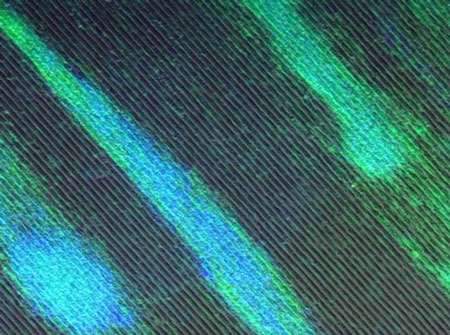
Physical cues help mature cells revert into embryonic-like stem cells
Bioengineers at the University of California, Berkeley, have shown that physical cues can replace certain chemicals when nudging mature cells back to a pluripotent stage, capable of becoming any cell type in the body.
October 20, 2013 Read more
Mathematical study of photosynthesis clears the path to developing new super-crops
How some plant species evolved super-efficient photosynthesis had been a mystery. Now, scientists have identified what steps led to that change.
October 17, 2013 Read more
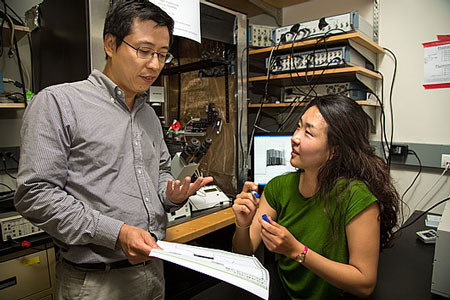
Scientists expand the genetic code of mammals to control protein activity in neurons with light
With the flick of a light switch, researchers at the Salk Institute for Biological Studies can change the shape of a protein in the brain of a mouse, turning on the protein at the precise moment they want. This allows the scientists to observe the exact effect of the protein's activation.
October 17, 2013 Read more
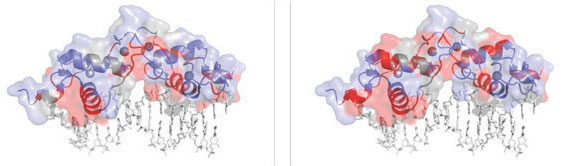
Transcription factors: function follows form
Clay can be used in various forms for a range of objects such as cups, plates or bricks. Similarly, proteins can transform their structure and thus adapt their function and activity. Researchers at the Max Planck Institute for Molecular Genetics in Berlin have analysed proteins for such modifications that control gene activity, so-called transcription factors.
October 17, 2013 Read more
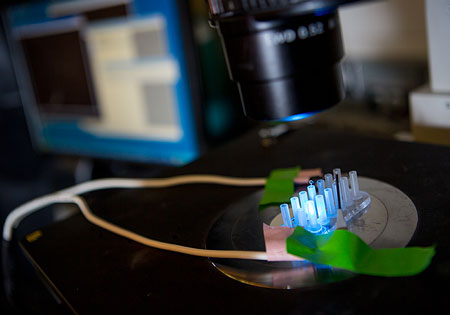
Separating the good from the bad in bacteria
New microfluidic technique quickly distinguishes bacteria within the same strain; could improve monitoring of cystic fibrosis and other diseases.
October 17, 2013 Read more
New partnerships to forge synthetic biology links between UK and China
Scientific links between the UK and China in the exciting field of synthetic biology will be boosted by the announcement of five grants awarded through a Synthetic Biology China Partnering Award.
October 16, 2013 Read more
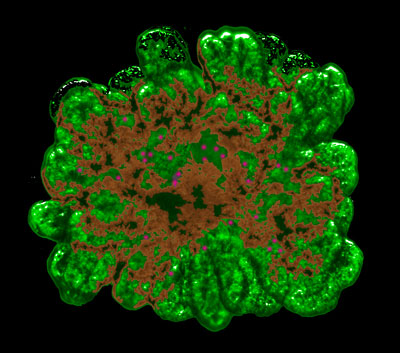
New 3D method used to grow miniature pancreas
An international team of researchers from the University of Copenhagen have successfully developed an innovative 3D method to grow miniature pancreas from progenitor cells. The future goal is to use this model to help in the fight against diabetes.
October 15, 2013 Read more
Adult stem cells help build human blood vessels in engineered tissues
Researchers at the University of Illinois at Chicago have identified a protein expressed by human bone marrow stem cells that guides and stimulates the formation of blood vessels.
October 14, 2013 Read more
Printable biotechnology
Cells, biological circuits, and individual biomolecules organize themselves and interact with the environment. Use of these capabilities in flexible and economically efficient biotechnological production systems is in the focus of the 'Molecular Interaction Engineering' project. It is the objective to develop printed biological circuits and catalysts for biologico-technical hybrid systems.
October 14, 2013 Read more